
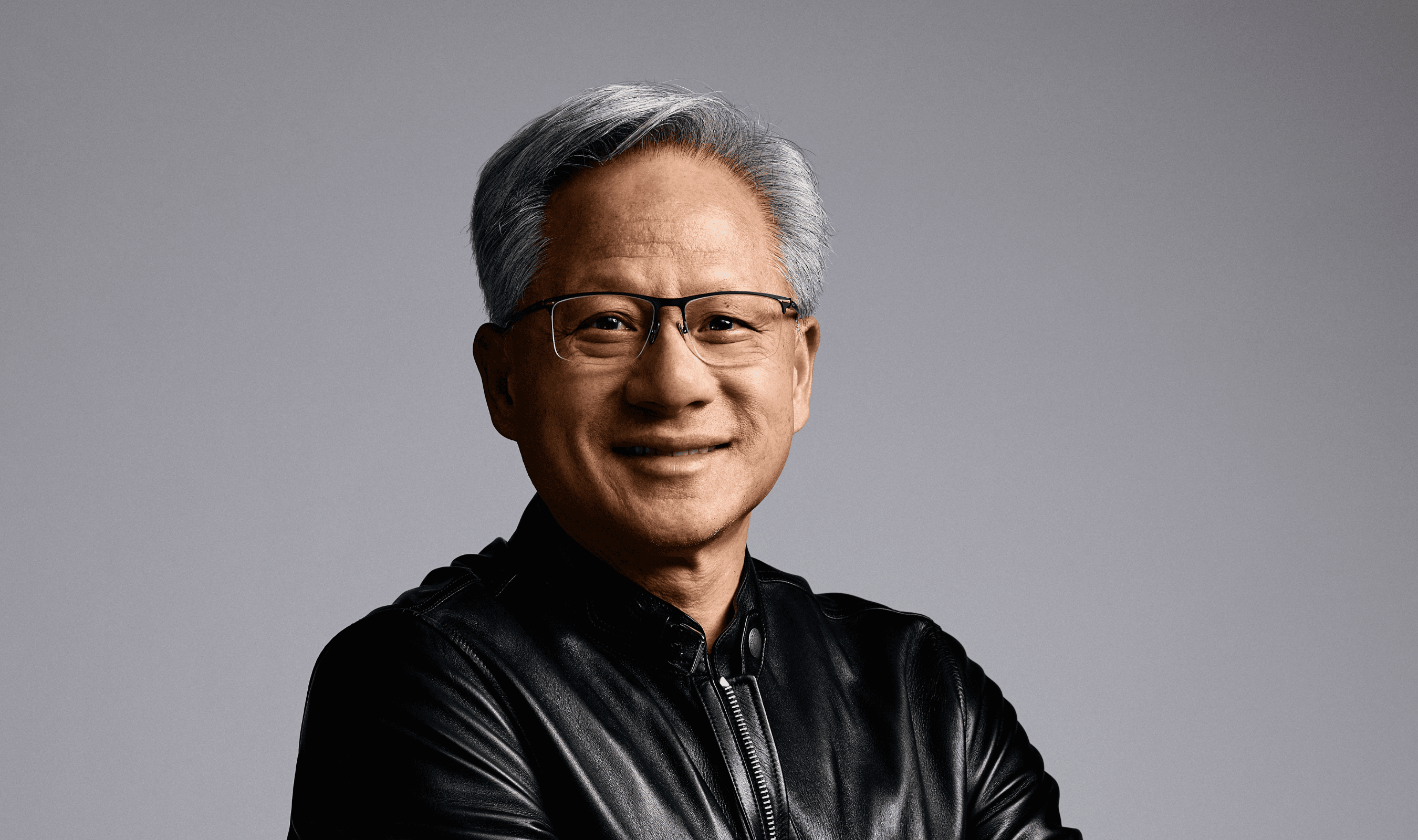
NVIDIA CEO Jensen Huang predicts 2026 will deliver a "ChatGPT moment" for physical AI, positioning the company at the center of robotics transformation. Huang's comments earlier this year signal NVIDIA's strategic push beyond data center dominance into autonomous machines and intelligent robotics.
The company announced new open models, frameworks, and AI infrastructure for physical AI at CES 2026. NVIDIA released Isaac and GR00T foundation models as platforms for robotics applications, with the GR00T N1 model representing the world's first open humanoid robot foundation model.
NVIDIA expanded its "Mega" Omniverse Blueprint to include libraries for building factory-scale digital twins. Siemens became the first company to develop digital twin software supporting the blueprint, while FANUC and Foxconn Fii connected their robot models to the platform.
Physical AI represents the fusion of perception, reasoning, and control in 3D space that enables machines to act autonomously. Unlike large language models trained on text data, physical AI models must operate safely in dynamic real-world environments while perceiving, reasoning, and acting in real time.
NVIDIA's robotics stack now includes the Jetson T4000 module powered by Blackwell architecture, delivering 4x greater energy efficiency for $1,999 at 1,000-unit volume. The company also introduced IGX Thor for industrial edge applications, extending robotics capabilities with enterprise software support and functional safety.
Major manufacturers including Belden, Caterpillar, Foxconn, Lucid Motors, Toyota, and TSMC are building Omniverse factory digital twins to accelerate AI-driven manufacturing. These partnerships aim to overcome labor shortages and drive American reindustrialization through physical AI and collaborative robots.
Robotics became the fastest-growing category on Hugging Face, where NVIDIA's open models and datasets lead downloads. The collaboration unites NVIDIA's 2 million robotics developers with Hugging Face's global community of 13 million AI builders.
Analysts at Morgan Stanley project the humanoid robot market will grow from tens of millions of dollars today to $5 trillion by 2050. Amazon, which reports having one million robots in operation, believes physical AI will transform robotics autonomy, manipulation, sortation, and computer vision.
NVIDIA's physical AI development leverages synthetic data generation through Cosmos open world foundation models and Isaac Sim robotics simulation framework. Serve Robotics, operating one of the largest autonomous robot fleets in public spaces, uses these technologies to complete over 100,000 last-mile meal deliveries while collecting 1 million miles of data monthly.
The company's three-computer architecture enables developers to bypass resource-intensive pretraining through GR00T-enabled workflows. New open-source frameworks on GitHub simplify complex pipelines and accelerate the transition from research to real-world robotics applications.
Boston Dynamics, Caterpillar, Franka Robots, Humanoid, LG Electronics, and NEURA Robotics debuted new robots and autonomous machines built on NVIDIA technologies at CES 2026. These demonstrations showcase the expanding ecosystem of AI-driven robotics powered by NVIDIA's full stack of Jetson processors, CUDA, and Omniverse platforms.
NVIDIA will host the Interactive Physical AI Workshop at CVPR 2026, focusing on technologies that perceive humans and scenes using audio-visual signals while generating communication through verbal and nonverbal behaviors. The workshop reflects growing academic and industry interest in interactive physical AI systems.
As of February 11, 2026, NVIDIA maintains a $4.62 trillion market capitalization with its stock trading approximately 10.5% below its 52-week high of $212.19. The company's strategic positioning in physical AI comes as analysts identify 2026 as a pivotal year for robotics and autonomous systems development.
NVIDIA's physical AI initiatives extend across healthcare, mining, and industrial applications. The company's Isaac for Healthcare platform enables surgical scope training using Cosmos Transfer, while mining applications address $650,000 annual losses from undetected boulders entering crushers.
The convergence of generative AI, physical AI, and spatial computing is expected to transform virtual reality over the next three to five years. NVIDIA's investments in these areas position the company to capitalize on what industry observers describe as the next major technological convergence beyond current AI capabilities.