

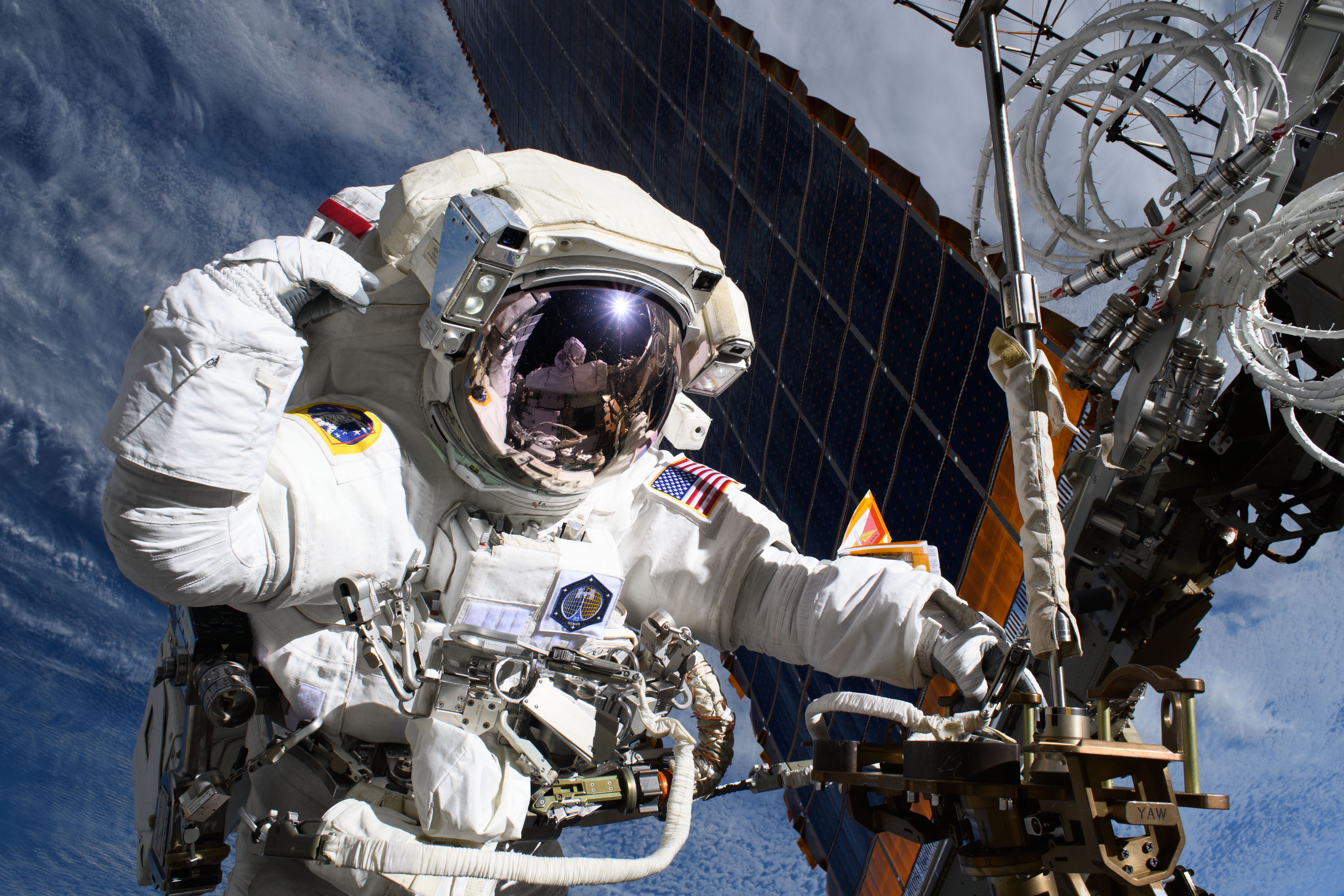
NASA executed its first medical evacuation from the International Space Station on Wednesday, January 14, returning four astronauts to Earth more than a month early. The SpaceX Dragon capsule carrying U.S., Russian, and Japanese crew members splashed down in the Pacific near San Diego early Thursday morning.
The evacuation cuts short a mission that launched in August and was scheduled to continue through late February. NASA canceled a planned spacewalk on January 7 before announcing the crew's early return, citing medical privacy while confirming the situation was not an emergency.
Outgoing space station commander Mike Fincke said via social media that the ailing astronaut is "stable, safe and well cared for." He described the decision as deliberate to allow proper medical evaluations on Earth, where full diagnostic capabilities exist. NASA officials refused to identify which crew member needed care or disclose specific health concerns.
"This was a deliberate decision to allow the right medical evaluations to happen on the ground, where the full range of diagnostic capability exists," Fincke said. NASA astronaut Zena Cardman added, "Our timing of this departure is unexpected, but what was not surprising to me was how well this crew came together as a family."
The medical evacuation marks a historic first for NASA in its 65 years of human spaceflight. Computer modeling had predicted such evacuations would occur every three years from the space station, but NASA had never executed one until now. Russian space programs have experienced similar situations, most notably in 1985 when Soviet cosmonaut Vladimir Vasyutin returned early from Salyut 7 with a serious infection.
The returning crew includes first-time space fliers Cardman, a 38-year-old biologist and polar explorer, and Russian Air Force veteran Oleg Platonov, 39. Both missed planned spacewalks due to the early return. Cardman's original 2025 launch was delayed to accommodate NASA astronauts Butch Wilmore and Suni Williams, who spent nearly a year stranded at the station due to Boeing's Starliner capsule issues.
Veteran astronauts Fincke, 58, and Japan's Kimiya Yui, 55, completed their missions early. Fincke has logged 1.5 years in orbit over four missions with nine spacewalks, while Yui celebrated his 300th day in space last week. "I want to burn it firmly into my eyes, and even more so, into my heart," Yui posted on social media, sharing Earth views including Mount Fuji and auroras.
With only one American and two Russian astronauts remaining aboard the station, NASA and SpaceX are accelerating the launch of a replacement four-person crew from Florida. The new crew was originally targeted for mid-February but will now launch earlier to restore full operations.
Until the replacement arrives, NASA must suspend all routine and emergency spacewalks, which require two astronauts outside with backup support from inside the station. The agency determined leaving the astronaut in space without proper medical attention for another month posed greater risk than temporarily reducing the station crew by more than half.
The medical evacuation represents the first major decision by NASA's new administrator Jared Isaacman, who assumed the agency's top position in December. The billionaire payment processing founder and two-time space flier stated, "The health and the well-being of our astronauts is always and will be our highest priority."
The Dragon capsule completed its return less than 11 hours after undocking from the station, following standard entry and splashdown procedures with medical experts aboard the recovery ship. NASA has not specified when the four astronauts will be transported from California to Houston's Johnson Space Center, their home base.
The station's remaining crew continues an eight-month mission that began with a Soyuz launch from Kazakhstan just 1.5 months ago. Their work continues as NASA manages the unprecedented medical situation while maintaining critical station operations with reduced personnel.