
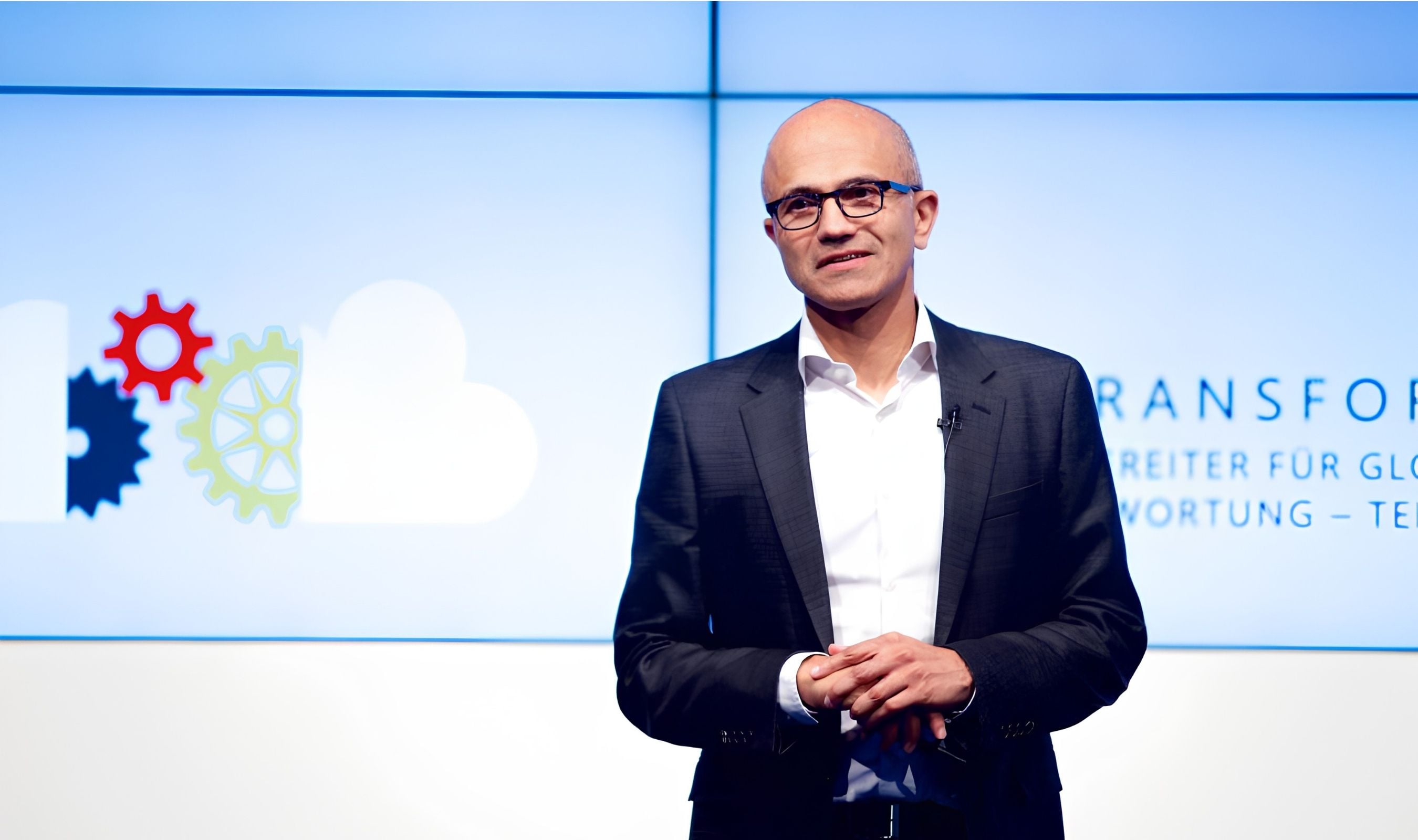
Microsoft CEO Satya Nadella takes the witness stand Monday in Oakland federal court, where newly disclosed 2018 emails show his own executives doubted OpenAI's research and saw "no value in engaging" with the lab, skepticism Musk's lawyers now wield as evidence that Microsoft knowingly helped divert a nonprofit from its mission.
Nadella's testimony, expected May 11, precedes OpenAI CEO Sam Altman's likely appearance on May 12 or 13 in what could be the final act of a trial that has laid bare Silicon Valley's most consequential partnership. An advisory jury is expected to reach a verdict on liability by the week of May 18, with Judge Yvonne Gonzalez Rogers delivering the final ruling on remedies.
Musk's case hinges on emails entered into evidence on May 7. The chain began in August 2017 when Altman asked Nadella for $300 million worth of Azure cloud computing services.
Nadella polled his lieutenants. The response from Microsoft's AI team: "no value in engaging," per an email from executive vice president Jason Zander.
Microsoft's research team considered its own work "more advanced." The PR team disliked the idea of backing a group promoting "machines beating humans."
"Overall I can't tell what research they are doing and how if shared with us it could help us get ahead," Nadella wrote in January 2018, according to court documents.
Microsoft CTO Kevin Scott was "highly skeptical of an imminent breakthrough in AGI." OpenAI's 2017 work was largely focused on building AI systems that could play video games. A financial analysis showed Microsoft stood to lose roughly $150 million over several years if it provided the services Altman wanted. But the calculus shifted when executives considered the alternative. Microsoft feared that walking away could push OpenAI into the arms of Amazon, then the dominant cloud provider.
Scott warned OpenAI might "storm off to Amazon in a huff."
Roughly 18 months after those emails, Microsoft invested $1 billion in OpenAI. The total commitment grew to $13 billion by 2023.
Microsoft's stake is now valued at $228 billion, a 17-times return on investment.
Musk's attorneys argue those returns prove Microsoft knew it was backing a for-profit pivot from the start. The Tesla and SpaceX founder is seeking to unwind OpenAI's conversion from nonprofit to for-profit, a move that could jeopardize the company's reported IPO plans.
Musk donated $38 million to OpenAI's founding and is now asking the court to force the company back to nonprofit status.
OpenAI counters that Musk agreed to a for-profit structure in 2017, demanded full control, then left when he could not get it. The company's lawyers point to testimony from co-founder Greg Brockman, who said Musk pushed for a for-profit conversion himself and wanted to use OpenAI to fund an $80 billion Mars colonization project.
Brockman testified last week that during a 2017 equity meeting, Musk "stood up and stormed around the table" so aggressively that Brockman thought he was going to be physically attacked. Musk tore a painting off the wall and stormed out. The court has already heard from former OpenAI CTO Mira Murati, who testified that Altman created "chaos" internally by telling different executives different things. "My concern was about Sam saying one thing to one person and completely the opposite to another person," Murati said.
She also testified that she supported Altman's return as CEO after his temporary ouster in 2023, fearing "OpenAI was at catastrophic risk of falling apart."
Judge Gonzalez Rogers has run a tight courtroom throughout the proceedings. She reprimanded Musk for posting insults about Altman and Brockman on social media during the trial, and cut off his repeated testimony about AI wiping out the human race.
"This is not a trial on the safety risks of artificial intelligence," she told the court.
Nadella's testimony will be limited to five hours under the court's scheduling order, allocated separately from the 22 hours each given to Musk and the OpenAI defendants. His appearance could determine whether jurors view Microsoft as a commercial partner that took a calculated risk or a co-conspirator in what Musk calls "a textbook tale of altruism versus greed."