
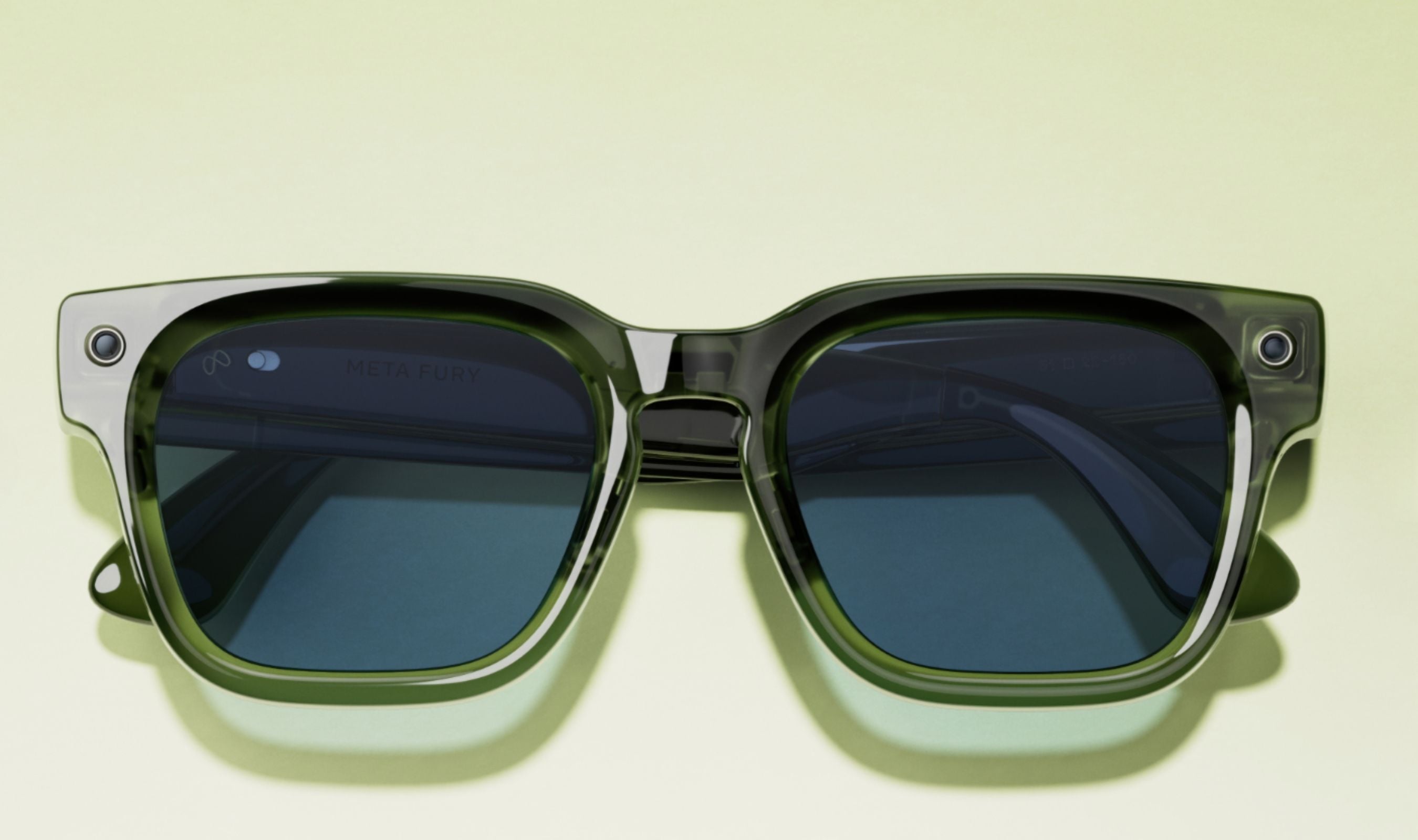
Meta dropped the Ray-Ban name from its smart glasses to sell them for $299, $80 cheaper than the latest Ray-Ban Meta models. The move is a bet that price, not prestige, will drive adoption. The new Meta Glasses go on sale today in three frame styles: Adventurer (rectangular, standard and large sizes), Fury (boxier), and Starfire, the latter designed with Kylie Jenner and branded Meta Glasses by Kylie.
All three are manufactured by EssilorLuxottica, the same company behind Ray-Ban and Oakley, but carry only Meta's name. The glasses pack the same internal hardware as the Ray-Ban Meta Optics Styles released earlier this year, with slightly longer battery life. Meta claims more than eight hours per charge, with the charging case adding up to 40 hours.
Why drop Ray-Ban? Price. "We just feel like we need to have a pair of glasses at a lower price point, and we were trying to figure out what could work there," Alex Himel, Meta's vice president of wearables, told The Verge. EssilorLuxottica's lower-priced brands lack the name recognition to carry a smart glasses line, so Meta went its own way.
Andrew Bosworth, Meta's CTO, said at a press event Monday that consumers are willing to pay a premium for Ray-Ban styles, and the new in-house frames are meant to provide more options. The company still sells the Ray-Ban and Oakley models.
Meta dominates the smart glasses market with nearly 70% share, per IDC data. Shipments surged 167% in Q1 2026 versus the same period last year.
CEO Mark Zuckerberg said in an April earnings call that daily active users of Meta's glasses have tripled year-over-year. The new glasses launch with Muse Spark, the first AI model from Meta's Superintelligence Labs. The model improves how the glasses extract details from photos and remember preferences.
Older Ray-Ban and Oakley models will get Muse Spark through a software update in the US and Canada.
AI now supports 14 additional languages including Arabic, Japanese, Mandarin, Hindi, and Korean. A "dynamic photo" feature arriving later this month automatically captures multiple frames and recommends the best shot.
Turn-by-turn pedestrian navigation is also coming to the display-less glasses. The Kylie Jenner model comes with a custom chime and an optional AI-generated version of Jenner's voice replacing the standard Meta AI voice. The glasses also feature adjustable nose pads that click into three positions and overextension hinges for wider faces.
The $299 price tag undercuts Snap's new Specs AR glasses by nearly $1,900, Snap's model sells for about $2,195. It also beats Meta's own second-gen Ray-Ban glasses, which started at $379.
But price alone won't overcome the category's core problem. Runar Bjorhovde, an analyst at Omdia, told CNN that tech companies are still struggling to prove smart glasses are more useful than smartphones.
"The question is whether these wearables can do something completely unique or something completely different, using the camera (and) creating context in the world," he said. "And the question is, what do you actually do with that?"
Meta still faces privacy concerns. The company is building a facial recognition feature for its glasses, both The New York Times and Wired reported in recent weeks.
Himel acknowledged tampering is an issue but said users "should see some updates from us really soon" on privacy measures.
Competition is accelerating. Google and Samsung are collaborating on AI glasses launching later this year with similar capabilities.
OpenAI is also developing a hardware product. IDC expects the average selling price of smart glasses to drop from $376 in 2026 to $229 by 2030.
Meta Glasses are available now through Meta's online store and retailers including Best Buy, Amazon, LensCrafters, and Sunglass Hut.