


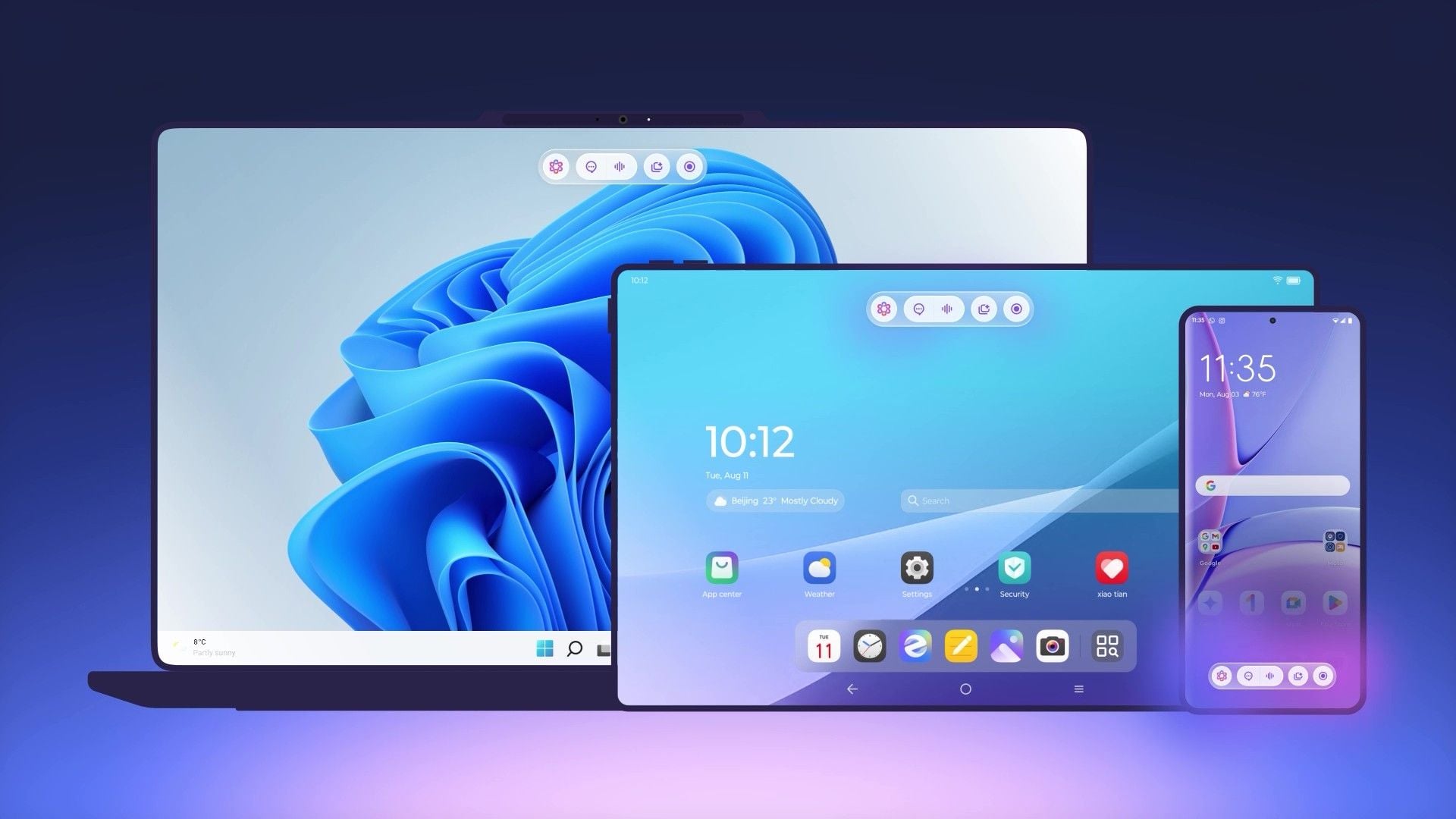
Lenovo and Motorola announced Qira, a cross-device AI assistant that will launch on Lenovo computers in Q1 2026 and reach Motorola smartphones later this year. The companies revealed the system at CES 2026, positioning it as a "Personal Ambient Intelligence System" that works across smartphones, PCs, tablets, and wearables.
Qira represents a shift from app-based AI to system-level intelligence that operates continuously across devices. According to Lenovo's Dan Dery, VP of AI Ecosystem, "Lenovo Qira is not another assistant, it's a new way intelligence shows up across your devices." The system builds what Lenovo calls a fused knowledge base, combining user interactions and documents from multiple devices to create personalized experiences.
Users can activate Qira by saying "Hey Qira," pressing a dedicated key, or tapping a persistent pill interface on smartphones. The assistant offers context-aware features including Next Move for task suggestions, Catch Me Up for activity summaries, and Pay Attention for meeting transcriptions. Motorola also demonstrated Project Maxwell, an AI pin prototype that incorporates Qira for hands-free operation.
Privacy protection centers on on-device processing, with personal data kept local according to Lenovo. The company employs a hybrid architecture that only sends information to secure cloud services when necessary. Most processing occurs directly on devices, enabling offline functionality and reducing privacy concerns.
Lenovo Qira will appear on select Lenovo devices starting in early 2026, while Motorola Qira will reach supported smartphones via over-the-air updates. Current Lenovo AI Now users will transition to the new system automatically. The rollout begins with Lenovo's ThinkPad, ThinkBook, and Yoga lines before expanding to Motorola's smartphone portfolio.
Motorola's Project Maxwell wearable represents a more ambitious vision for Qira's future. The proof-of-concept device features a camera and microphone, allowing Qira to understand visual context and execute tasks like ordering rides or sending messages without phone interaction. While not yet a commercial product, it demonstrates Motorola's direction for ambient AI companions.
The Qira announcement comes as Lenovo expands its AI portfolio across consumer and commercial devices. The company also introduced Smart Modes for personalized PC settings, Smart Share for device collaboration, and Smart Care for AI-assisted troubleshooting. These tools complement Qira's cross-device intelligence framework.
Industry analysts note Qira enters a competitive AI assistant market dominated by Google Assistant, Apple's Siri, and Amazon's Alexa. However, Lenovo and Motorola differentiate through deep device integration and cross-platform continuity. The system's ability to transfer files between devices and maintain context across platforms could appeal to users invested in both companies' ecosystems.
Early 2026 marks a critical period for AI integration in consumer electronics, with multiple manufacturers announcing enhanced assistant capabilities. Lenovo and Motorola's coordinated approach through Qira represents one of the first cross-brand AI systems designed specifically for device ecosystems rather than individual platforms.