
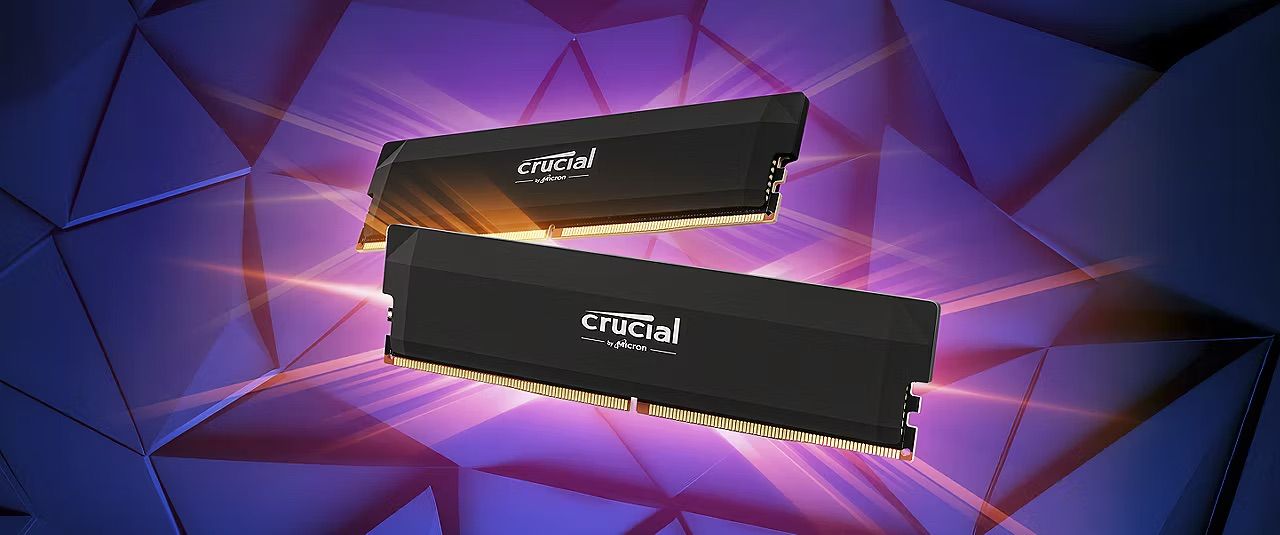
If you've built a PC in the last decade, you've probably used Crucial memory. The budget-friendly RAM and SSD brand has been a staple for PC builders and hobbyists since 1996, offering reliable components without the flashy RGB premiums. But that era is ending - and the reason says everything about where the tech industry's priorities are shifting.
Micron Technology, which owns Crucial, announced this week that it's making the "difficult decision to exit the Crucial consumer business." The company will continue shipping products through February 2026, then the brand disappears for good. According to Micron's official statement, this move will "improve supply and support for our larger, strategic customers in faster-growing segments."
Translation: AI companies are offering way more money for memory chips than PC builders can pay, and Micron is following the cash.
The AI gold rush is reshaping hardware markets
This isn't just about one brand shutting down. It's about a fundamental shift in how memory manufacturers allocate their production. Micron is one of the "big three" memory chip makers alongside Samsung and SK hynix, reportedly controlling about a quarter of the global memory and flash market. When they decide to redirect their output from consumer products to enterprise AI customers, it creates ripple effects across the entire industry.
The numbers tell the story. According to industry tracking, the average price for two 8GB sticks of DDR4-3200 RAM jumped from $40-50 in June to $110 by December. Solid-state drives saw similar increases, with 1TB M.2 models climbing from around $100 to $125. These aren't minor fluctuations, they're the kind of price spikes that change what's possible for budget PC builds.
What's driving this? AI and machine learning workloads absolutely devour memory. Large language models, training datasets, and inference operations need massive amounts of high-bandwidth memory running as close to processing chips as possible. Companies like OpenAI, Microsoft, Google, and countless AI startups are scrambling to secure memory supplies, offering prices that make consumer sales look like pocket change by comparison.
The collateral damage for PC enthusiasts
For PC builders, the Crucial shutdown represents more than just losing a familiar brand. It means one less competitor in an already concentrated market, potentially intensifying the global memory shortage that's already driving up prices. When you combine this with the ongoing GPU shortages linked to cryptocurrency mining (remember that mess?), it creates a perfect storm for anyone trying to build or upgrade a computer.
The timing couldn't be worse. We're in an era where PC gaming is more popular than ever, remote work has made home computing essential, and creative professionals need more powerful systems. Yet the components they need are being redirected to data centers running AI models.
Micron says it will continue warranty service and support for existing Crucial products, and the company will keep selling Micron-branded enterprise products to commercial customers. But for the DIY community that relied on Crucial's affordable, no-frills approach to memory, this is a significant blow.
How long will this last?
Industry analysts aren't optimistic about a quick resolution. SK hynix, which controls about one-third of the global memory market, reportedly expects the memory shortage to last through the last quarter of 2027 - that's two more years of constrained supply and elevated prices.
Here's the frustrating part: even if the current AI bubble eventually pops, the damage to consumer memory markets might be permanent. Manufacturers are retooling their production lines for high-bandwidth memory optimized for AI workloads, not the plug-in modules that go into consumer PCs. The new capacity being built is specifically designed to run alongside AI processing chips, not to be sold as standalone RAM sticks.
So what does this mean if you're planning a PC build? If you have the budget, buying memory sooner rather than later might be wise. Prices are likely to continue climbing as supply tightens further. And while other brands like Corsair, G.Skill, and Kingston will still be around, they'll be operating in a market where the fundamental economics have shifted against consumer interests.
The Crucial shutdown is a symptom of a larger transformation happening across the tech industry. As AI becomes the dominant driver of hardware innovation and investment, consumer products are increasingly becoming an afterthought. For decades, PC enthusiasts benefited from the trickle-down effects of enterprise technology. Now, they're experiencing the squeeze as that flow reverses direction.
It's a reminder that in technology, as in everything else, money talks. And right now, AI companies are shouting the loudest.