
Nearly a decade after the original AirPods launched, Apple is finally letting users manually tune how they sound. At WWDC 2026, the company announced a custom EQ is coming to its latest AirPods lineup as part of iOS 27, iPadOS 27, and macOS 27 this fall. The real strategic play, though, sits one bullet point below that headline: AirPods Pro 3 users will soon sync heart rate data through iPhone to gym equipment via GymKit, a feature that reveals how Apple is positioning its earbuds as the middle rung of a three-tier fitness ladder.
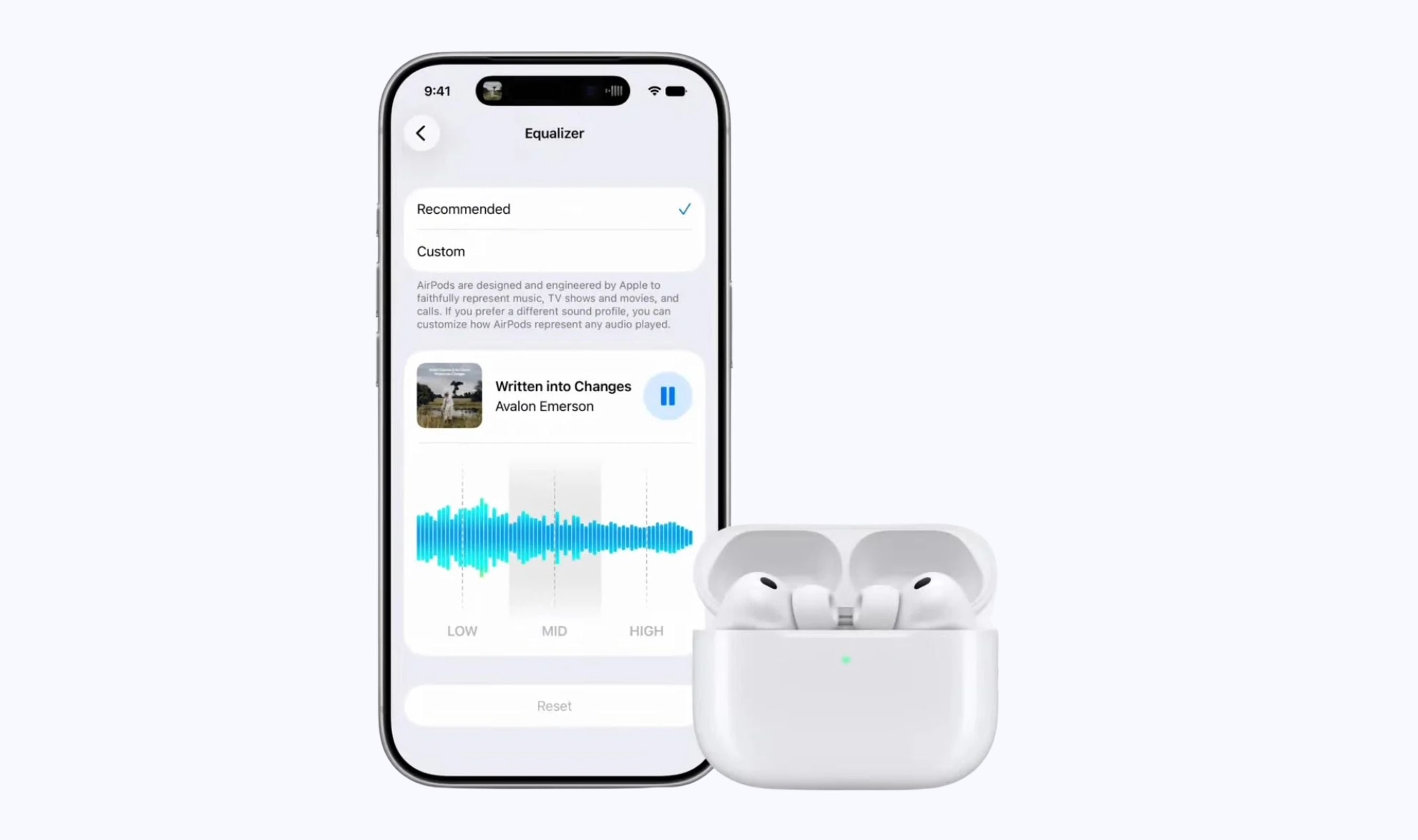
Custom EQ: What took so long? AirPods have long relied on Apple's Adaptive EQ to optimize sound automatically. That left users who wanted to boost bass or cut treble with no manual option, a gap competitors like Sony (10-band EQ on the WH-1000XM6) and Bose (added in 2020) filled years ago. The custom EQ arriving this fall will be a 3-band equalizer (low, mid, high) accessible directly from AirPods Settings, complete with an interactive preview so you hear changes live as a song plays. Apple says users can smooth toggle between their custom profile and the default tuning. The catch: only AirPods powered by the H2 chip, AirPods Pro 3, AirPods Max 2, and AirPods 4, will support it. That leaves AirPods Pro 2 and original AirPods Max owners out.
It remains unclear whether Beats' Powerbeats Pro 2, which also uses the H2 chip, will get the feature.
Heart rate sync and the fitness ladder The more consequential addition is GymKit heart rate sync for AirPods Pro 3. Users will pair their iPhone with compatible cardio equipment from manufacturers including Johnson, Life Fitness, Precor, Schwinn, Technogym, and Woodway, and their earbuds' heart rate data flows straight into the machine.
Apple executives Julz Arney (Senior Director of Fitness Technologies) and Eric Charles (Senior Manager of Apple Watch Worldwide Product Marketing) told GoriMe the heart rate sensor fills a deliberate gap. iPhone handles basic activity tracking.
Apple Watch handles advanced metrics across 80-plus workout types. AirPods Pro 3 sits in the middle: real-time heart rate and calorie tracking across 50 workout types, with up to 6.5 hours of playback with the sensor active.
"Both devices use the same PPG technology, so the readings are equivalent," Charles said, referring to the light-based heart rate tech shared between AirPods Pro 3 and Apple Watch. If you wear both at once, the iPhone picks whichever stream gives cleaner data, and since your head is more stable than your wrist during exercise, the AirPods can sometimes win. The sensor pulses light into your ear 256 times per second. Apple redesigned the ear tips with five sizes (including XXS) and foam-infused silicone specifically to lock the seal during workouts. The result is IP57 dust and sweat resistance and what the company calls "the most stable, best-fitting AirPods Pro yet."
AirPods Pro 3 launched September 19 at roughly $265. Custom EQ and GymKit heart rate sync arrive with iOS 27 this fall.