
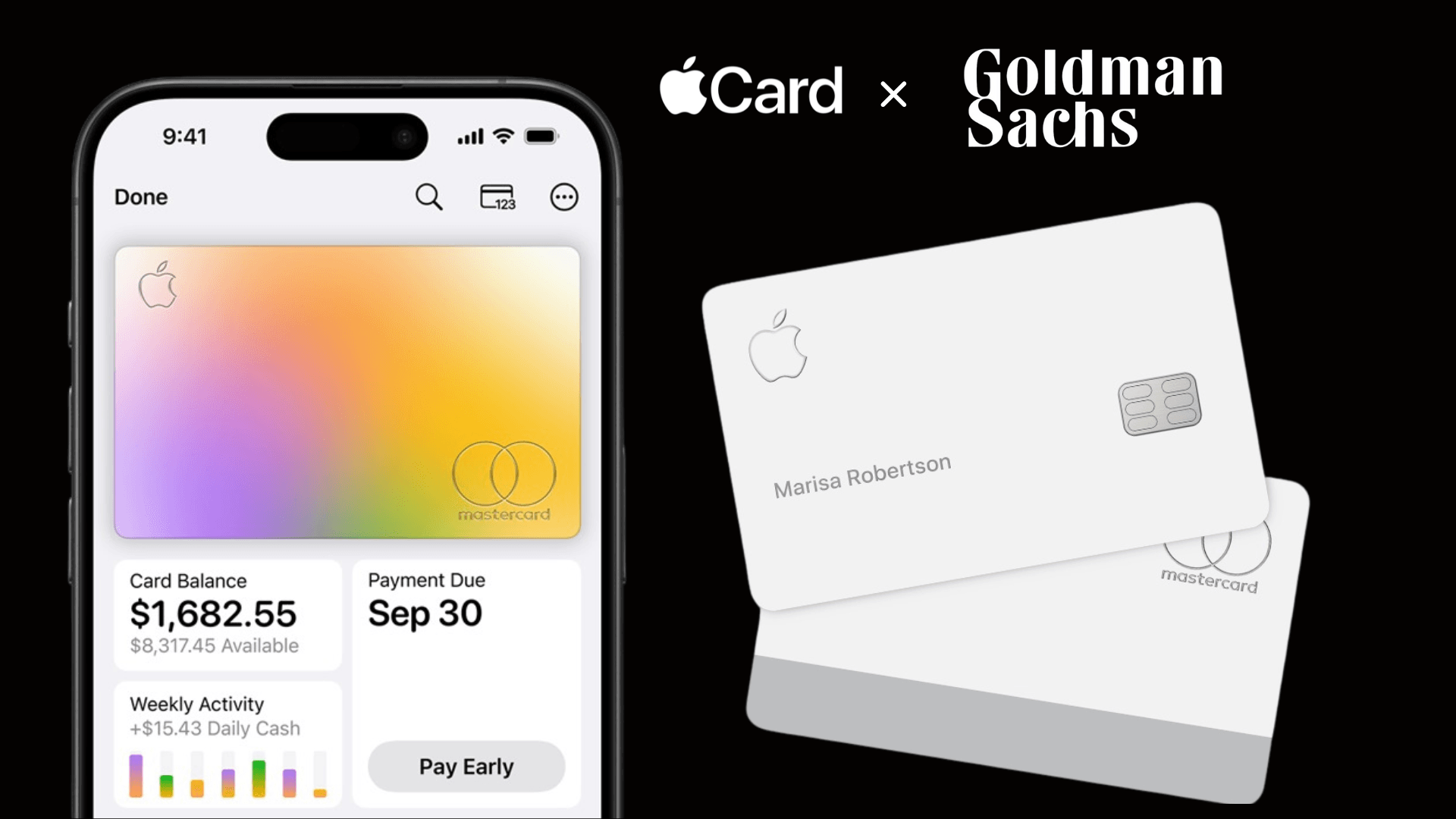
Apple's credit card partnership with Goldman Sachs appears headed for dissolution in 2026, with JPMorgan Chase emerging as the leading candidate to take over the $20 billion portfolio. The six-year partnership has cost Goldman Sachs at least $1 billion in losses, prompting the investment bank to seek an early exit from its 2030 contract.
Goldman Sachs CEO David Solomon signaled the potential early termination during a January 2025 earnings call, stating the Apple Card dragged down the bank's return on equity by 75 to 100 basis points last year. "We have a contract with Apple to run that partnership until 2030, although there's some possibility that it won't continue until that time frame," Solomon told analysts.
JPMorgan Chase entered advanced negotiations with Apple in July 2025, according to The Wall Street Journal, with talks accelerating in recent months. The banking giant would replace Goldman Sachs as the financial partner for Apple's credit card program, which currently handles over $20 billion in balances.
The Apple Card's financial challenges stem from its generous terms and high-risk customer base. The card offers no foreign transaction fees, no late fees, no returned payment fees, up to 3% cash back on partner merchants, and 0% APR financing on Apple products. These features have proven unsustainable for traditional banking operations.
Credit quality presents a significant hurdle for any new issuer. Apple Card carries a 34% subprime customer rate, defined as borrowers with credit scores below 660. This compares to Chase's 15% subprime rate and Capital One's 31%. The card also shows a 4% delinquency rate, above the 3.05% industry average.
Regulatory issues have compounded Goldman Sachs' difficulties. In October 2024, the Consumer Financial Protection Bureau fined Apple and Goldman Sachs nearly $90 million combined for mishandling transaction disputes and misleading iPhone users about interest-free payment options.
Other financial institutions have expressed interest in the partnership. Barclays and Synchrony Financial were reportedly in the running, while American Express CEO Stephen Squeri commented in 2023 that co-brand partnerships must "add value to both brands" and "create premium economics." Capital One remains a potential alternative if JPMorgan negotiations falter.
The payment network component may also see changes. Visa has reportedly offered Apple $100 million to replace Mastercard as the network behind Apple Card, with American Express also expressing interest in the payment processing role.
Apple Card Savings Accounts present another complication. The high-yield savings product, also issued by Goldman Sachs, may continue separately from the credit card partnership. JPMorgan Chase does not currently offer high-yield savings accounts, creating uncertainty about the savings product's future.
Industry analysts suggest any new partnership would require Apple to accept less generous terms. Late fees would likely be introduced, and the product's overall generosity would probably decrease under new management. The deal would only proceed if a new lender can acquire the portfolio at a "huge discount," according to 9to5Mac.
Apple launched its titanium credit card in 2019 as part of its expanding financial services strategy. The card remains available only in the United States, with approximately 12 million users and $17 billion in outstanding balances. The partnership shift represents one of the most significant changes to Apple's financial services since the card's debut.
The transition timing remains uncertain, but sources indicate a resolution could come in 2026. Both companies face pressure to finalize arrangements before Goldman Sachs' consumer lending losses, which totaled $6 billion across all products, further impact the bank's financial performance.