

Anthropic released data showing which jobs remain safe from AI automation this week, just as the Pentagon began phasing out its own Claude model from classified military networks. The timing highlights both the company's analytical capabilities and its precarious position in a market where theoretical research meets practical displacement.
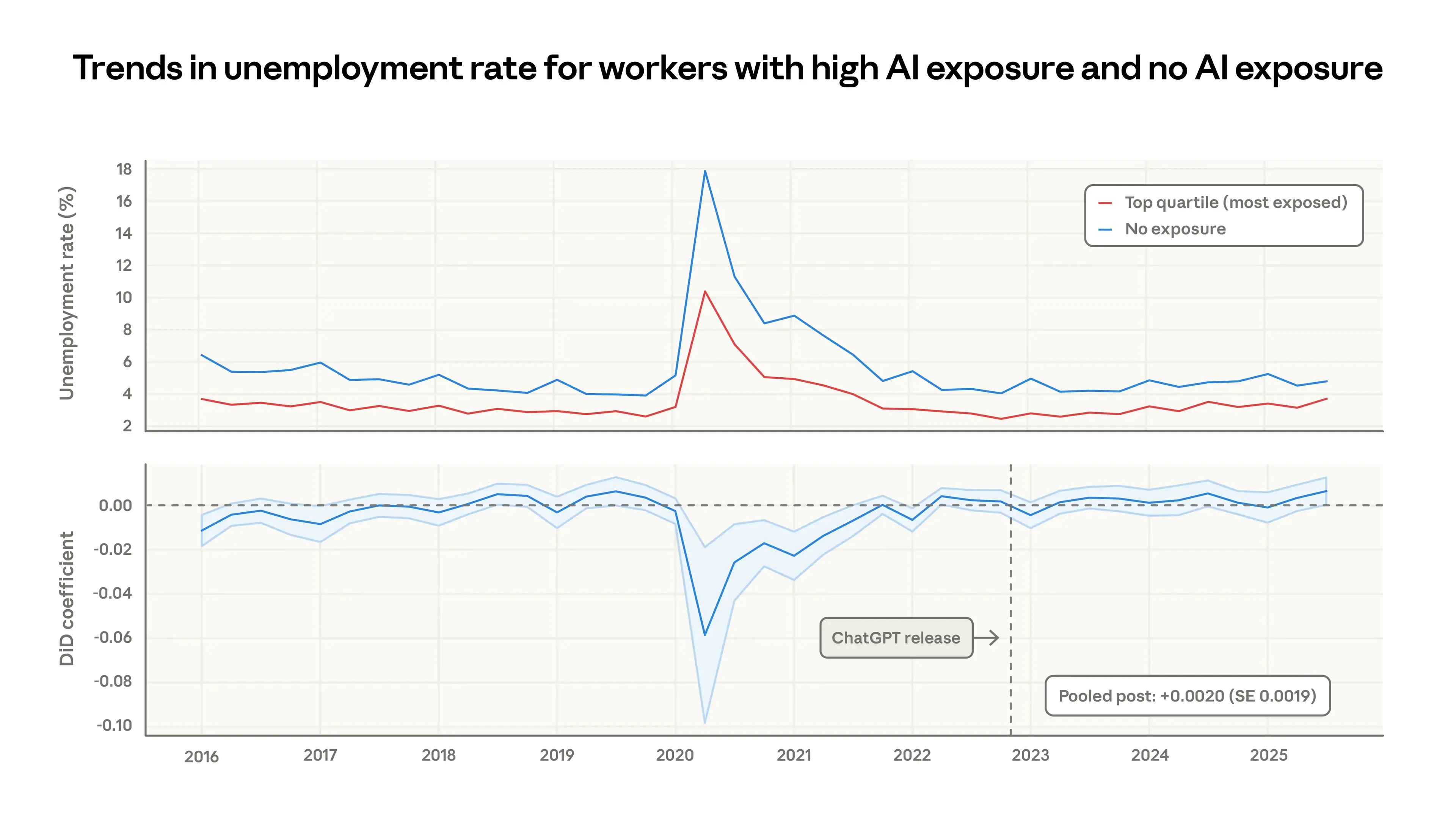
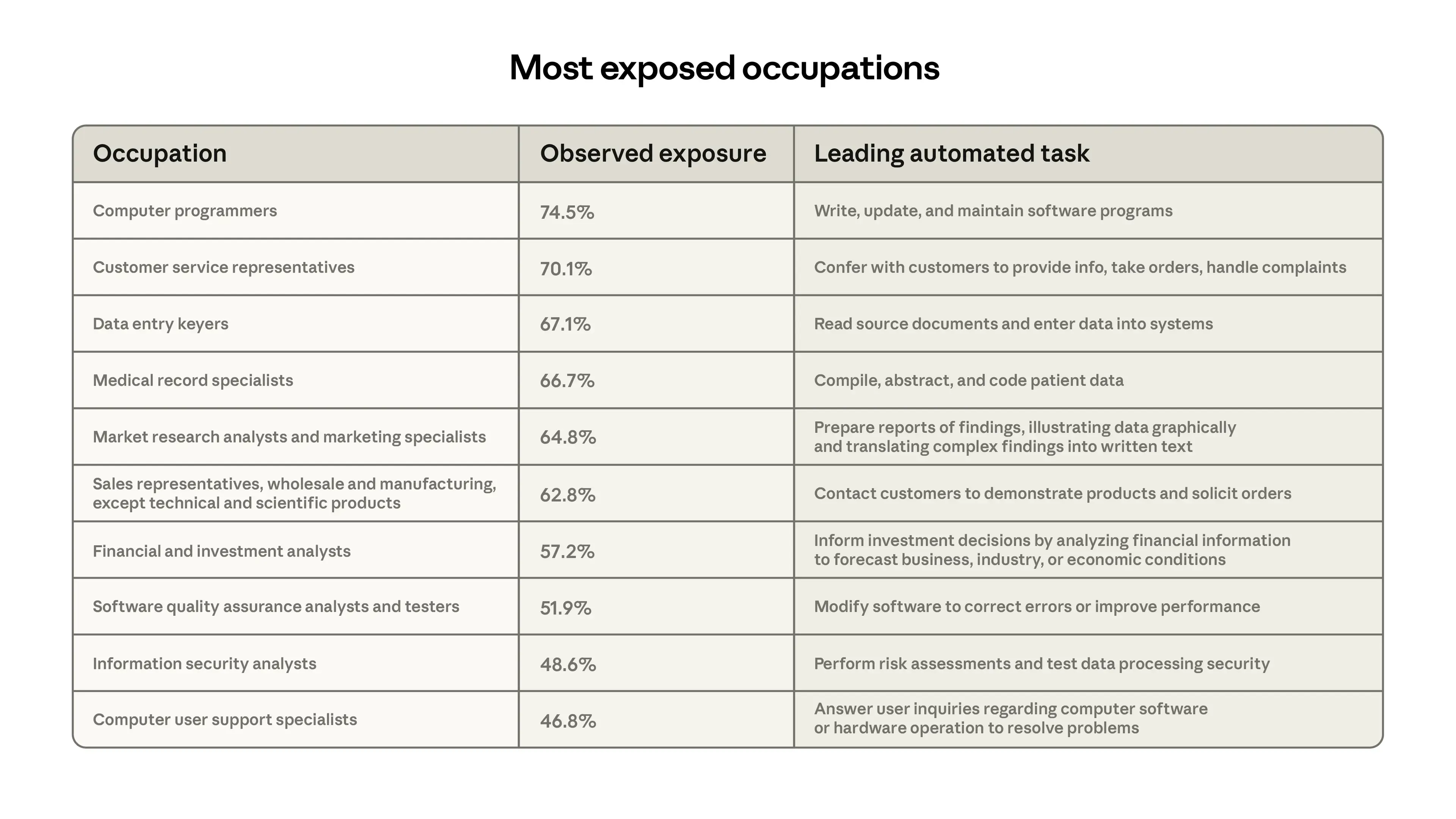
The AI firm published new findings on March 5 introducing an "observed exposure" metric that tracks how Claude actually gets used in workplaces versus what it could theoretically accomplish. Computer programmers face the highest exposure at 75% task coverage, followed by customer service representatives and data-entry workers at 67%. These roles show up consistently in first-party API traffic as companies quietly replace human agents with automated pipelines.
About 30% of U.S. workers score a flat zero on Anthropic's exposure scale, meaning their tasks don't appear in AI usage data at any meaningful level.
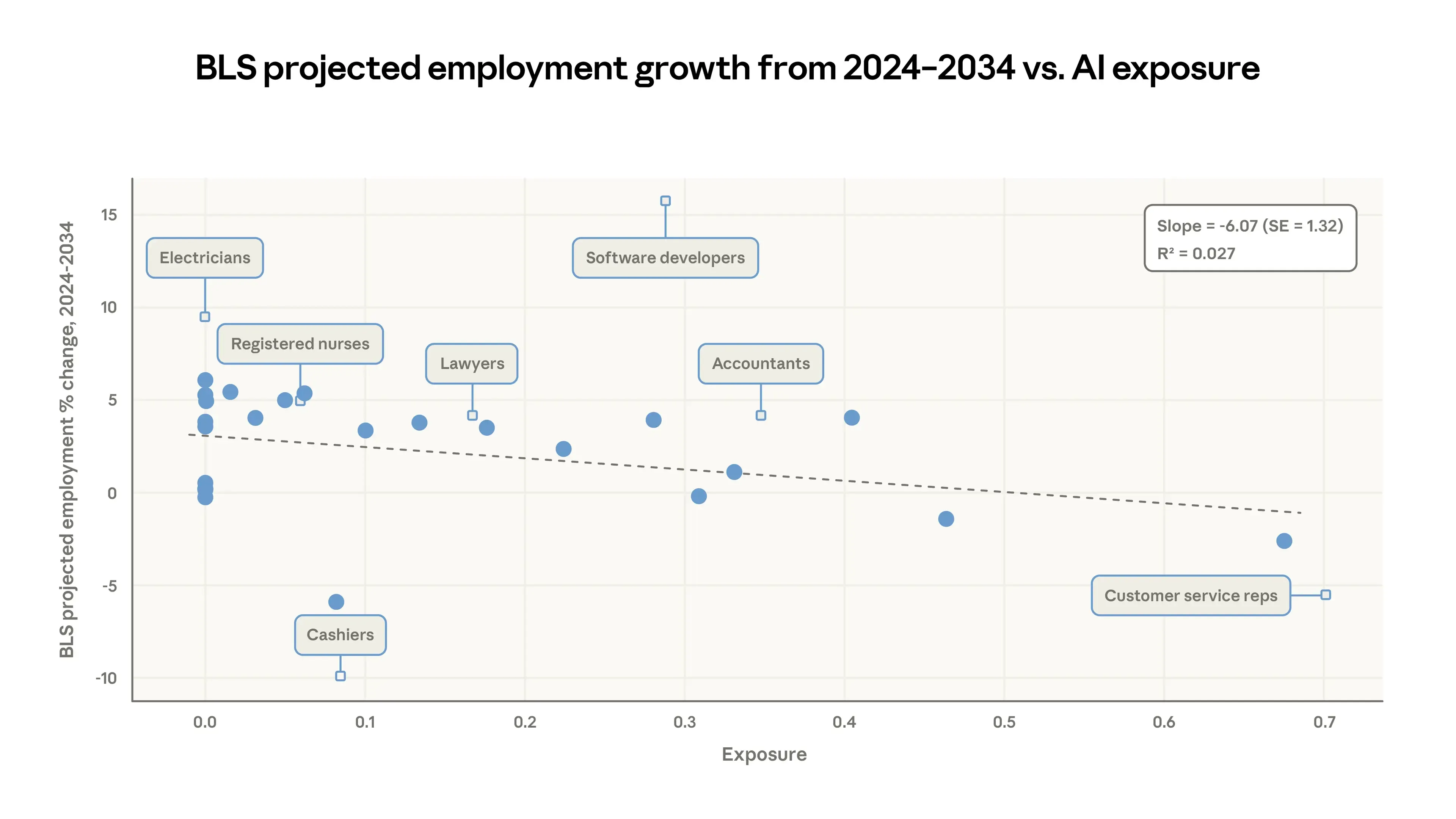
Bureau of Labor Statistics projections through 2034 indicate that for every ten percentage point increase in a job's AI coverage score, projected growth for that role drops by 0.6 percentage points.
While Anthropic analyzes workforce impacts, its own technology faces replacement in one of the world's most sensitive environments. The Department of Defense notified the company last week that it has been deemed a "supply chain risk" and must phase Claude out of classified networks within six months. Within hours of that announcement, OpenAI secured a deal to deploy its models on those same military systems.
The Pentagon dispute centers on Anthropic's safety-first approach versus military demands for unfettered operational control. In late 2024, Anthropic became the first AI company to clear the Pentagon's classified hurdles, but that position now appears temporary as competitors accept less restrictive terms.
Workers in professions most exposed to artificial intelligence tend to be "older, female, more educated and higher-paid," according to the research. This matches previous findings showing women-dominated administrative roles face particular vulnerability to automation pressures.
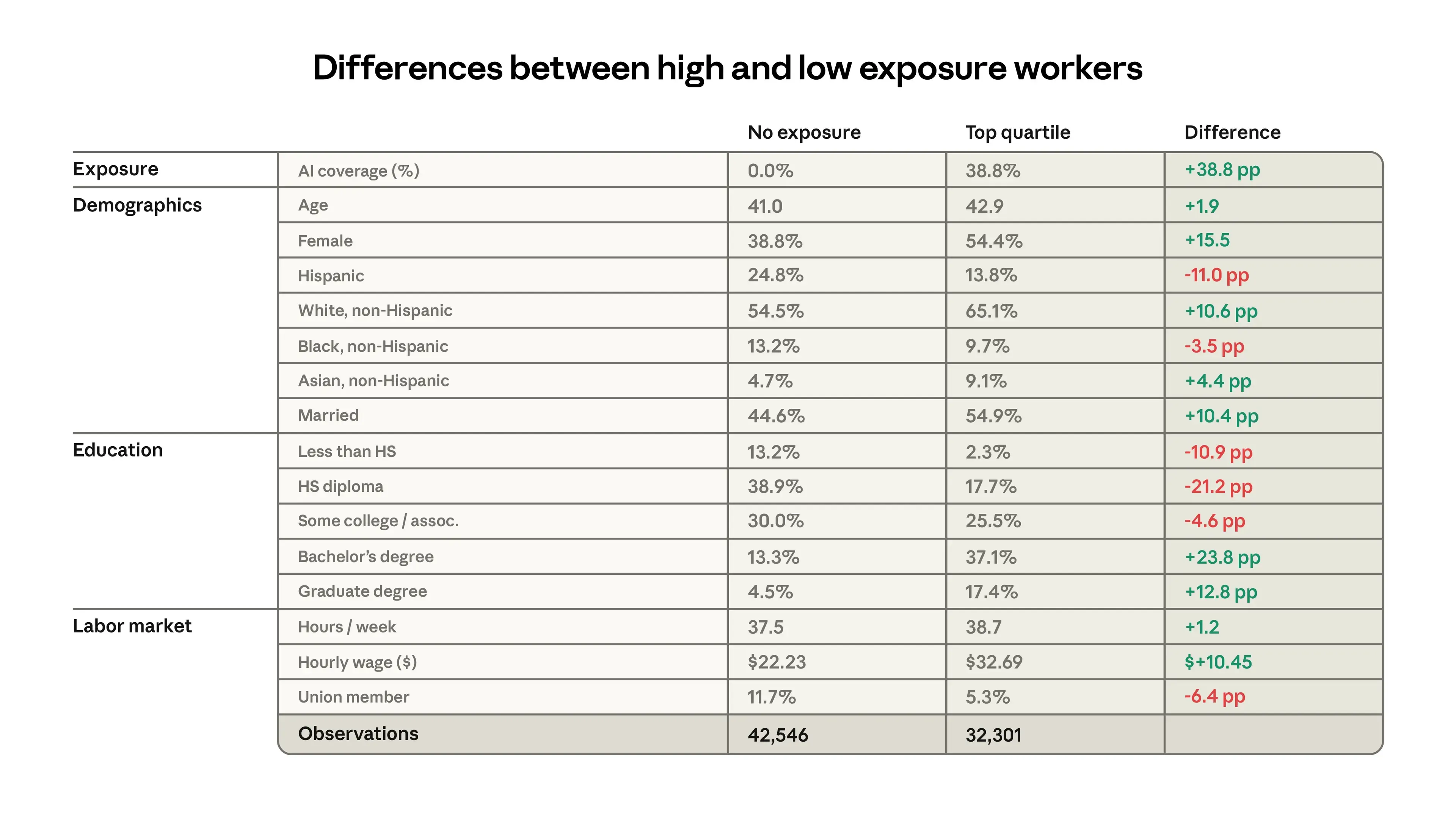
Least exposed occupations typically require physical abilities that current AI cannot replicate effectively. Jobs like groundskeeping, cooking, motorcycle repair and bartending rank among those with minimal automation risk according to Anthropic's methodology.
The company built its exposure index by combining O*NET occupational data covering approximately 800 U.S. professions, Claude's internal usage logs, and academic frameworks measuring whether AI can halve task completion times.