
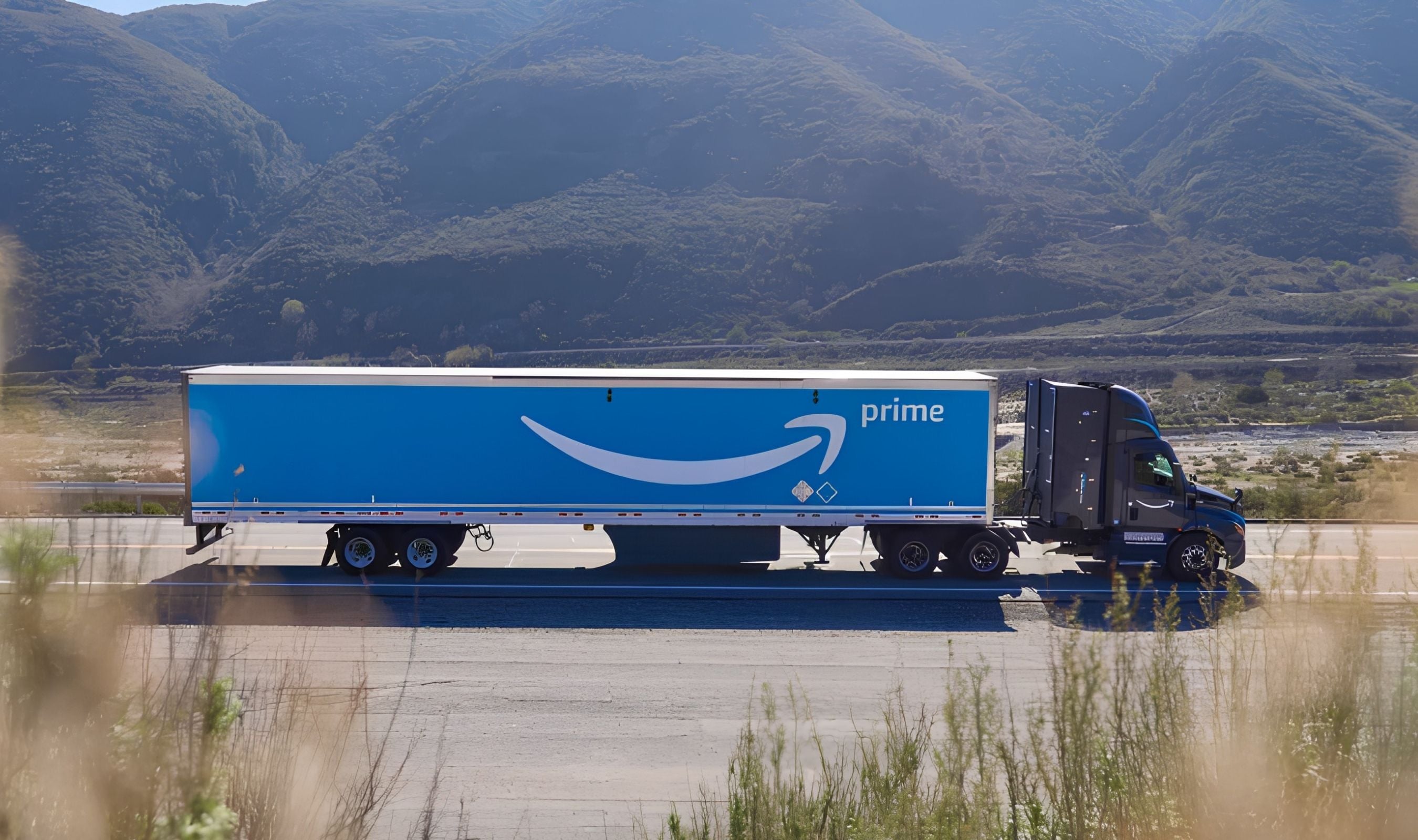
Amazon opened its less-than-truckload shipping network to all businesses on Wednesday, and freight carrier stocks took an immediate hit. Old Dominion Freight Line tumbled 5%, ArcBest sank 4%, and newly public FedEx Freight dropped about 7%, according to CNBC.
Saia and XPO Logistics slid 3% and 5% respectively. The sell-off suggests investors see Amazon as a credible threat to the LTL incumbents. But a closer look at what Amazon is actually doing tells a different story.
Amazon launched its initial LTL offering in April 2025 for shippers who don't need a full trailer, but that service was limited to inbound deliveries to Amazon facilities. Goods would arrive on pallets, get broken apart, and ship individually through Amazon's parcel network. The company has offered limited LTL capacity since 2019, per FreightWaves.
The new expansion changes the model. Businesses can now ship one to six pallets (150 to 15,000 pounds) to any destination in the U.S. not just Amazon warehouses, as part of the company's Amazon Supply Chain Services program.
Features include next-day live pickup for orders placed by 5 p.m. same-day drop-trailer pickup, and standing daily pickups for high-volume shippers.
Amazon touts a fleet of 80,000 trailers and 24,000 intermodal containers. LTL shippers get real-time GPS tracking, automated appointment scheduling, and electronic proof-of-delivery.
But Satish Jindel, president of ShipMatrix, told FreightWaves that Amazon is operating as a freight broker, not an asset-based carrier. "They don't have drivers.
They don't have trucks. They don't have terminals to sort and load and deliver and pickup," Jindel said.
"They are looking to use their relationship as a large LTL inbound customer to offer lower rates for pickup and delivery of shipments that don't touch an Amazon facility." That positions Amazon against brokers like C.H. Robinson and Echo Global Logistics, not against carriers like Old Dominion or FedEx Freight.
Amazon disputes that characterization. The company says it owns the assets behind the service, pointing to a network of more than 80,000 trailers and 24,000 intermodal containers used to operate its LTL offering. "We built an asset-backed LTL service that closes that gap: flexible same-day and next-day pickup, real-time shipment tracking from dock to door, and dedicated LTL-trained drivers," said Jim Ruiz, director of Amazon Freight. "Tens of thousands of selling partners have used this service since 2019. Now it's open for all businesses."
TD Cowen analyst Jason Seidl said in a research note that Amazon's service skews toward economy lanes with three-to-four-day delivery windows, relying heavily on intermodal transport. As of the first quarter of 2025, Amazon had about 74 cross-dock facilities, far fewer than what a traditional LTL carrier operates.
Seidl wrote that Amazon's expansion "could take share from LTLs on the margins without driving en-masse share exodus."
Morgan Stanley equity analyst Ravi Shanker struck a similar tone. "While LTL likely represents only a small component of Amazon's overall logistics footprint, we reiterate that Amazon has repeatedly demonstrated an ability to gain traction in transportation markets through a flexible and iterative operating model," Shanker wrote.
Ruiz said the expansion came in response to demand from Amazon selling partners. "The feedback from Amazon selling partners using our LTL service was clear: the technology, visibility, and reliability were exactly what they needed, and they wanted to use it more broadly," Ruiz said in a news release. The expansion follows last month's opening of Amazon's freight, distribution, fulfillment, and parcel shipping services to non-Amazon sellers under the same Supply Chain Services umbrella.
Morgan Stanley reported in a research note earlier this year that Amazon had been approaching shippers to gauge interest in a broader LTL offering. Wednesday's announcement confirms those discussions turned into action.
Update, June 10, 2026: This story has been updated to include Amazon's response, including an on-the-record statement from Amazon Freight director Jim Ruiz and the company's clarification that it owns the trailers and intermodal containers used to operate its LTL service.