
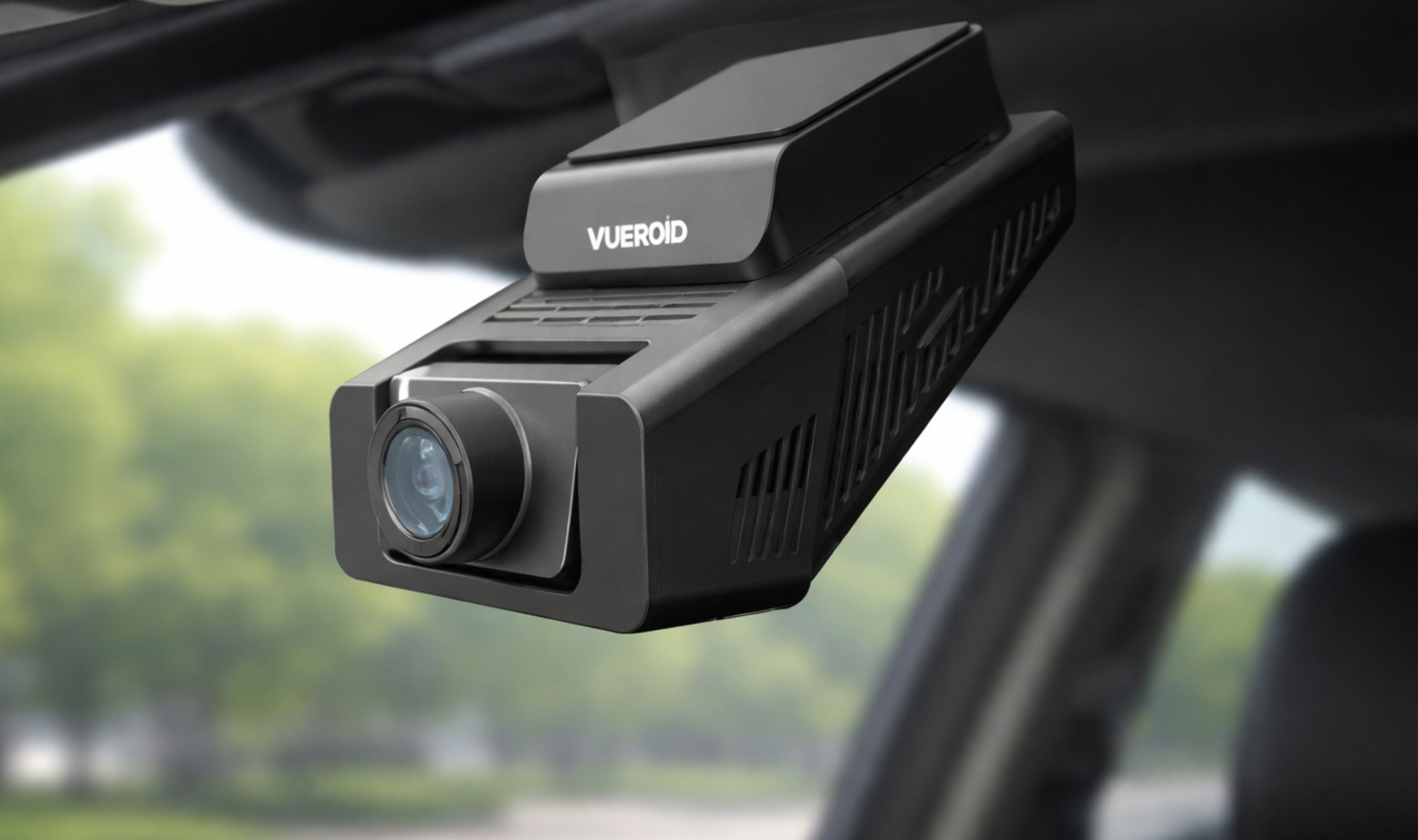
Most dash cams promise 4K and deliver something closer to an upscaled 1080p blur. The Vueroid S1 4K Infinite is not one of those cameras. After running the 2-channel system for three weeks across day drives, night commutes, and parked overnight sessions, the footage from this thing is genuinely a cut above what I'm used to seeing. License plates are readable at real-world distances. Nighttime detail holds up better than anything else I've tested recently. The Sony STARVIS 2 sensors paired with Vueroid's proprietary image processing produce results that justify the premium label on the box.
Technobezz is supported by its audience. We may get a commission from retail offers. Reviews ethics statement.
Vueroid S1 4K Infinite Review: This Is What Premium Dash Cam Footage Actually Looks Like
The Vueroid S1 4K Infinite 2-channel dash cam combines Sony STARVIS 2 sensors, 4K front and 2.5K rear recording, Infinite Plate Capture mode, and one of the fastest parking mode wake-ups in the…
Updated April 8, 2026Apr 8, 2026
•11 min read

Credit: Technobezz
Get Deals Like These in Your Inbox
The best prices, reviewed weekly.
In This Review
8.5/ 10
Best for Commuters, road trippers, and security-conscious drivers who want the best possible video quality, reliable parking mode, and a dash cam built to handle extreme heat without missing critical footage
Vueroid S1 4K Infinite 2-Channel Dash Cam
Front Camera SensorSony STARVIS 2 IMX678
Front Resolution4K UHD (3840 x 2160) @ 30fps (max 60fps)
Rear Camera SensorSony STARVIS 2 IMX675
Rear Resolution2.5K QHD (2560 x 1440) @ 30fps
Front FOV151 degrees
Rear FOV160 degrees
But getting to that point wasn't smooth. The initial setup, WiFi pairing, and app experience were genuinely frustrating, and at $429 for the 2-channel kit with no microSD card included, the price is hard to ignore. The Vueroid S1 4K earns its reputation on video quality and build alone, but it asks you to put in some patience during those first couple of hours.
Vueroid S1 4K Infinite 2-Channel Dash Cam - Best Premium 4K Dual Dash Cam
The Vueroid S1 4K Infinite is a dual-channel dash cam system with a 4K front camera and 2.5K rear camera, both powered by Sony STARVIS 2 sensors. It features Vueroid's proprietary Sight Matrix image processing, Infinite Plate Capture mode, HDR recording, 24/7 parking mode with Durashift heat management, GPS-based geofencing, and AI-assisted license plate restoration. Available in 1-channel, 2-channel, and 3-channel configurations.
Prime Day deal: For Prime Day, June 23 to 26, 2026, the S1 4K Infinite is up to 20 percent off on Amazon. VUEROID is also running a Family Pack Bundle (the S1 4K and S1 QHD plus 128GB and 256GB cards) at 25 percent off, $623.99 down from $839.96.
Key Highlights
- 4K front camera (3840x2160) at 30fps, with optional 60fps mode
- 2.5K rear camera (2560x1440) at 30fps with 160-degree field of view
- Sony STARVIS 2 sensors (IMX678 front, IMX675 rear) for superior low-light performance
- Vueroid Sight Matrix proprietary ISP tuning developed over 30 years of expertise
- Infinite Plate Capture (IPC) mode for enhanced license plate readability
- HDR recording with clean dynamic range and no ghosting
- Durashift Parking Mode with extreme low-power draw (~1mA) and sub-1-second wake-up
- GPS geofencing auto-disables parking mode at home to prevent battery drain
- 5GHz WiFi for fast footage transfer to the Vueroid Hub app
- AI License Plate Restoration and privacy blurring via app or PC viewer
- Hardwire cable included for 24/7 parking mode out of the box
- CPL filter included to reduce windshield glare
Pros
- Video quality is outstanding, especially in low light and mixed conditions
- License plates are consistently readable at practical distances during day and night
- Build quality feels premium with tight tolerances and durable materials
- Parking mode wake-up is incredibly fast, recording within about one second of impact
- Geofencing for automatic parking mode control is a smart, practical feature
- Durashift heat management keeps the camera operational in extreme temperatures
- Hardwire cable and CPL filter included in the box saves additional purchases
- OTA firmware updates through the app keep improving the experience
- TFF file system handles power loss without corrupting footage
- Front camera's 151-degree field of view captures a wide, detailed scene
Cons
- Initial setup and WiFi pairing were frustrating with connection difficulties
- The Vueroid Hub app needs polish, and WiFi tends to disconnect when the app is backgrounded
- No microSD card included at this price point, which feels like an oversight
- At $429 for the 2-channel system, it's one of the more expensive options in this class
- 60fps mode disables HDR and IPC, and drops rear camera to 15fps
Who It's For
Commuters, road trippers, rideshare drivers, and anyone who takes dash cam footage seriously as a form of protection. If you've been burned by a cheap dash cam that couldn't capture a readable plate when it mattered, or if you live somewhere with extreme heat and need a camera that won't quit in the summer, the S1 4K Infinite is built for you. It's also a strong pick for people who park in public lots overnight and want reliable, always-on surveillance with minimal battery drain.
Skip if
If you're on a tighter budget and don't need 4K resolution, there are solid 2K options that cost significantly less. If a seamless out-of-box app experience is important to you, the setup friction here might be a dealbreaker.
Design and Build Quality
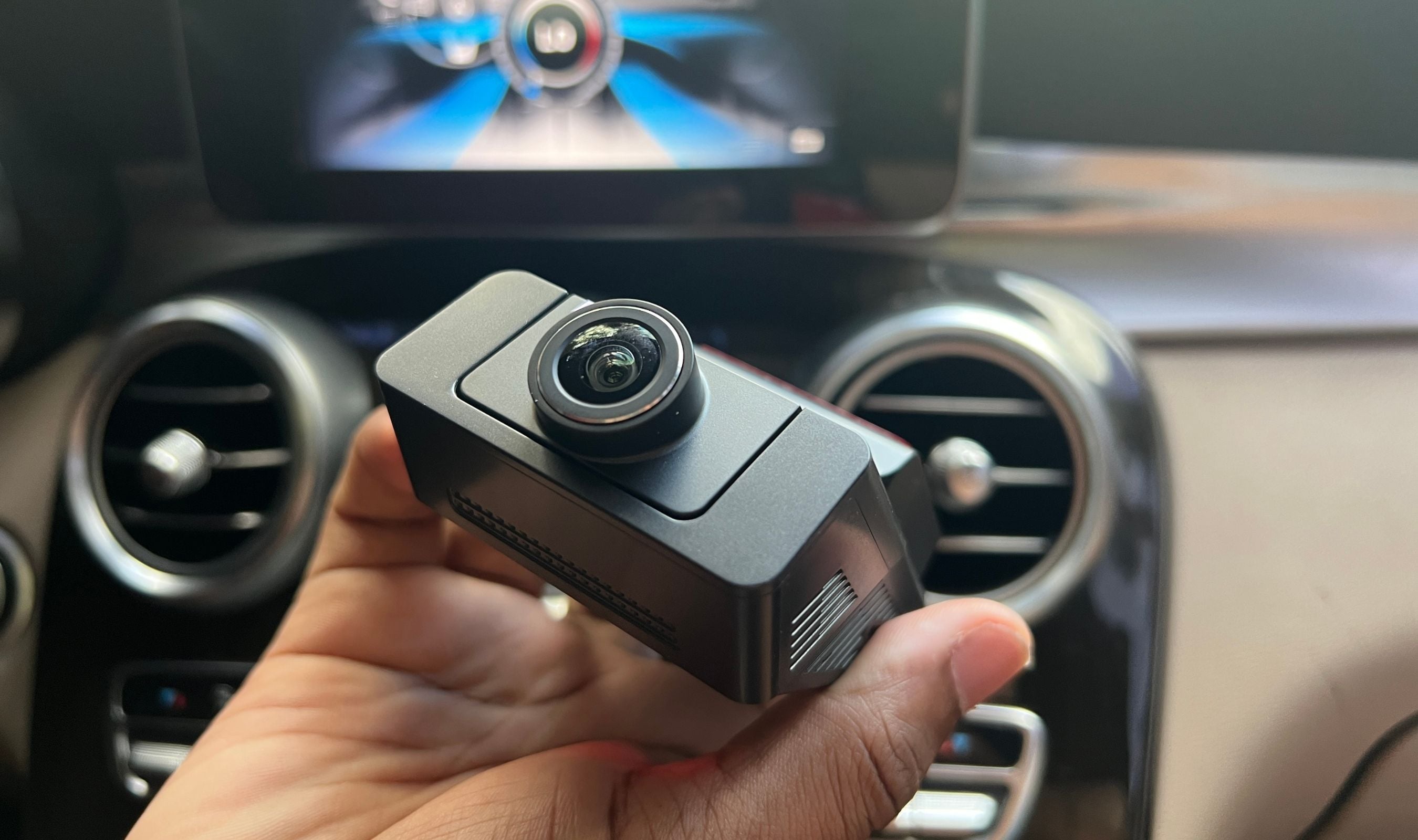
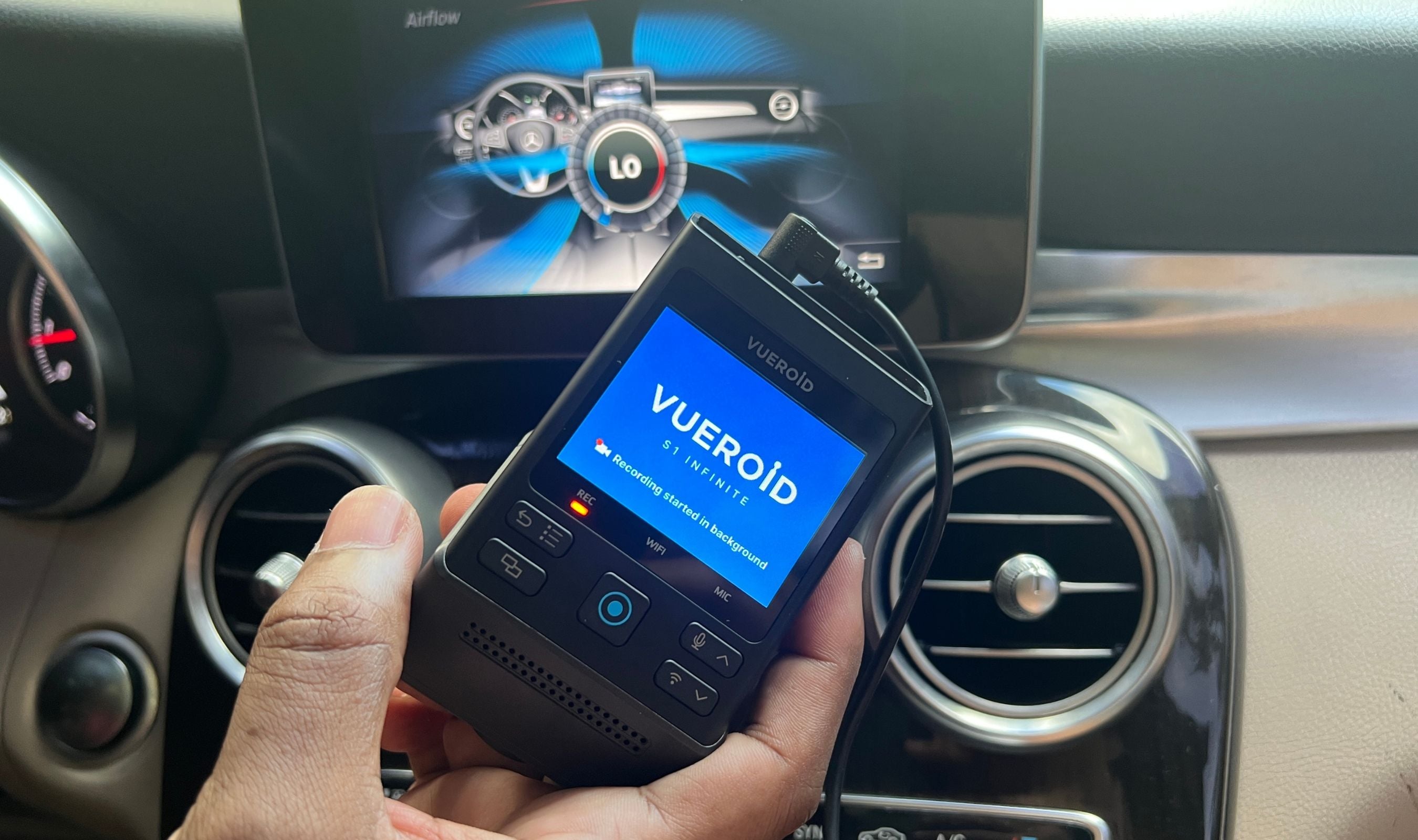
The Vueroid S1 4K communicates quality the moment you pick it up. The materials are solid, the tolerances are tight, and there are no rattling panels or lightweight plastics. The front camera is compact with a 2.3-inch LCD on the back for real-time monitoring and settings navigation. It sits discreetly behind the rearview mirror without blocking significant windshield space.
The mount design is worth mentioning. Unlike many dash cams where the mount stays on the windshield and the camera clips in and out, the S1 4K's adhesive pad is attached directly to the camera body. That means the camera stays more secure during driving, even on rough roads, but removing it temporarily is less convenient. If you plan to swap the camera between vehicles, keep that in mind. For a permanent installation, it's a non-issue.
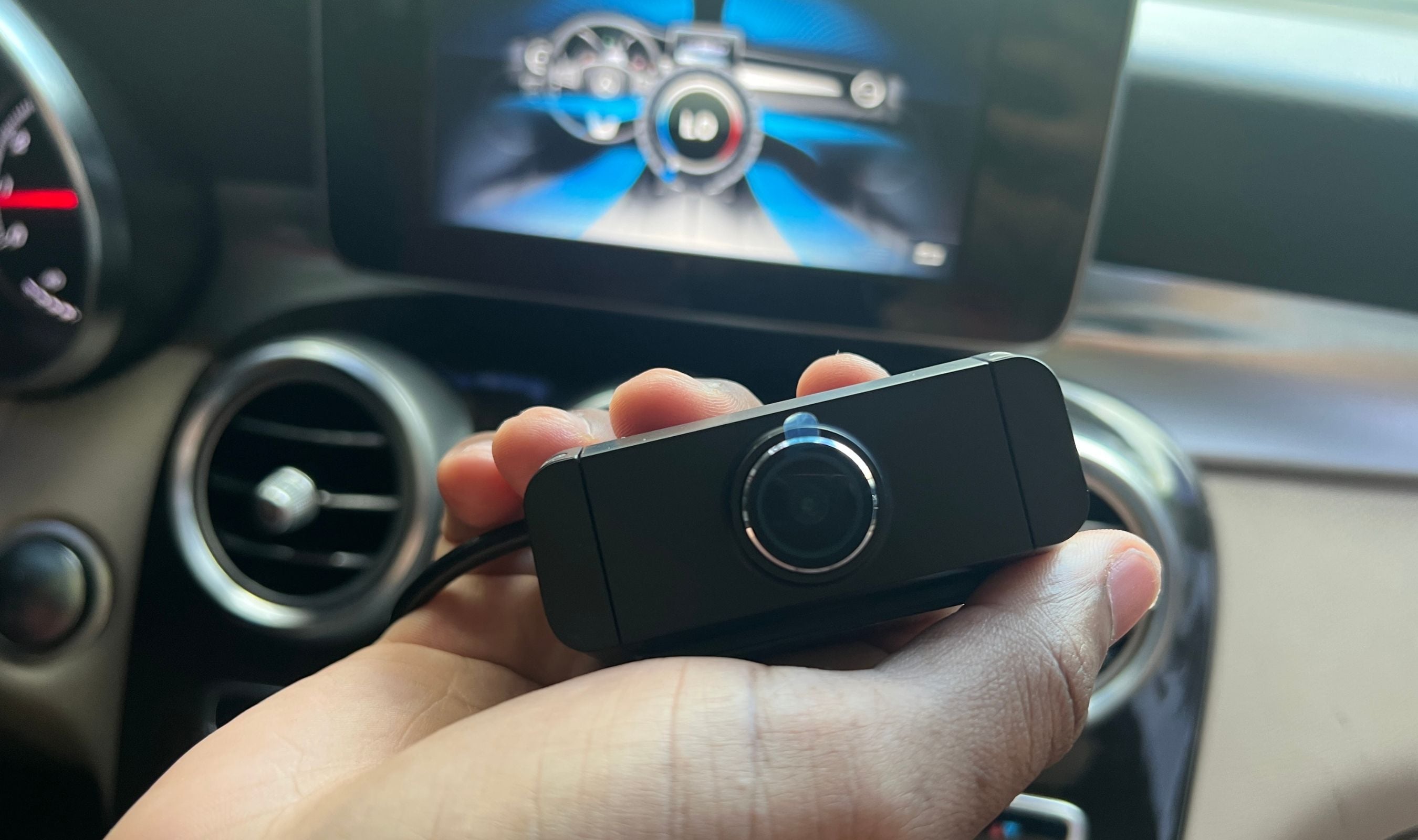
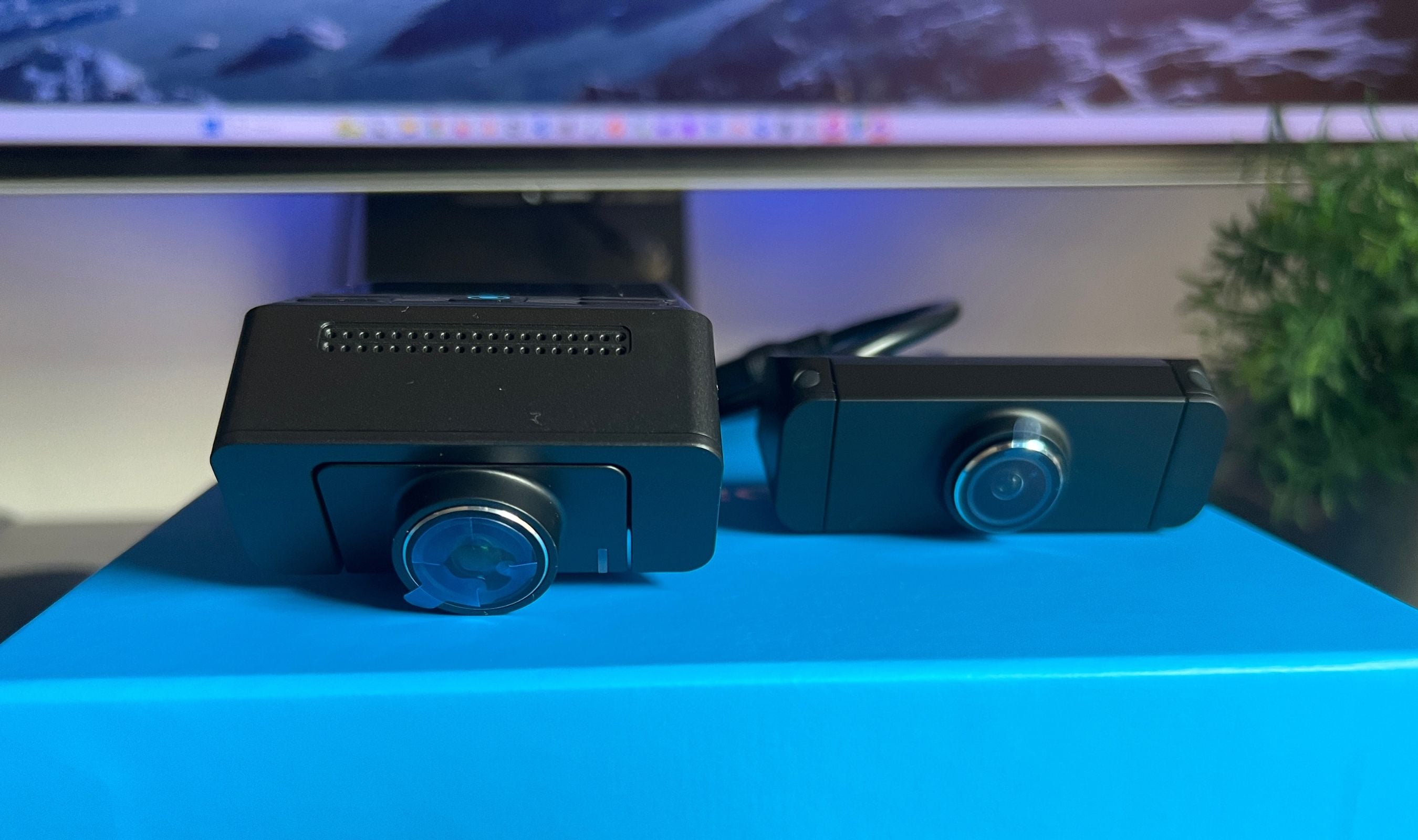
The rear camera is a compact unit with a similar build quality and its own adhesive mount. The included extension cable is long enough to route cleanly from the front of most vehicles to the rear window, and Vueroid also sells a longer 9-meter cable separately for larger vehicles. Both cameras feel built for long-term use in harsh conditions, not like something you'd replace after one summer.
Video Quality
This is where the Vueroid S1 4K separates itself from the pack. The front camera records true 4K at 30fps (with an optional 60fps mode), and the clarity is immediately noticeable compared to other dash cams I've tested. Road signs are sharp. Lane markings are crisp. Vehicle details like make, model, and color are easily identifiable. Most importantly, license plates are readable at practical distances during normal driving conditions.
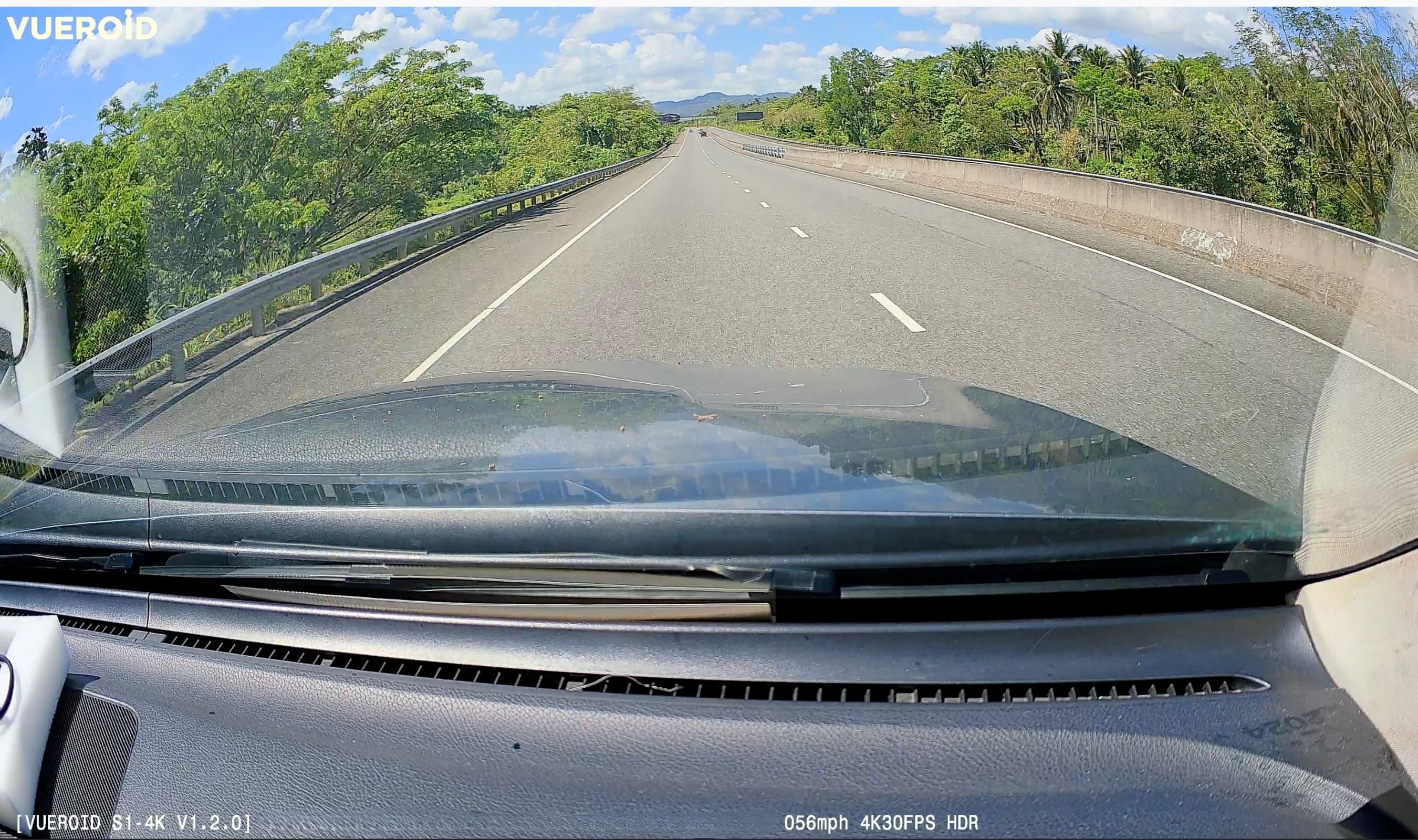
The Sony STARVIS 2 IMX678 sensor does the heavy lifting, but Vueroid's proprietary Sight Matrix image signal processing is what really refines the output. Colors look natural, not oversaturated or washed out. Motion handling is controlled without the oversharpening artifacts that plague some 4K cameras. The footage looks like what your eyes actually see through the windshield, which sounds simple but is surprisingly rare in this category.
The rear camera shoots at 2.5K (2560x1440) with a wider 160-degree field of view, and it holds up impressively well. For incident documentation, the detail is more than sufficient. Plates behind you are readable in good conditions, and the wider angle captures adjacent lanes and approaching vehicles from the sides.
Nighttime performance is where the S1 4K really earns its price tag. The STARVIS 2 sensors manage headlight bloom effectively, retain strong shadow detail, and maintain accurate color even in mixed lighting. Streetlights, headlights, and reflective signs don't blow out the way they do on lesser cameras. License plates remain readable under streetlights and in parking lots. This is footage you can actually use when it matters, not just footage that technically exists.
Infinite Plate Capture and HDR
The Infinite Plate Capture (IPC) mode is a specialized HDR-based feature that adjusts shutter speed, noise reduction, and sharpness specifically to maximize license plate legibility. In practice, it works best during transitional lighting conditions like sunrise and sunset, where standard exposure settings struggle with contrast. During bright daylight, the difference is subtle. In full darkness, IPC automatically defers to standard HDR.
HDR recording is clean with no visible ghosting, and it's worth leaving on full-time for everyday driving. The dynamic range handles tunnels, bridges, and direct sunlight transitions smoothly. One thing to note: running in 60fps mode disables both HDR and IPC, and drops the rear camera to 15fps. For most use cases, 30fps with HDR and IPC enabled is the better configuration.
Parking Mode and Power Management
The parking mode on the S1 4K is among the best I've used. The Durashift system is specifically designed for vehicles that sit in extreme heat. Instead of shutting down entirely when the cabin temperature spikes, the camera enters an extreme low-power mode (drawing roughly 1mA) while staying ready to wake up and start recording within one second of detecting an impact. That response time is on par with Blackvue and faster than most competitors.
You get multiple parking mode options: impact and motion detection, impact and timelapse, and the extreme low-power impact-only mode. The geofencing feature is a particularly smart addition. You set your home location, and the camera automatically disables parking mode when you're in that zone to prevent unnecessary battery drain. When you park at work, a restaurant, or anywhere else, parking mode kicks back in automatically. No manual toggling required.
The hardwire cable is included in the box, which is a genuine value-add since most competitors charge $25 to $35 extra for one. Battery protection features are configurable with voltage cutoff thresholds and parking timers, plus temperature monitoring that gracefully manages overheating without losing footage. The layered approach to power safety shows real engineering maturity.
App and Setup Experience
This is the S1 4K's weakest area, and I want to be straightforward about it. The initial setup was not smooth. Getting the camera paired to WiFi took more attempts than it should have. The Bluetooth pairing worked for initial discovery, but the WiFi handoff was inconsistent, and I ran into connection drops multiple times before things stabilized. If you're someone who expects plug-and-play simplicity, budget some extra patience for the first setup.
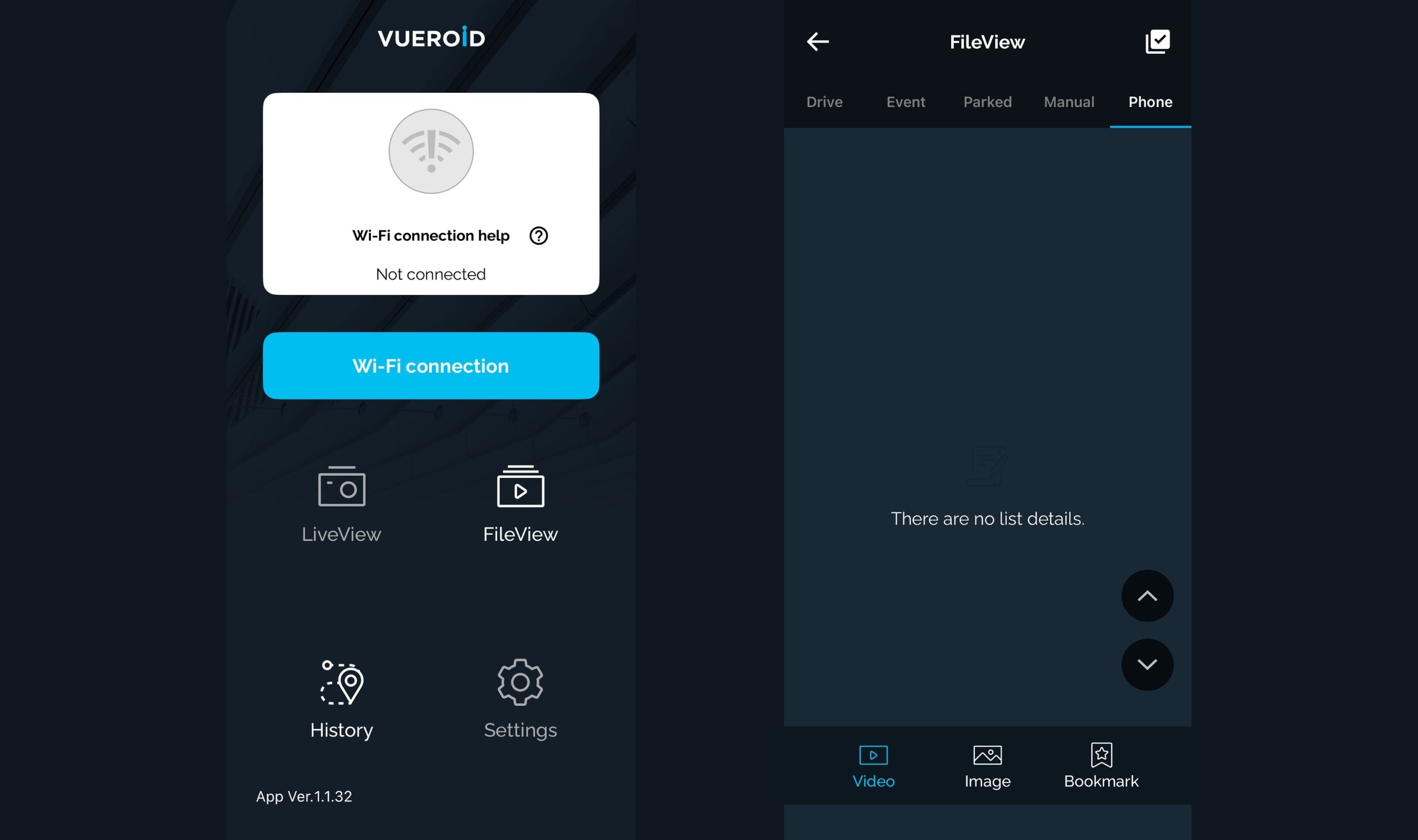
The Vueroid Hub app (not the older Vueroid Dashcam app, make sure you download the right one) is functional once you're connected. File browsing is organized, footage previews load quickly, and video transfers over 5GHz WiFi are fast. You can trim clips, share them directly, and review up to six months of driving history with GPS route data. The OTA firmware update process is smooth and keeps improving the camera over time.
The frustrating part is WiFi stability. The connection tends to drop when you background the app on your phone, which means you sometimes need to reconnect when you come back to it. It's not a dealbreaker since you can always pull the microSD card and transfer files directly, but for a camera at this price, the wireless experience should be more seamless. Vueroid has been actively pushing firmware updates that address these issues, so there's reason to believe it will improve.
AI Features
The S1 4K includes AI License Plate Restoration, which attempts to enhance blurry plates from your footage through the app or PC viewer. In practice, the results are mixed. It works best on plates that are already partially legible and just need a clarity boost. For plates that are genuinely unreadable due to motion blur or distance, don't expect miracles. It's a useful tool to have in your back pocket, but not a reason to buy this camera.
The AI Privacy Protection feature is more consistently useful. It automatically detects and blurs faces and license plates in footage you want to share publicly. If you're posting dashcam clips to social media or submitting footage for insurance that you want to keep other people's plates private, this saves the hassle of manual editing.
This product was provided to Technobezz for review. We independently select what we review. The manufacturer had no input on this article and did not see it before publication. All opinions are our own.
FAQ
Is a microSD card included?
No. The Vueroid S1 4K Infinite does not include a microSD card. Vueroid recommends using 256GB or larger high-endurance cards. It supports up to 512GB.
What's the difference between the 1CH, 2CH, and 3CH versions?
The 1-channel ($349) includes only the front 4K camera. The 2-channel ($429) adds a 2.5K rear camera. The 3-channel ($499) adds an interior 1080p camera with IR night vision. The front camera is identical across all three.
Does it record when the car is off?
Yes, if you use the included hardwire cable to connect it to your vehicle's fuse box. The camera enters parking mode and can record on impact detection, motion detection, or timelapse. The extreme low-power mode draws about 1mA and wakes up within one second of detecting an impact.
Can I use 60fps mode?
Yes, the front camera supports 4K at 60fps. However, enabling 60fps disables HDR and Infinite Plate Capture, and reduces the rear camera to 15fps. For most people, 30fps with HDR enabled produces better overall results.
How does it handle extreme heat?
The Durashift system manages overheating in stages. First, it turns off the LCD. If temperatures continue rising, it enters a temporary low-power shutdown and automatically resumes recording once it cools down. The camera is rated for operating temperatures up to 65 degrees Celsius (149 degrees Fahrenheit).
Which app do I need?
Download the Vueroid Hub app (iOS and Android). There are several Vueroid apps on the store, but Vueroid Hub is the current one for the S1 4K Infinite.
The setup experience and app stability are real weak points that Vueroid needs to address. And the missing microSD card at a $429 price tag is a hard pill to swallow. These aren't small complaints. But once the camera is installed and running, it does exactly what a dash cam is supposed to do: capture clear, reliable evidence every time you drive and every time your car is parked. If you're willing to push through the initial friction, the S1 4K Infinite rewards you with some of the best dash cam footage available right now. For anyone who treats their vehicle's security as a serious investment, this camera makes a strong case for itself.
Share this article
More in News
KTC MEGAPAD 32-inch 4K UHD Smart Portable TV down to $729.99 in latest price cut
KTC's 32-inch 4K touchscreen smart TV drops to $729.99, saving $170 on a versatile rolling display for any room.
4 min read
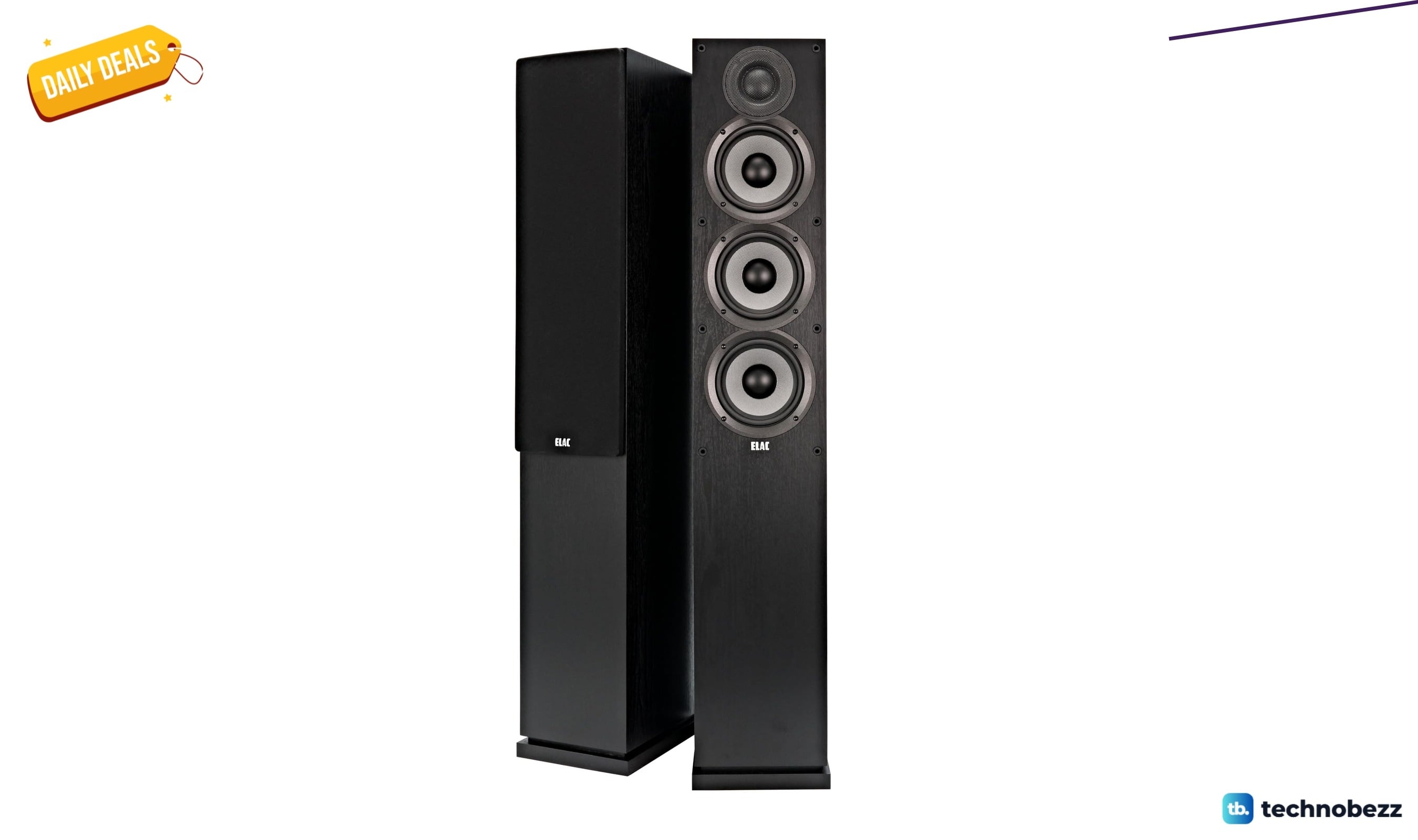
ELAC Debut 2.0 F5.2 Floorstanding Speaker price drops to $319
Get the ELAC Debut 2.0 F5.2 floorstanding speakers for $319, a $130 discount off the list price and one of the lowest recent prices.
3 min read
CiBest 1080P WiFi Bluetooth Projector is $57.99 at Woot
CiBest 1080P WiFi Bluetooth Projector is $57.99 at Woot in new condition, with a $99.99 Woot Reference Price.
5 min read

Auusda Business Computer slips to $315.86
Get the Auusda Business Computer with a 15.6-inch FHD display, backlit keyboard, and fingerprint login for $315.86 21% off at Amazon.
4 min read

Samsung coupon codes and deals
5 min read

Best tech coupon codes and online deals
4 min read
4 headphone deals we verified this week, starting at $35
5 min read
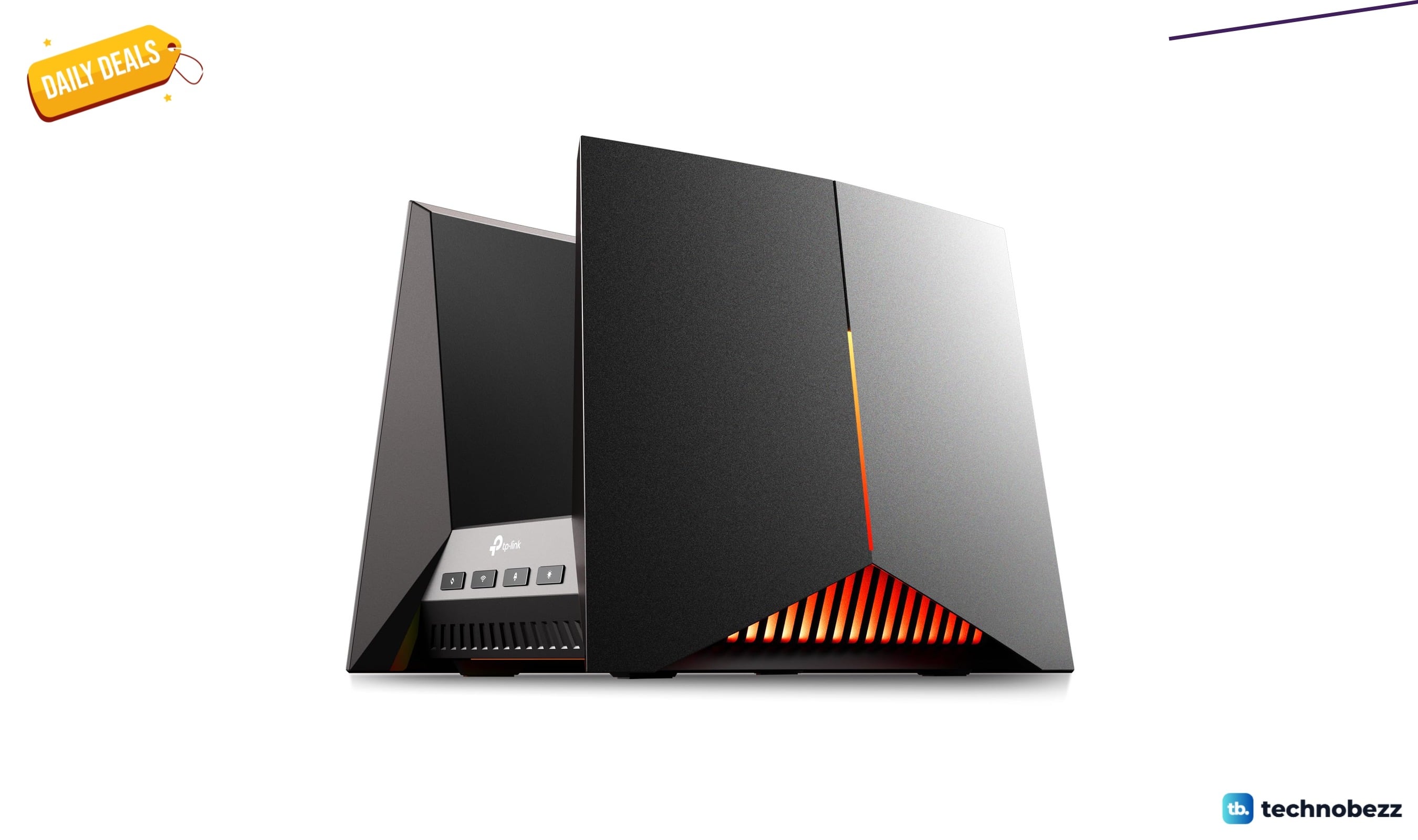
TP-Link Tri-Band BE19000 Wi-Fi 7 Gaming Router drops to $449.99
3 min read
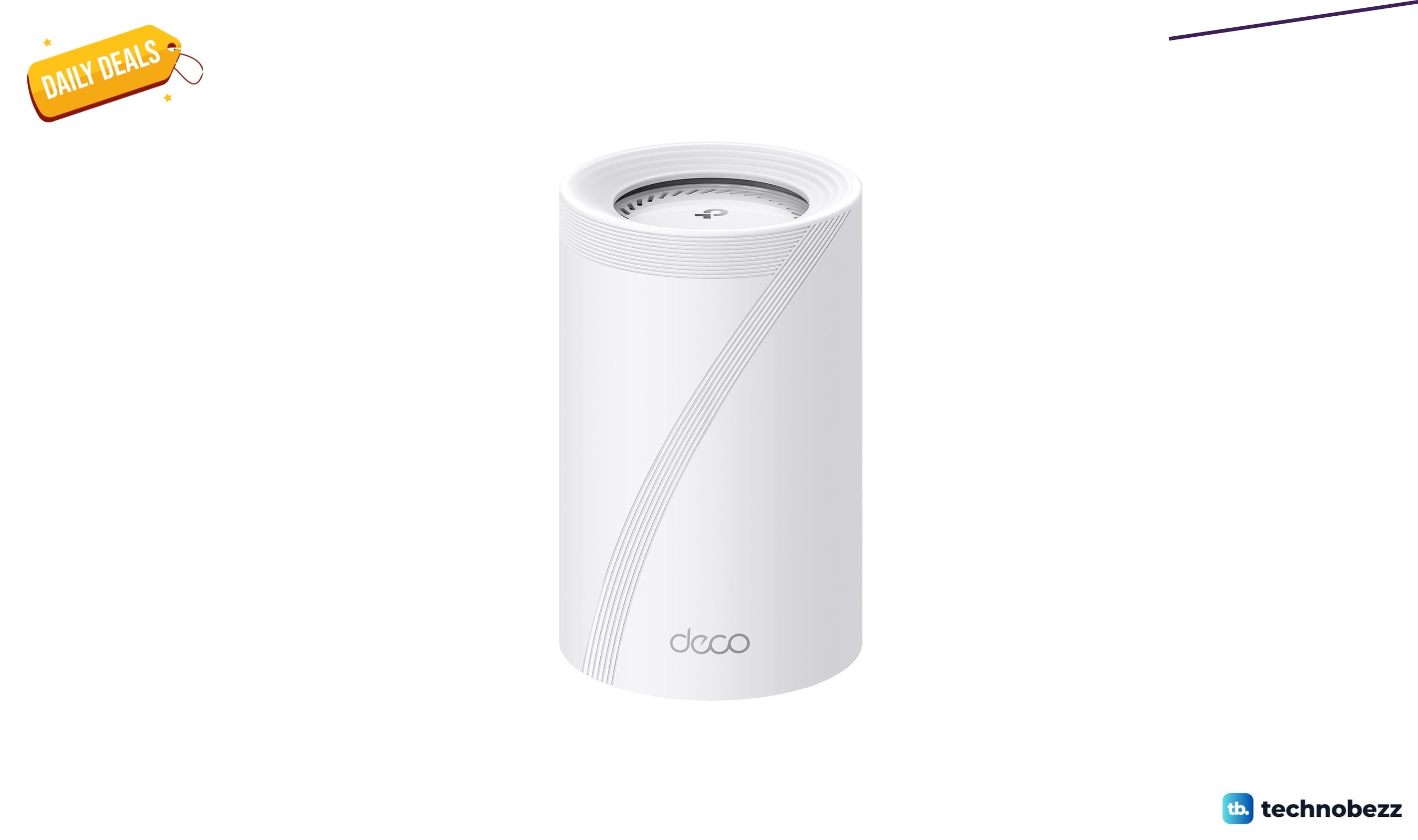
TP-Link Deco 7 Pro BE17000 Tri-Band Wi-Fi sees price cut to $299.98
5 min read
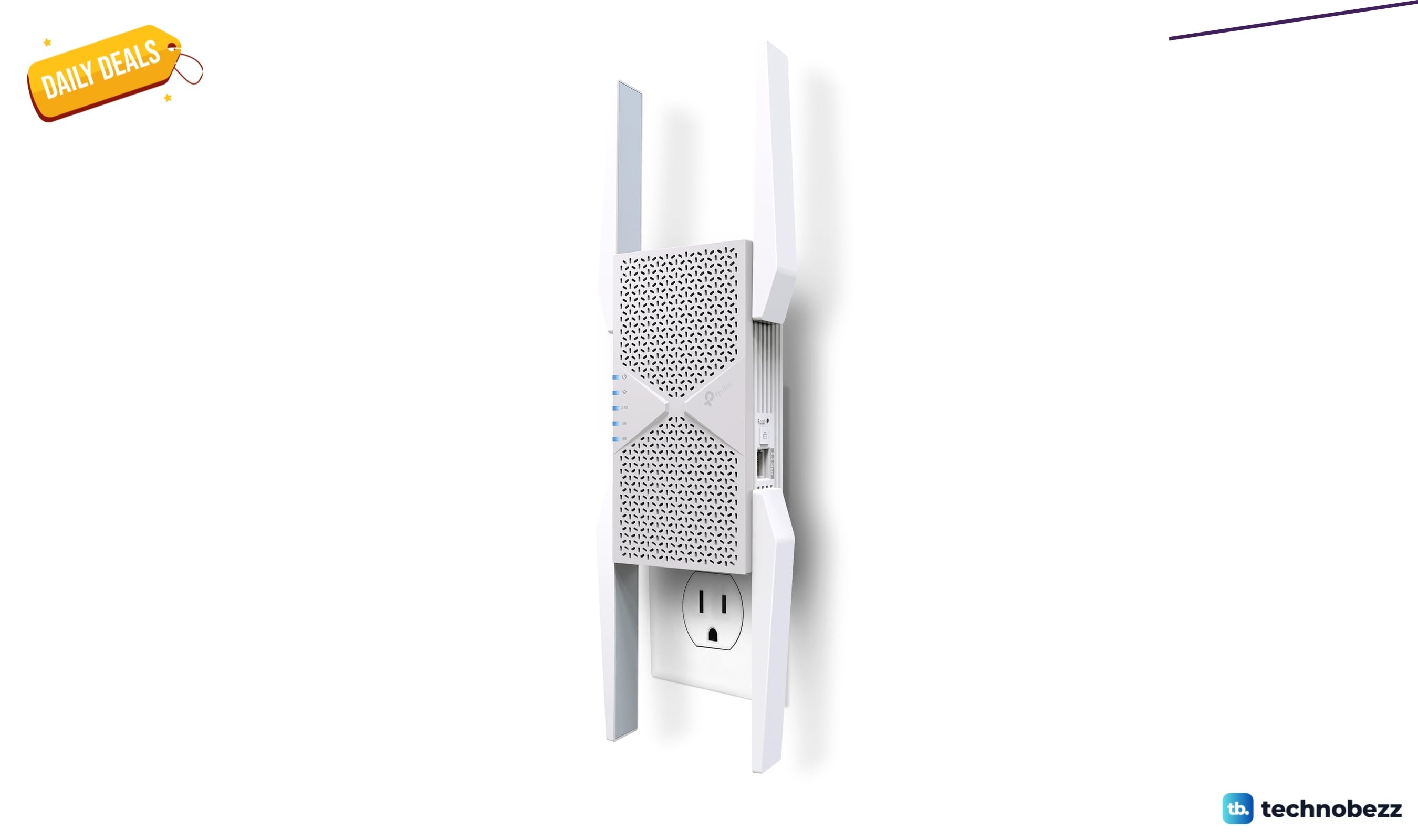
TP-Link BE10000 Wi-Fi 7 Range Extender RE653BE now $169.99, down from $199.99
4 min read
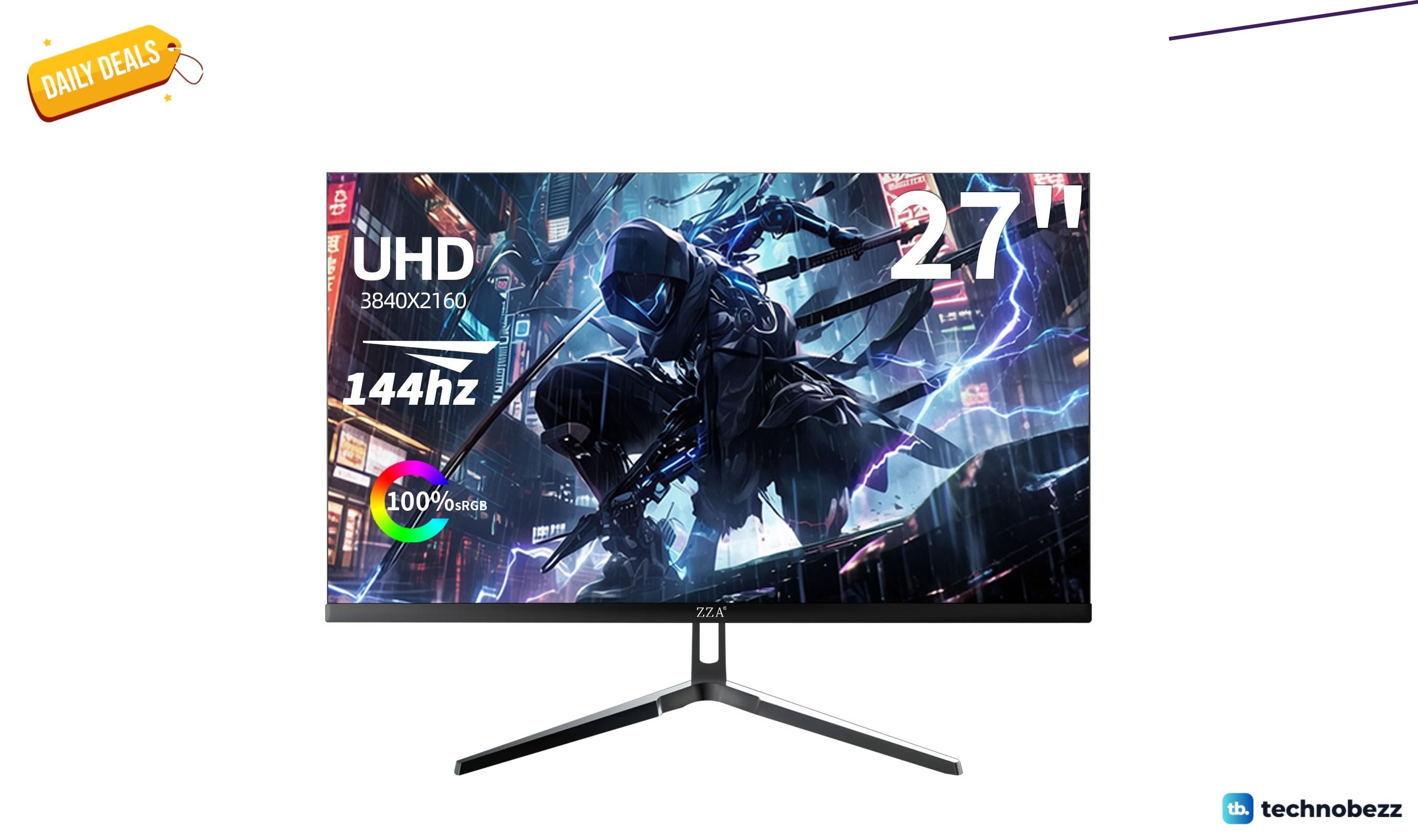
ZZA 4K Gaming Monitor now selling for $189.99
4 min read
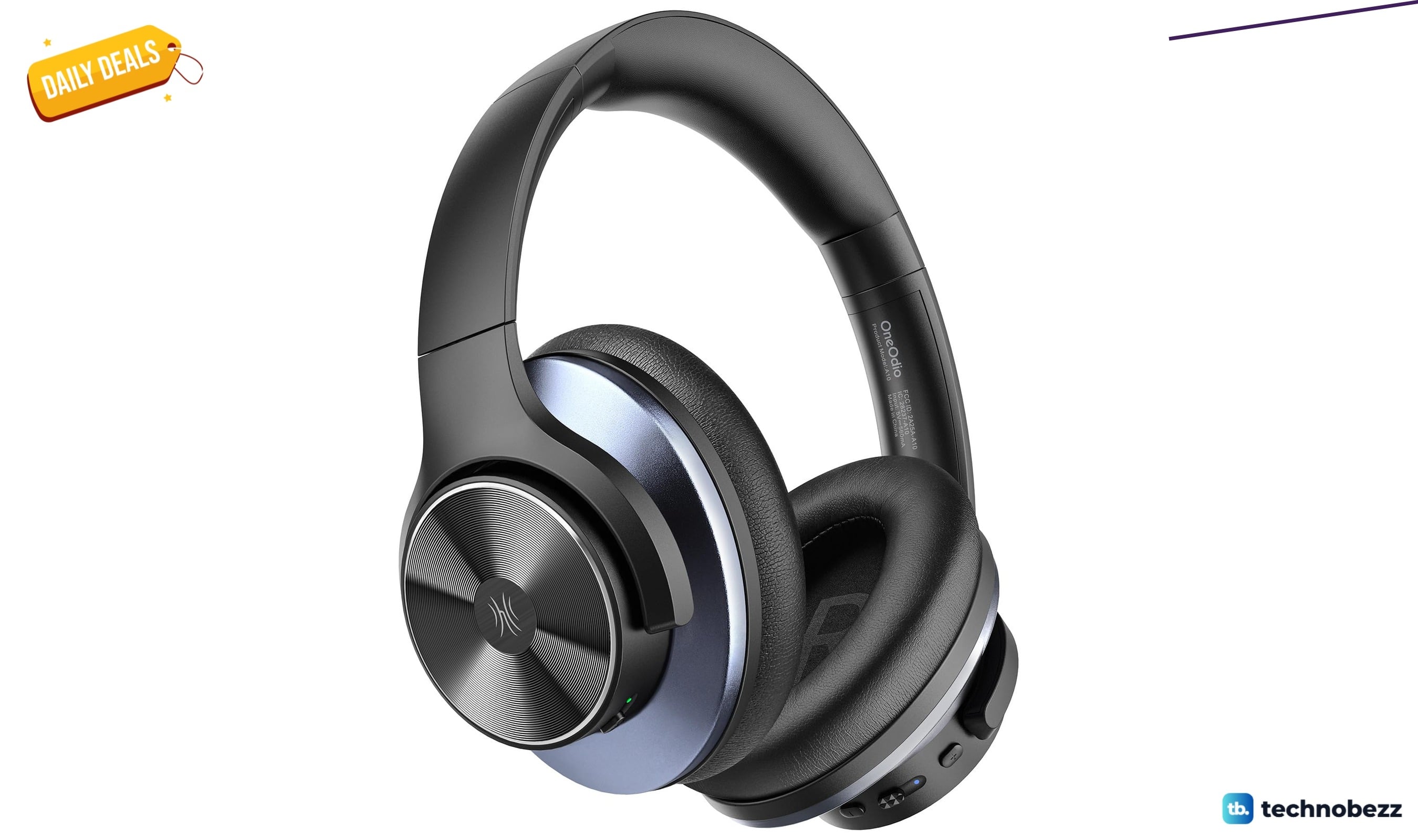
OneOdio Focus A10 Wireless Active Noise Cancelling Headphones now selling for $71.19
3 min read