Getting into your ASUS router settings is the first step to changing your WiFi password, updating firmware, or fixing a connection problem. If you have forgotten the admin login, there are reliable ways to get back in. This guide walks through every method, from the web dashboard and the mobile app to a full factory reset, using the current ASUSWRT interface.
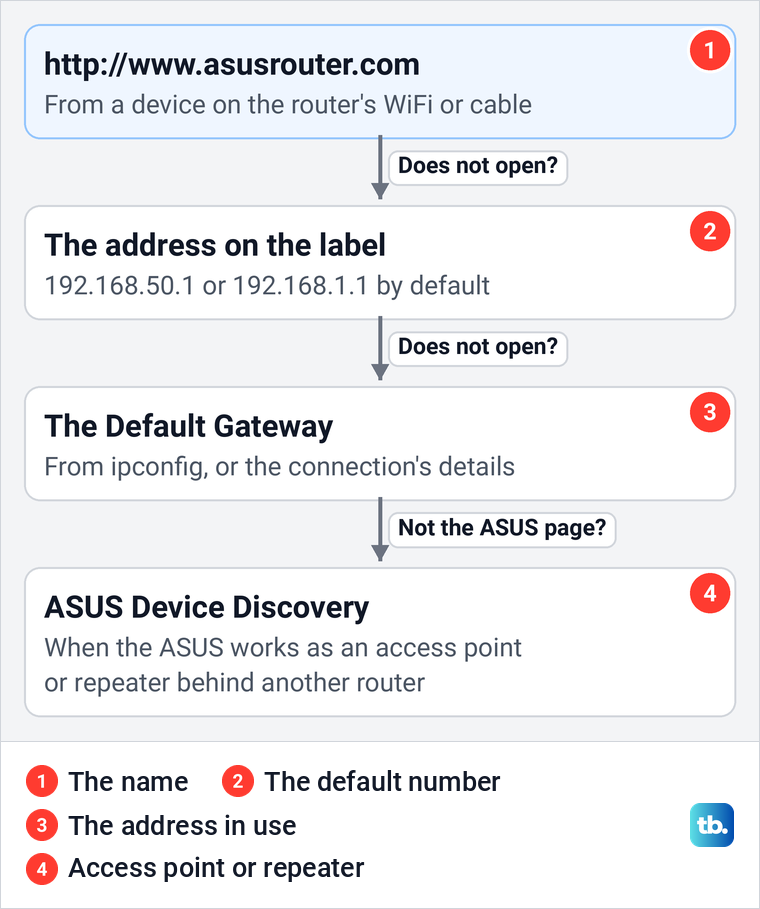
To sign in, connect your phone or computer to the ASUS router's WiFi or plug it into one of the router's LAN ports. Open a browser, type http://www.asusrouter.com in the address bar, or the router's own address, which is 192.168.50.1 or 192.168.1.1 by default, and enter the router's login name and password. If you have forgotten that login, the only way back in is a factory reset, which clears every setting.
The short version
- Sign in: on the router's WiFi or a cable, open http://www.asusrouter.com, or 192.168.50.1 or 192.168.1.1, and enter the router login.
- Page will not open: press Windows + X, choose Terminal, run ipconfig and type the Default Gateway address instead.
- New or just reset: Quick Internet Setup opens and has you create the login.
- Forgot the login: hold RESET for 5 to 10 seconds until the power light flashes. Every setting is cleared.
- Know the login: change it under Administration > System, with no reset.
How to Log In to Your ASUS Router on the Web
Start from a device that is connected to the ASUS router itself, either on its WiFi or with a network cable in one of its LAN ports. Make sure the router is on and its power light is steady. The settings page is served by the router, so a phone on mobile data or a laptop on another network cannot open it this way.
Open any browser, such as Edge, Chrome, Firefox or Safari. Click the address bar at the very top, type http://www.asusrouter.com and press Enter. Typed into a search box instead, the same words only bring up search results, and your router is never asked.
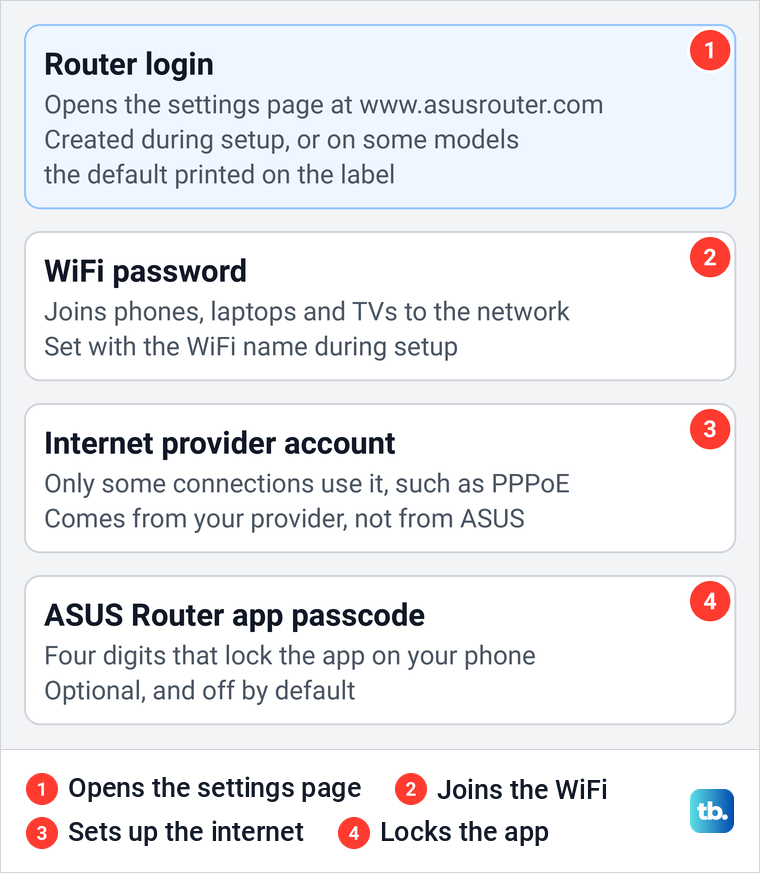
When the sign-in page appears, enter the router's login name and password and select Sign In. A router that is new or has just been reset opens Quick Internet Setup instead, which is covered further down.
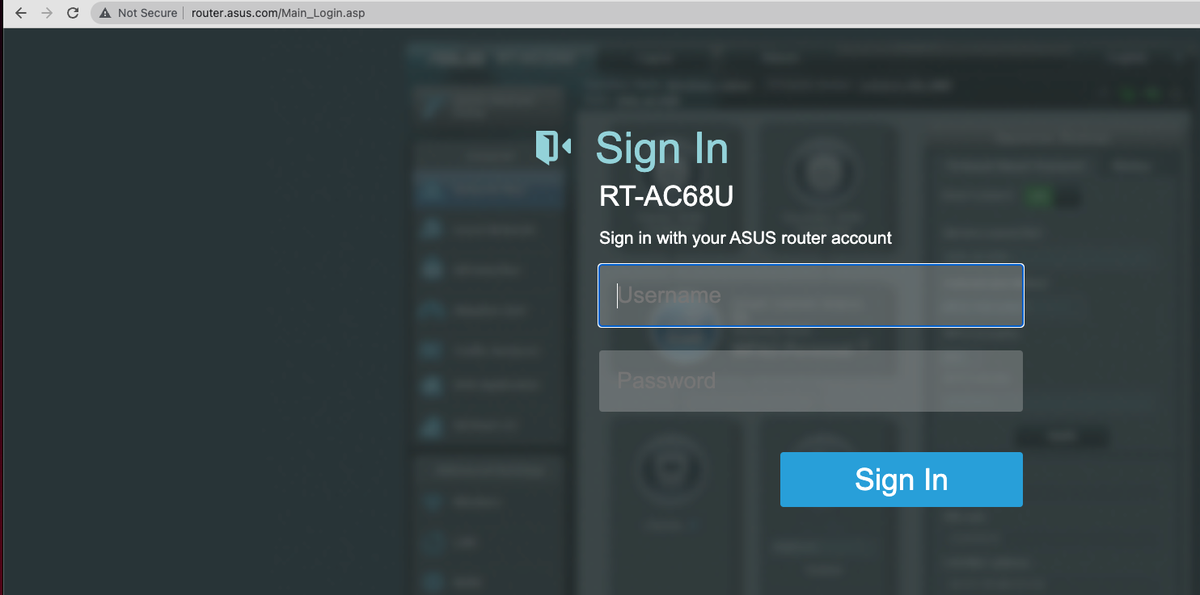
Three different sign-ins get mixed up here, and only one of them opens this page. The WiFi password joins your devices to the network, and the account from your internet provider is only entered during setup on some connections. The ASUS Router app can add a fourth, a four-digit passcode that locks the app.
Default ASUS Login Details and IP Addresses
ASUS gives two default addresses for its routers, 192.168.50.1 and 192.168.1.1, plus the name www.asusrouter.com. Which number your model uses is printed on the router's label, which also gives the default WiFi name. If someone changed the router's address since then, neither default works, and you need the address it uses now.
| What to type | When to use it | What you should see |
|---|---|---|
| http://www.asusrouter.com | Your device is on the router's WiFi or plugged into a LAN port | The sign-in page, or Quick Internet Setup on a new or reset router |
| http://192.168.50.1 | The label or the user manual gives this address | The same page, if this is your router's address |
| http://192.168.1.1 | The label or the user manual gives this address | The same page, if this is your router's address |
| The Default Gateway your computer shows | Both defaults fail, or the address was changed | The ASUS page, unless the ASUS sits behind another router as an access point |
| https://www.asusrouter.com:8443 | The router has been set to sign in over HTTPS | A privacy warning first, because the router's certificate is self-signed |
The login itself depends on the model. On some models the label gives admin as both the user name and the password, while others print their own default login there. Once anyone has changed that login, the label no longer works, and a router that is new or freshly reset may ask you to create a login rather than sign in.
You may see 192.168.0.1 listed elsewhere as an ASUS default, but ASUS's own pages give only 192.168.50.1 and 192.168.1.1. The name ASUS's support pages give today is www.asusrouter.com, so use it if another name, such as router.asus.com, does not open. If none of these opens your router, find the address it really uses, as shown below.
Log In Using the ASUS Router App
The ASUS Router app for Android and iPhone signs in to the router with the same router login name and password. It supports the ZenWiFi, ROG Rapture and TUF Gaming lines, every WiFi 6 (802.11ax) model and many older ones. ASUS also lists models it leaves out, including all of its cable modem routers.
To add a router that is already set up, connect the phone to that router's WiFi and open the app. Tap the plus button at the top right, choose Manage a connected router and enter the router login name and password. A new or reset router goes through setup in the app instead, and that is where you create the login.
The app can also lock itself with a four-digit passcode, Touch ID or Face ID, which is off by default. That passcode only opens the app and is not the router's password. If you forget it, delete the app and install it again, because ASUS has no copy of it.
What you can change in the app depends on the model and its firmware, so a setting you know from the browser may sit elsewhere or be missing. When the phone cannot sign in, first check that it is on the WiFi of the router you want to manage, then restart the phone and the router.
How to Find Your Router IP Address
When neither the name nor a default number opens the page, ask your computer which address it uses to reach the router. Windows calls it the default gateway. On a home network with one ASUS router doing the routing, that is the router's address.
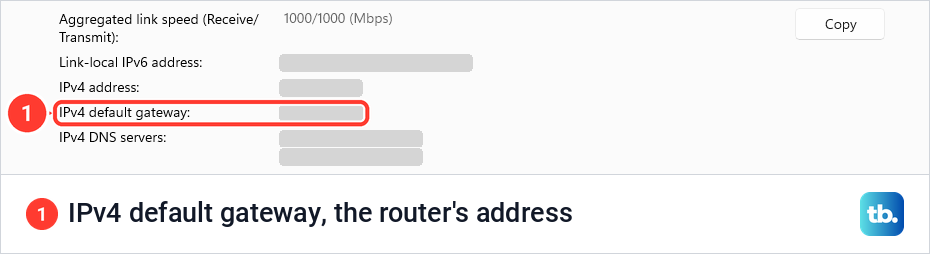
Press Windows + I to open Settings. On our PC, which runs Windows 11, version 25H2 and is connected by cable, we opened Network & internet > Ethernet. Near the foot of that page, a list of the connection's properties held a row labelled IPv4 default gateway, and its value is the address to type in the browser. The row just above it, IPv4 address, belongs to your PC, not the router.
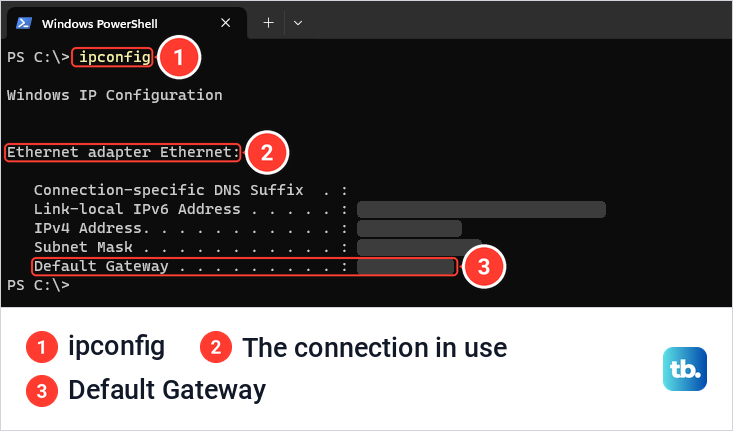
The same address comes from a command, and because the command lists every connection, it also works on WiFi. Press Windows + X, choose Terminal, then type the command below and press Enter. It works the same way in Command Prompt.
ipconfigOn our PC, Terminal opened on a Windows PowerShell tab without administrator rights. The command printed a block headed Ethernet adapter Ethernet, and its Default Gateway line showed the same address as the Settings row. On WiFi, find the block whose heading names your wireless connection, and read the Default Gateway line that holds an address.
On a Mac, choose Apple menu > System Settings > Network, click the connection you use, then Details and TCP/IP, where the router's address is listed. Whichever device you use, type the address into the browser's address bar with http:// in front.
The gateway is not always the ASUS. If your ASUS works as an access point or a repeater behind another router, the gateway is that other box, and ASUS Device Discovery finds the ASUS instead. It lists the ASUS routers, repeaters and access points on your network with the address of each one.
On Windows, search for your router's model on asus.com, open Driver & Utility, choose your Windows version and download ASUS Device Discovery from Utilities. Install it, connect the PC to the network by WiFi or cable, open Device Discovery and select Search. Choose your model or WiFi name and select Setting to open its sign-in page, or type the address it shows into the browser.
On a Mac, Device Discovery is in the App Store. ASUS's Device Discovery instructions give the steps for Windows, Mac, Android and iOS.
When the Login Page or Password Does Not Work
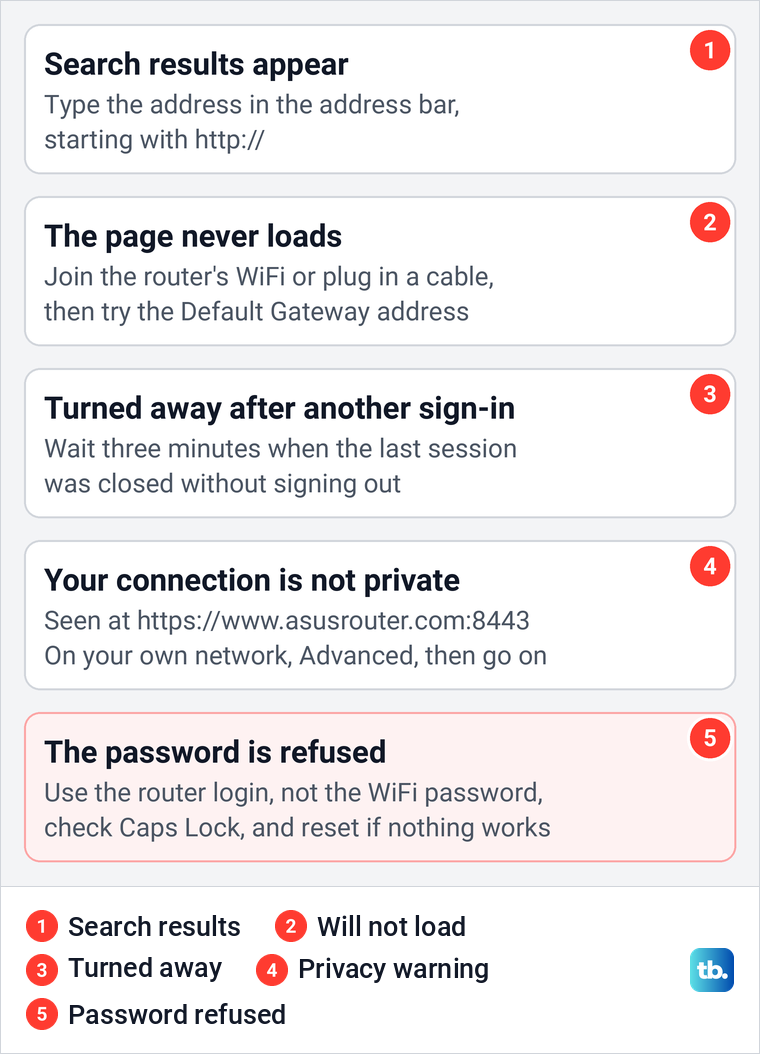
Search results mean the address went into a search box, so type it into the address bar at the top, starting with http://. If the page never loads, check that the device is on the router's WiFi or cable and not on mobile data, then try the gateway address from the section above.
A router can also turn you away right after someone else used it. If you signed in from one computer and closed the browser or shut down without logging out, you have to wait three minutes before you can sign in from another computer. Signing out each time you finish avoids the wait.
If the router has been set to sign in over HTTPS, type the whole address, https://www.asusrouter.com:8443, with the https:// and the :8443. The browser then warns that the connection is not private, because the router's certificate is self-signed. On your own network, at your own router's address, select Advanced and go on to the page, because the connection to your router is still secure.
If the password is refused, check that you are typing the router login, not the WiFi password or your provider's account. Passwords are case sensitive, so check Caps Lock as well. The label's default only works if nobody has changed the login, and when nothing you know is accepted, the router has to be reset.
Create the Login on a New or Reset Router
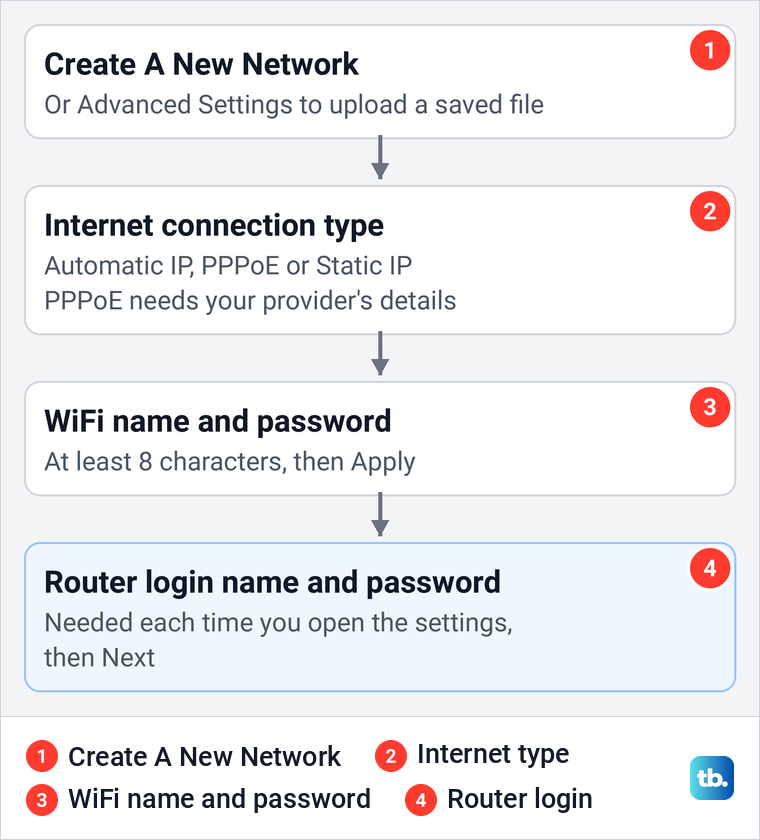
A new ASUS router, or one that has just been reset, opens Quick Internet Setup instead of a sign-in page the first time you visit www.asusrouter.com. Join its WiFi using the default network name on the label, which starts with ASUS, or connect a cable to a LAN port. Then open the address as usual.
Select Create A New Network. Setup detects the internet connection type, Automatic IP, PPPoE or Static IP, and a PPPoE connection needs the user name and password from your internet provider. Next you name the WiFi network and give it a password of at least eight characters, then select Apply.
The last step asks for the router's login name and password, followed by Next. You will need this login every time you open the settings, so keep it in a password manager. ASUS recommends more than 10 characters with capital letters, numbers and symbols, and no runs such as 1234567890.
Some models let you keep the default login printed on the label instead. When setup finishes, the router opens its management page, where Internet Status should read Connected.
Recover a Forgotten Admin Password
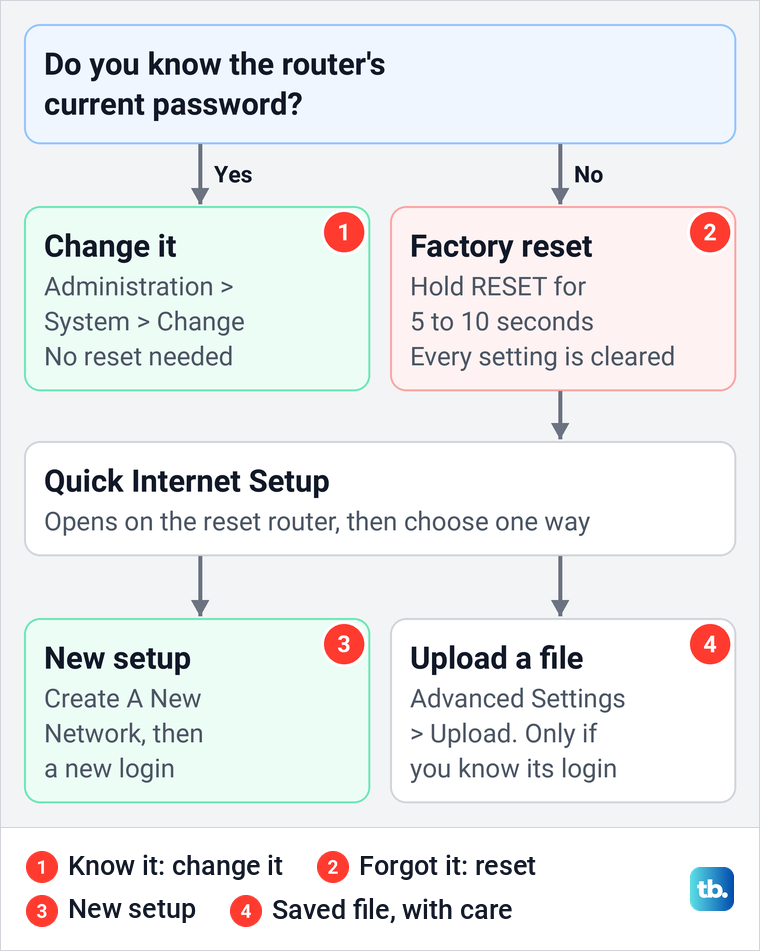
An ASUS router has no password recovery. If you have forgotten the login name or password, or the login you have is still refused after the checks above, the way back in is to reset the router to its factory settings and set it up again. The router keeps no copy you can retrieve, and ASUS cannot look up a password you chose.
A reset erases every setting, including the internet connection settings, the WiFi name and its password. Before you press anything, find the details your internet provider gave you, especially a PPPoE user name and password. Note the WiFi name and password your devices use now, so you can set the same ones again.
If you still know the password and only want a new one, do not reset. Sign in and change it under Administration > System, as described further down. Also check whether you once saved a settings file from this router, because it can put your settings back after the reset, with one catch explained below.
Factory Reset Using the Physical Button
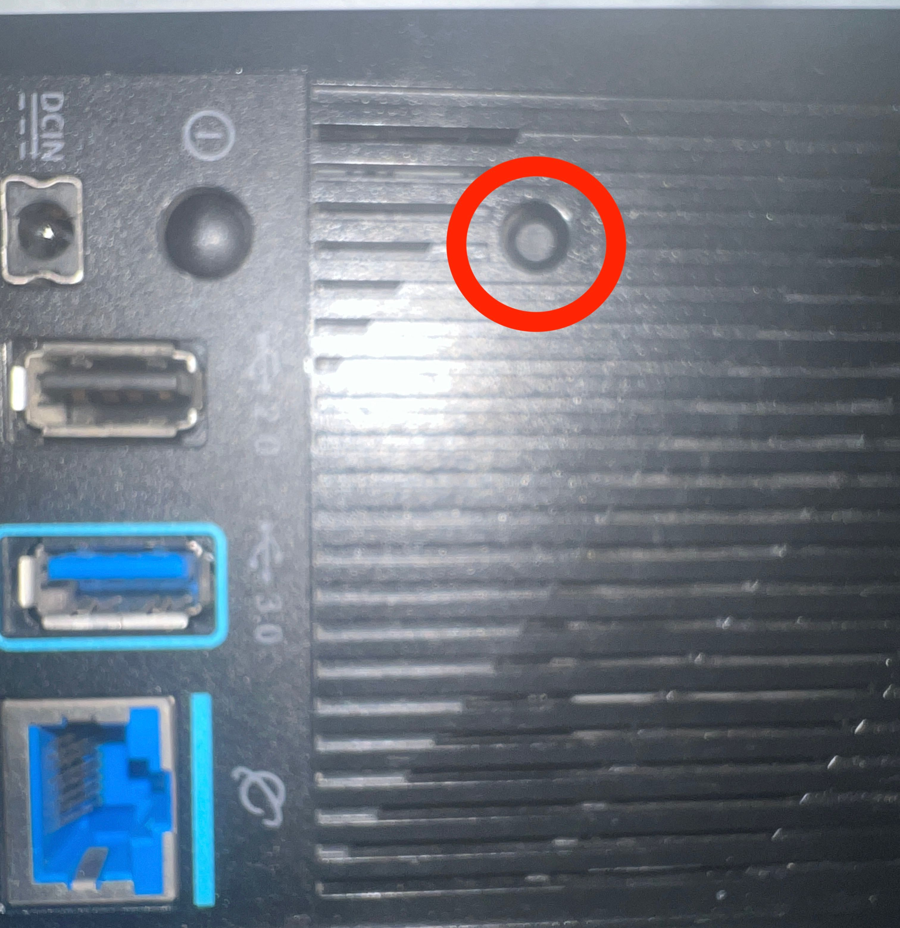
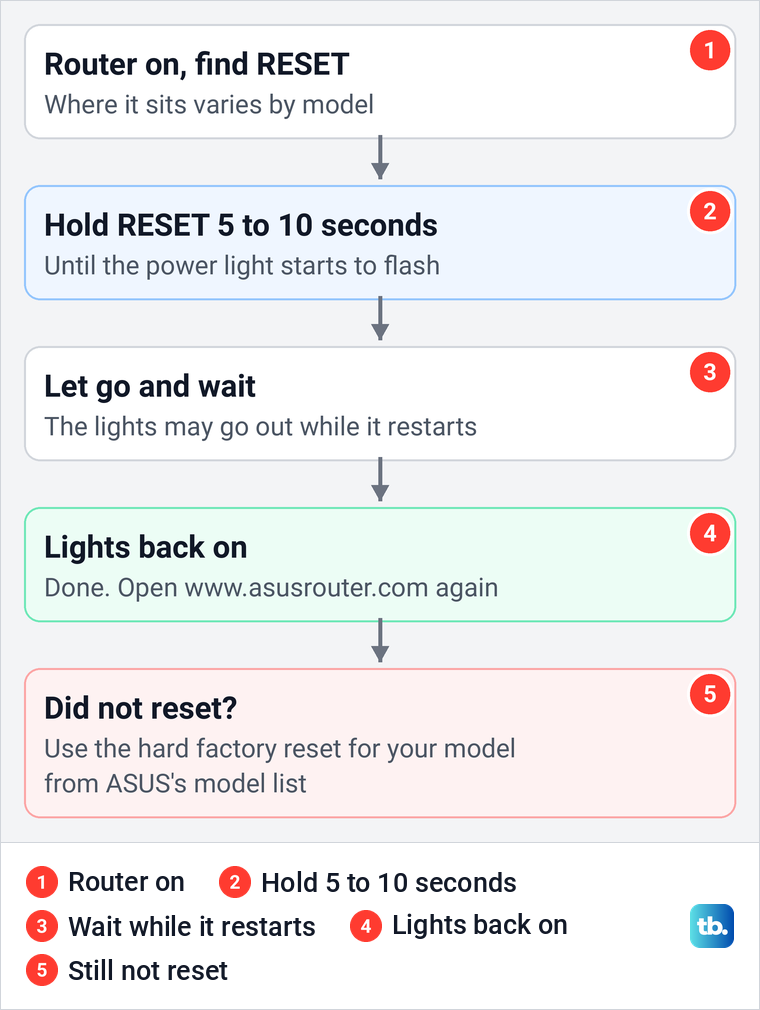
Leave the router switched on and find its RESET button, whose position varies by model and is shown in the user manual. Press and hold RESET for 5 to 10 seconds, until the power light starts to flash, then let go. The lights may go out while the router restarts, which is normal, so leave the power alone. The reset is done when the lights come back on.
If the button does not reset the router, use the hard factory reset for your model instead, which ASUS keeps on its hard factory reset model list. The method differs by model. On models in its first group, such as the RT-AX53U, you turn the router off, hold WPS while you turn it back on, keep holding when the power light comes on, and let go only when it starts flashing.
A hard reset also clears the logs kept by AiProtection, Traffic Analyzer and Web History. If your model is not on the list, the Reset button and the user manual are the route.
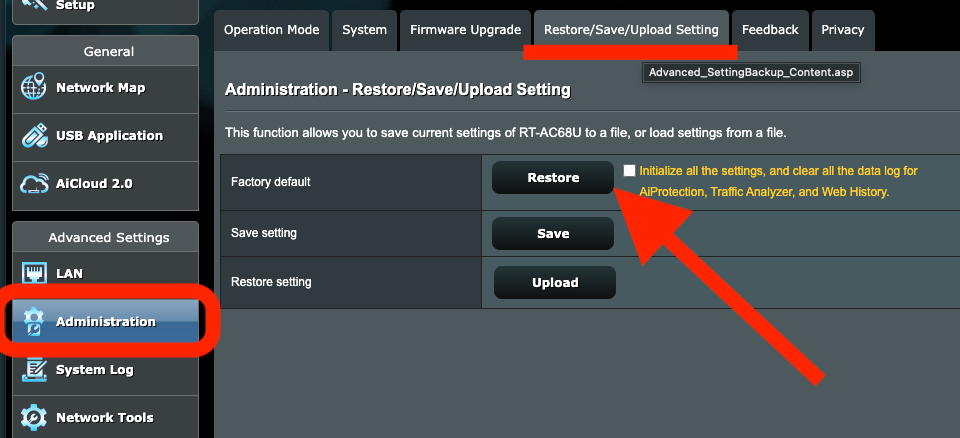
If you can still sign in and want a clean start, you do not need the button. Administration > Restore/Save/Upload Setting > Restore does the same from the browser, and the app has System reset to factory default under Settings > System Settings.
A reset is for a lost login or a router whose settings have gone wrong. If the real trouble is patchy coverage in part of the house, try the steps to fix a weak WiFi signal before you erase your settings.
What to Do After a Reset
When the lights come back, the router is back on its factory WiFi name from the label and has none of your settings. Connect to that network or plug in a cable, open www.asusrouter.com and go through Quick Internet Setup. Enter your provider's details if your connection needs them, and depending on the model, either create a new login or use the default printed on the label.
If you give the network exactly the same name and password as before, devices that remember it can usually reconnect by themselves. A new name or password means entering it on each one, and on an iPhone you can skip the typing if you share a WiFi password from a Mac that is already connected.
A doorbell, a TV or a games console may need its own steps. You may have to reconnect a Ring doorbell to a new WiFi network, or follow the fixes for a Roku TV not connecting to WiFi. Consoles have separate steps for a PS5 not connecting to WiFi and for an Xbox that rejects the correct WiFi password.
Finally, update the router's firmware, which can be done from the app or the browser page, because new firmware often includes security fixes. Turn on automatic firmware updates as well where your model offers them, so later fixes install by themselves.
Restore Your Settings From a Saved File
An ASUS router can save its settings to a file on your computer, and that file can put your old setup back after a reset. The file has to be saved beforehand, while you can still sign in, under Administration > Restore/Save/Upload Setting > Save setting. It is named after the model, such as Settings_ZenWiFi AX.CFG, and only works on that same model.
Here is the catch. The file carries the router login that was in use when it was saved, and after an upload you sign in with that login. If you reset because you forgot the password, uploading an older file brings the forgotten password back and locks you out again, so only use a file whose login you know.
A box beside Save setting matters too. A file saved with it ticked has the original password removed, so you cannot sign in with that password after an upload, and ASUS says not to upload such a file.
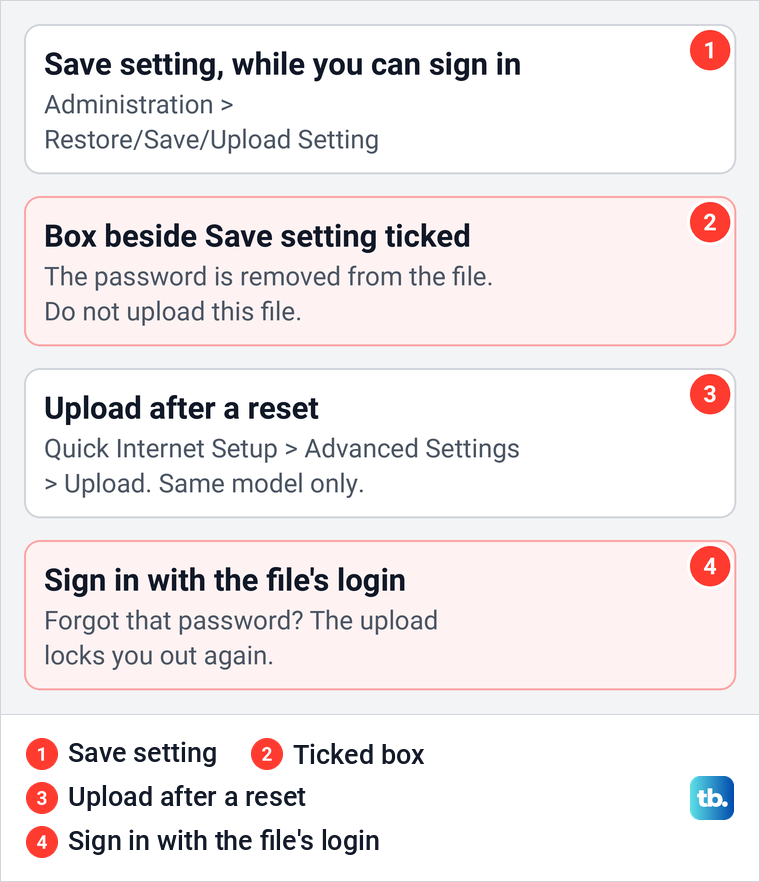
To upload after a reset, choose Advanced Settings > Upload in Quick Internet Setup instead of Create A New Network, then pick the file. The router reboots, which takes about 60 seconds, and you sign in again with the login stored in the file. On a router you can already sign in to, the Upload button is on the same Restore/Save/Upload Setting tab.
The ASUS Router app keeps its own backups under Settings > System Settings > Setting Backup, up to 10 of them. Those stay inside the app, so for a file you can keep elsewhere, save it from the browser page.
Change the Admin Password When You Can Sign In
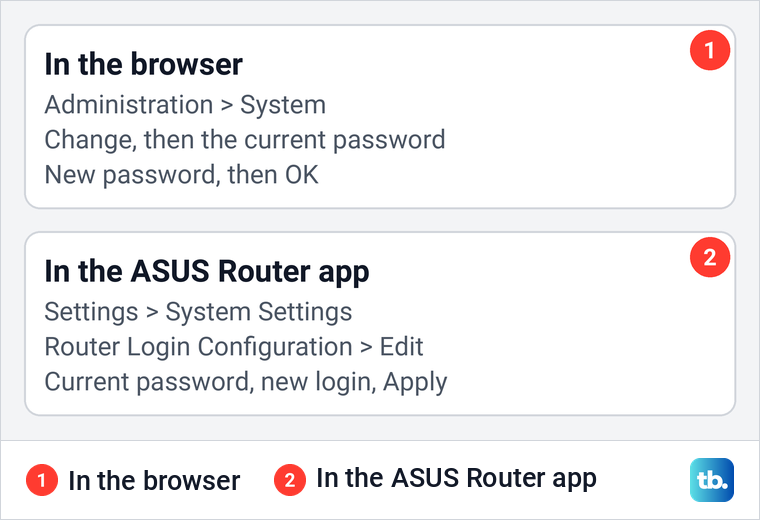
When you know the login and only want a stronger one, change it without a reset. Sign in at www.asusrouter.com and go to Administration > System, where the router login name is shown.
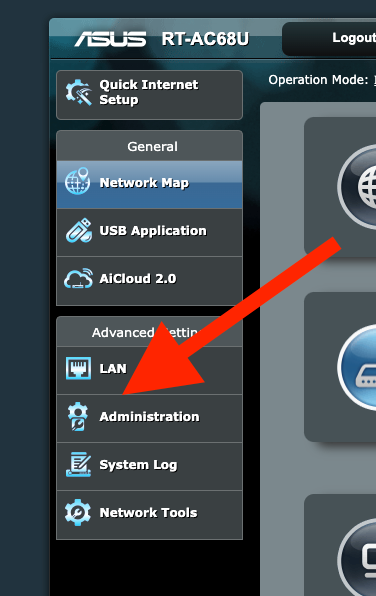
Select Change next to the password, enter the current password, then the new one, and select OK. Confirm with OK again and sign in with the new password. Changing the login name follows the same steps.
In the ASUS Router app, go to Settings > System Settings > Router Login Configuration > Edit. Enter the current password, then the new login name and password, and tap Apply. Save the new password somewhere safe before you sign out.
This changes only the login for the settings page. If you can sign in and only need a new wireless key for your devices, you can change your WiFi password instead, which is a separate setting.
Sign In From Outside Your Home
The www.asusrouter.com name only works on your own network. To reach the settings from somewhere else, remote access has to be turned on first, and the router needs a public WAN IP address from your internet provider. Behind another router, or on a connection whose provider shares addresses between customers, it will not work properly.
In the browser page, go to Administration > System, find Remote Access Config and set Enable Web Access from WAN to Yes. Keep the HTTPS port, 8443 by default, and select Apply. From outside, type https:// followed by the router's WAN IP or DDNS name and :8443.
In the app, link your social account to the router and set up DDNS first, then turn on Remote Connection under Settings > System Settings. Leave WAN access off unless you need it, because keeping it off reduces exposure to attacks from the internet. If you do turn it on, use a long, unique router password and keep the firmware current.
How we tested this guide
We tested this on a PC running Windows 11, version 25H2, where we found the router's address in the connection's properties in Settings and again with ipconfig in Terminal.
Frequently Asked Questions
What address opens my ASUS router login page?
Type http://www.asusrouter.com in the address bar from a device on the router's WiFi or cable, or the router's own address, which is 192.168.50.1 or 192.168.1.1 by default. If the address was changed, use the Default Gateway your computer shows.
What if router.asus.com does not open my ASUS router?
Use http://www.asusrouter.com, the name ASUS's support pages give today, from a device on the router's WiFi or cable. If that fails too, try 192.168.50.1 or 192.168.1.1, then the Default Gateway your computer shows.
What is the default ASUS router username and password?
It depends on the model, so read the label on the router. Some labels give admin for both, others print their own login, and a new or reset router may ask you to create one. A login that has been changed replaces the label's details.
Is the ASUS router password the same as my WiFi password?
No. The router login opens the settings page, the WiFi password joins devices to the network, and the account from your internet provider sets up the connection. Each is set separately.
Can I recover a forgotten ASUS admin password without a reset?
No. A forgotten router login means a factory reset, which clears every setting. A settings file saved earlier can restore them, but it brings back the login it was saved with.
What if the Reset button does not reset my ASUS router?
Use the hard factory reset for your exact model from ASUS's model list. Methods differ, and on some models you hold WPS while you turn the router on.
Is the ASUS Router app passcode my router password?
No. The optional four-digit passcode only locks the app on your phone. If you forget it, delete the app and install it again, then sign in with the router login.
Can I log in to my ASUS router from outside my home?
Only after remote access has been turned on, and only if the router has a public WAN IP from your provider. You then type https:// with the WAN IP or DDNS name and :8443. Turn it off when you no longer need it.