
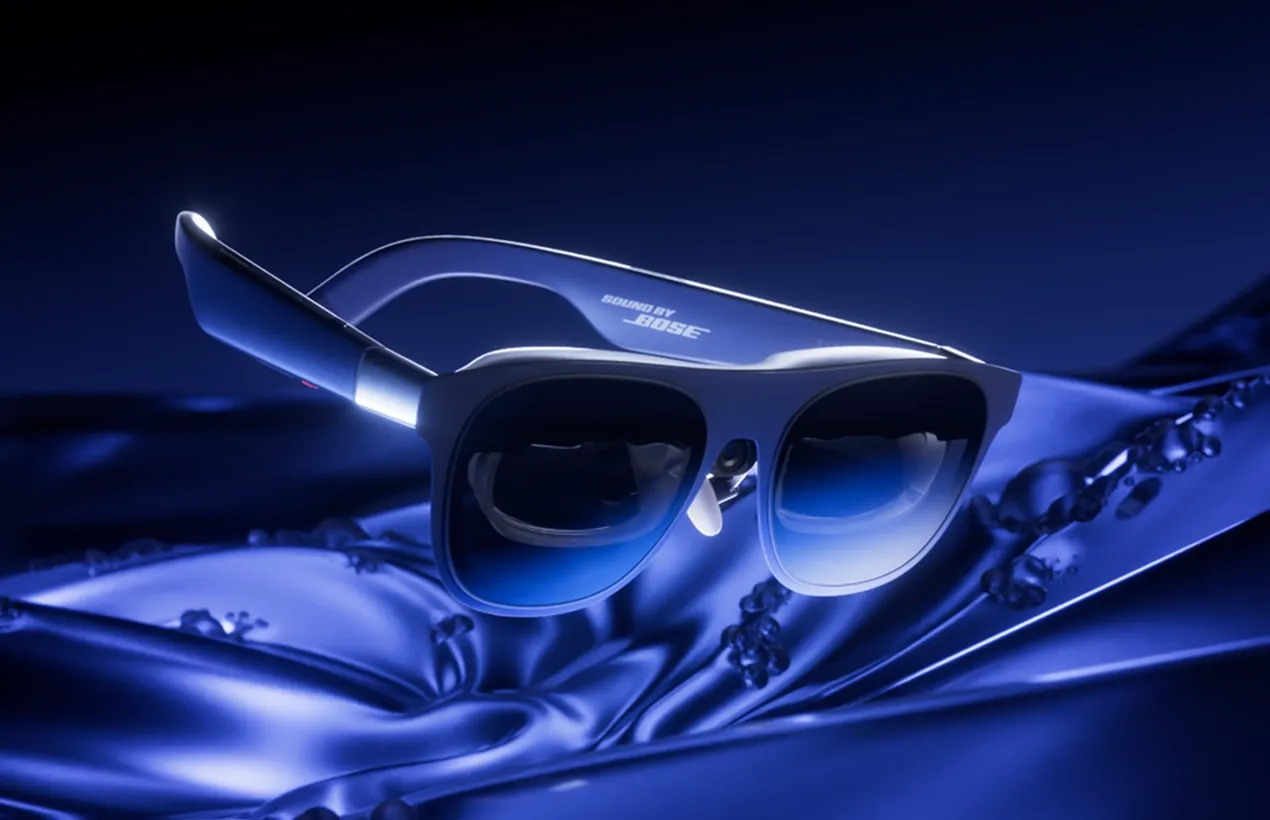
Xreal unveiled its 1S spatial glasses at CES 2026, delivering a $449 wearable display that converts any 2D content to 3D in real time. The glasses connect via USB-C to phones, laptops, and gaming devices, projecting a virtual 200-inch screen with 1200p resolution at 120Hz refresh rates.
The 1S model represents a $50 price reduction from the previous Xreal One while improving multiple specifications. Display brightness increased to 700 nits from 600 nits, resolution upgraded to 1200p from 1080p, and field of view expanded to 52 degrees from 50 degrees.
Xreal's Real 3D feature, powered by the onboard X1 processor, converts any 2D video, photo, or interface into stereoscopic 3D without DRM restrictions. The system analyzes scene depth in real time, though frame rates drop to approximately 30fps during conversion according to early testing.
At 84 grams, the glasses maintain a lightweight design that draws power directly from connected devices. They include Bose audio speakers and work with any USB-C device supporting DisplayPort output, including modern iPhones, Android phones, Macs, PCs, and handheld gaming consoles.
For Nintendo Switch 2 compatibility, Xreal introduced the $99 Neo hub. The magnetic 10,000mAh battery pack tricks Nintendo's consoles into docked mode while providing power passthrough for extended gaming sessions without direct cable connections.
The glasses offer two viewing modes: screen-following for mobile use and anchored placement for stationary viewing. Users can adjust virtual screen size up to 500 inches and switch between 16:10 aspect ratio for productivity or 32:9 ultrawide for multitasking.
Early reviewers noted significant heat generation during Real 3D operation, particularly around the display modules. The glasses reached noticeable temperatures after extended movie viewing sessions, though nose pads prevent direct facial contact with heated components.
Xreal's approach contrasts with Apple's Vision Pro spatial computing system by focusing on single-window display rather than full operating environments. The company positions the 1S as a portable entertainment solution for flights, commutes, and private viewing scenarios.
Optional accessories include a $99 Xreal Eye 12MP modular camera for photo and video capture, plus $99 prescription inserts from Honsvr for vision correction. The glasses ship with a protective case and 4-foot woven USB-C cable.
Availability begins immediately in US and UK markets through Xreal.com. The 1S model undercuts Meta's Ray-Ban Wayfarer Gen 2 AI glasses ($329) while offering actual display capabilities that Meta's audio-focused models lack.