
TCL is bringing its premium Super Quantum Dot Mini-LED display technology to more affordable price points this year, directly challenging Samsung's position in the mid-range television market.
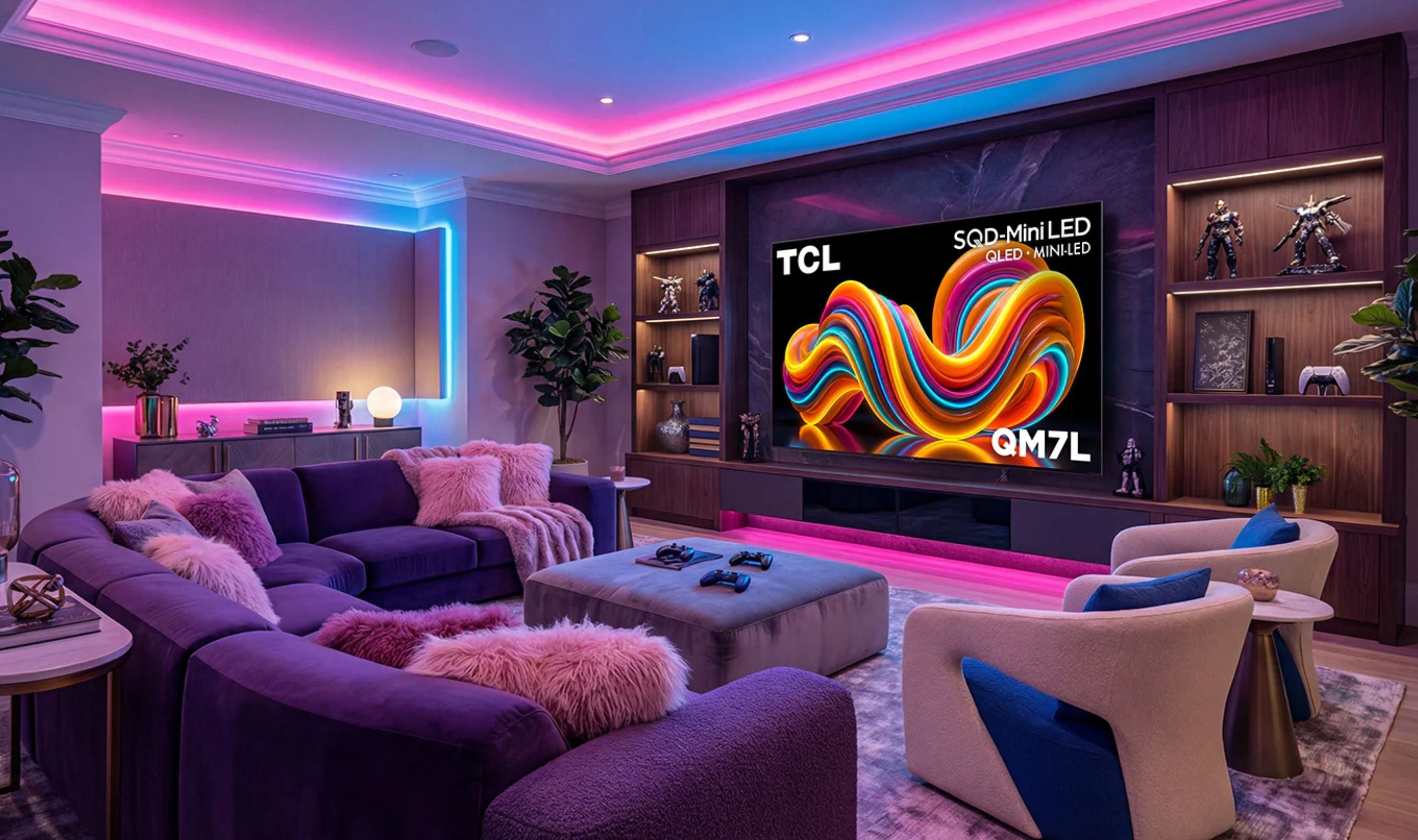
The company announced pricing and availability for its QM8L and QM7L series TVs, which feature the same SQD technology first introduced in its flagship X11L model at CES 2026. The QM8L series starts at $2,499.99 for a 65-inch model and reaches $5,999.99 for a 98-inch version, matching last year's pricing while adding enhanced color technology.
These models use Super Quantum Dots that provide extended color gamut coverage up to 100% BT.2020 according to TCL specifications, along with WHVA 2.0 Ultra Panels and TSR AI Pro processors. For gamers, the QM8L offers four HDMI 2.1 ports capable of 4K/144Hz input with VRR support across all connections, plus FreeSync Premium Pro compatibility.
The series features up to 4,032 local dimming zones on the largest model and reaches peak brightness of 6,000 nits, with Dolby Vision 2 Max support scheduled via future software update.
At more accessible price points, the QM7L series starts at $1,199.99 for a 55-inch model and tops out at $3,999.99 for a 98-inch version. These sets use HVA 2.0 Pro Panels with up to 2,100 local dimming zones and peak brightness of 3,000 nits, though they won't receive Dolby Vision 2 updates due to hardware limitations.
Both series incorporate TCL's Enhanced Halo Control System to minimize backlight blooming effects and feature Audio by Bang & Olufsen speaker arrays with Dolby Atmos support. The Google TV platform includes Gemini Interactive AI assistant for hands-free voice control and content discovery.
TCL also introduced its first RGB Mini-LED TV series, the RM9L, priced from $7,999.99 for an 85-inch model to $29,999.99 for a massive 115-inch version.
"Despite calling it 'the most advanced RGB-Mini LED TV to date,' TCL maintains that its SQD-Mini-LED technology delivers superior performance with less color crosstalk and backlight blooming than RGB LED alternatives."
The company's positioning reflects a strategic choice: while covering both display technologies in its 2026 lineup, TCL sees limitations in RGB LED that can result in higher levels of artifacts compared to SQD Mini-LED solutions.
In picture quality comparisons against emerging technologies like RGB LED from competitors including Samsung and Sony, early reviews suggest TCL's SQD-Mini-LED provides stiff competition despite lower price points than flagship offerings from established brands.