
Updated January 20, 2026: Bloomberg's Jason Schreier suggests PS6 market may be limited, saying it would be "insane" to launch when the PS5 era "has barely even gotten started."
Moore's Law Is Dead confirms no delay decision has been made despite ongoing RAM concerns. New Sony patent filed by Mark Cerny hints at full backward compatibility with all previous PlayStation generations, including PS3.
Updated January 1, 2026: Insider Gaming reports potential PS6 delay beyond 2027 due to global RAM shortages driven by AI demand. Moore's Law Is Dead confirms manufacturing is planned for mid-2027 based on internal documents.
Sony and AMD unveiled Project Amethyst breakthrough technologies including Neural Arrays, Radiance Cores, and Universal Compression for next-gen consoles. New leaks detail PS6 handheld codenamed "Canis" with Switch-style docking capabilities. Mark Cerny teased bringing new tech "to a future console in a few years' time."
The PlayStation 5 has been dominating living rooms since 2020, but if you're anything like me, you're already wondering what comes next. Sony hasn't officially announced the PlayStation 6 yet, but the rumor mill has been churning out details for months.
Based on industry patterns, leaks, and some educated guesses, here's what we can reasonably expect from Sony's next-generation console.
Let's start with the big question: when will we actually see this thing? Looking at Sony's release history provides some solid clues. The PlayStation 3 launched in 2006, PS4 arrived in 2013, and PS5 hit shelves in 2020.
That's a pretty consistent seven-year gap between major console generations. If Sony sticks to this pattern, and there's no reason to think they won't - we're looking at a 2027 release window for the PS6.
But here's where things get interesting. Earlier this year, PlayStation 5 lead architect Mark Cerny dropped some hints during a technical talk with AMD. He mentioned being "really excited about bringing them to a future console in a few years' time."
During the same October 2025 presentation, Cerny noted the technologies "only exist in simulation right now, but the results are quite promising." The comment aligns with insider reports that Sony plans to begin PS6 manufacturing in mid-2027.
Former PlayStation boss Shuhei Yoshida added his perspective too, suggesting that 2028 "feels right" for the next generation, especially considering how the PS5's launch was slowed by manufacturing issues.
It should be noted that Yoshida left Sony at the end of 2024 and doesn't have insider knowledge about current timelines, but his 30+ years at PlayStation gives him a solid understanding of how the company approaches console launches.
PlayStation 6 Specs at a Glance
Here's everything we know so far, based on the most reliable leaks and analyst reports:
Release Date: Late 2027 or 2028 (potential delay due to RAM shortages)
Codename: "Orion"
Processor: Custom AMD APU with Zen 6 CPU cores and RDNA 5 GPU
GPU Performance: Approximately 3x faster than base PS5, on par with RTX 4080
Memory: GDDR7, likely 24-32GB with 640-768 GB/s bandwidth
Storage: 2TB SSD expected
Display Output: 4K at 120fps or 8K at 60fps
Key Technologies: Neural Arrays, Radiance Cores, Universal Compression (Project Amethyst), enhanced PSSR upscaling
Ray Tracing: Hardware-accelerated path tracing via dedicated Radiance Cores
Backward Compatibility: PS4 and PS5 games expected; patent suggests potential PS1/PS2/PS3 support
Disc Drive: Detachable (similar to PS5 Slim)
Starting Price: Estimated $500-$600 (could increase due to component costs)
Manufacturing: AMD partnership confirmed; mid-2027 production planned
PS6 Specs: AMD Zen 6 CPU & RDNA 5 Graphics
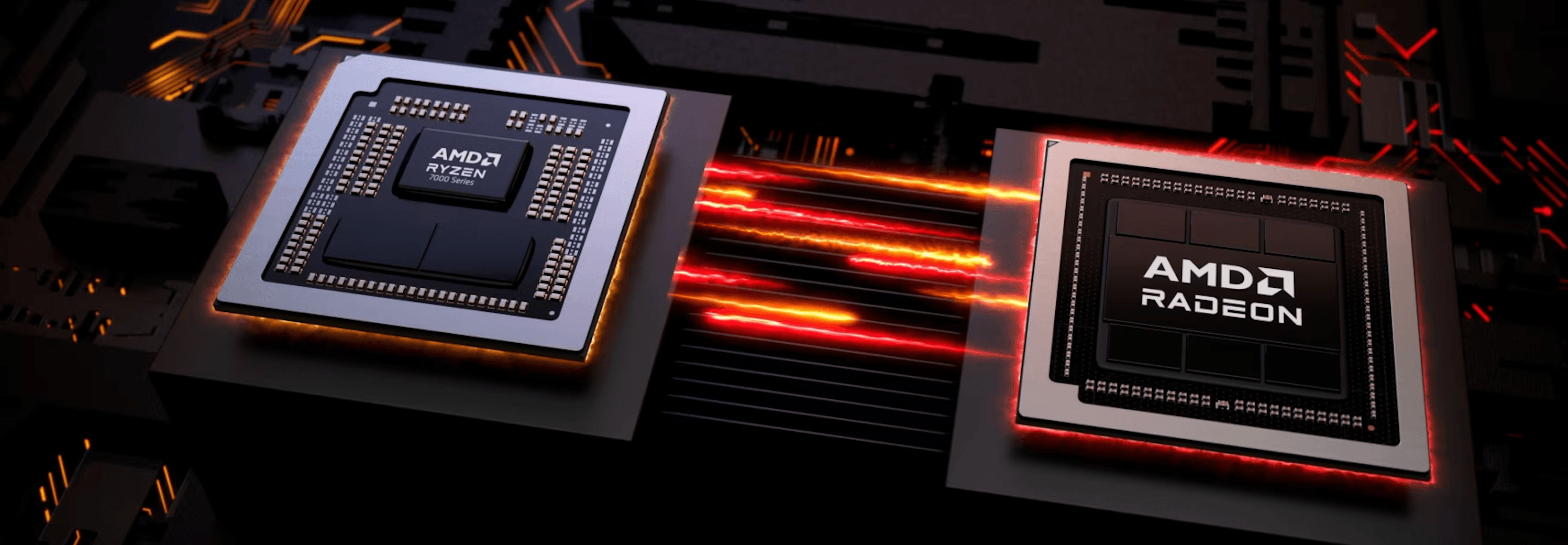
When it comes to hardware, Sony's partnership with AMD appears to be continuing. Multiple sources, including Reuters reporting from September 2024, indicate that AMD won out over Intel to supply the PS6's processor. This makes sense from a backward compatibility standpoint, sticking with AMD's architecture means PS5 games should run smoothly on the new hardware.
In October 2025, Sony and AMD publicly unveiled Project Amethyst, their joint collaboration on next-generation graphics technology. In a video posted to the PlayStation YouTube channel, lead architect Mark Cerny and AMD's Jack Huynh detailed three breakthrough technologies:
Neural Arrays for improved upscaling and denoising, Radiance Cores for hardware-accelerated ray tracing and path tracing, and Universal Compression to boost memory bandwidth efficiency. Cerny described the collaboration as "a fundamental strategy shift" in how Sony develops consoles.
The technical leaks, primarily from hardware-focused channels like Moore's Law is Dead, suggest we're looking at a custom AMD chipset featuring Zen 6 CPU cores paired with RDNA 5 graphics architecture. Early estimates put the GPU at around 40-48 compute units with clock speeds potentially reaching 3 GHz.
If these numbers hold up, we could see rasterization performance that's roughly three times what the base PS5 delivers today.
Memory is another area where the PS6 should see significant upgrades. Reports point toward GDDR7 memory with bandwidth in the 640-768 GB/s range, a substantial jump from current consoles.
Storage will likely get a boost too, with most analysts expecting at least 2TB of SSD space to accommodate those ever-growing game file sizes.
PS6 Price: RAM Shortage & Launch Cost Estimates
This is where things get tricky. The PS5 launched at $499 for the standard edition, but Sony's mid-generation PS5 Pro arrived in 2024 with a $700 price tag. Some industry observers believe that higher price point was a test to see what gamers would tolerate.
Most estimates put the PS6 somewhere between $500 and $600 at launch, though that window now appears uncertain. In December 2025, Insider Gaming's Tom Henderson reported that conversations about potential delays have begun at both Sony and Microsoft due to skyrocketing RAM prices.
In early January 2026, Moore's Law Is Dead clarified on a podcast that "the decision has not been made to delay any consoles," noting that PlayStation has time before needing to alter its plans. The agreement with AMD to manufacture the rumored Orion APU by mid-2027 remains on track.
However, the situation remains fluid, with Micron confirming that the AI-driven memory-chip shortage has intensified and will extend beyond 2026.
At CES 2026, Micron's VP Christopher Moore stated that shortages "could persist for quite some time," with the company expecting high prices to last until 2028 "at least until the AI demand starts to fade away."
The global GDDR7 memory shortage, driven by unprecedented AI infrastructure demand, has pushed prices up by 30-50% throughout late 2025. Memory suppliers like Samsung, SK Hynix, and Micron are prioritizing AI data center orders over consumer electronics.
PS6 Features: Backward Compatibility & VR Integration
Backward compatibility appears to be a priority, with Sony likely extending support to PS4 and PS5 titles. This would continue the trend started with the PS5 and make the transition to new hardware much smoother for players with extensive game libraries.
A significant development emerged in January 2026 when Sony filed a new patent that could transform backward compatibility for the PS6. The patent, which names Mark Cerny as an inventor, describes an advanced system capable of running games from all previous PlayStation generations, including the notoriously difficult PS3.
The technology proposes a hybrid hardware and software solution where the new console's processor could dynamically adjust its operating frequency and behavior to accurately replicate older hardware environments, including the PS3's complex Cell processor.
If implemented, this would unify more than three decades of PlayStation history on a single platform, addressing one of the gaming community's longest-standing requests.
Virtual reality integration is another area to watch. With PSVR2 establishing Sony's presence in the VR space, the PS6 could bring more advanced wireless headsets with improved motion tracking and haptic feedback. Some leaks even suggest the console might include VR hardware in the box, though that seems like a stretch given the cost implications.
Perhaps the most intriguing rumor involves a potential handheld companion device. Multiple sources, including Bloomberg reporting from 2024, indicate Sony is exploring a new gaming handheld codenamed "Canis."
According to leaked AMD documentation uncovered by Moore's Law Is Dead in August 2025, this would be Sony's first true gaming handheld since the PS Vita, capable of running PS4 and PS5 games natively without streaming.
The handheld is reportedly built around the same AMD architecture as the PS6, featuring four Zen 6c CPU cores for gaming and two low-power cores for system tasks, paired with 16 RDNA 5 compute units. When docked, it could output at higher clock speeds similar to the Nintendo Switch.
Recent reports indicate Sony has updated its development kits to prioritize "Low Power Mode" support, with documentation suggesting developers ensure their games can run on only eight CPU threads. Industry analysts interpret this as Sony quietly preparing the software ecosystem for handheld hardware.
New comparisons at CES 2026 between Intel's upcoming Panther Lake handheld chips and Sony's rumored Canis hardware have provided additional insight into potential performance expectations.
Leaker Kepler_L2 noted that Panther Lake running at 30W should deliver similar performance to Canis at 15W, highlighting the efficiency advantages of Sony's custom AMD silicon combined with the console-optimized PlayStation OS.
The first Panther Lake-based handhelds are expected in mid-2026, which could serve as a useful benchmark for understanding how PS5 games might scale down to portable hardware.
Price estimates place the PS6 handheld around $400-$500, potentially launching alongside or shortly after the home console in late 2027.
Industry Challenges
What's fascinating about the PS6 conversation right now is how it's unfolding against a backdrop of industry uncertainty. The AI boom has created component shortages, development costs continue to rise, and there's genuine debate about whether we even need a new console generation this soon.
The debate about PS6 timing intensified in January 2026 when Bloomberg journalist Jason Schreier weighed in, suggesting there might not be a significant market for a new PlayStation console anytime soon.
Speaking on the Xbox Expansion Podcast, Schreier noted that launching an expensive new console when the PS5 generation is still finding its footing would primarily appeal to hardcore tech enthusiasts.
"The idea of a more expensive console now...who would want that?" he questioned, adding that he's "not sure how much of a market there would be for a PlayStation 6 next year."
His comments reflect a growing sentiment that Sony may extend the PS5's lifecycle, particularly with major releases like GTA 6 expected to drive significant console sales through late 2026.
Many gamers are surprisingly okay with waiting. Online discussions reveal a sentiment that current hardware still has plenty of untapped potential, especially when developers prioritize optimization over pushing graphical boundaries.
There's also concern about price fatigue, with subscription services getting more expensive and AAA games potentially hitting the $100 mark.
Sony itself seems to be taking a measured approach. During a business presentation earlier this year, SIE CEO Hideaki Nishino acknowledged the "huge interest in our next generation console strategy" while emphasizing that the future of the platform is "top of mind."
That's corporate speak for "we're working on it, but don't expect details anytime soon."
Should You Wait for PlayStation 6?
The PlayStation 6 represents more than just another hardware iteration, it's a test of whether traditional console cycles can survive in an era of rapid technological change and economic uncertainty.
Sony appears to be balancing innovation with pragmatism, sticking with proven partners like AMD while exploring new form factors like handhelds.
If the leaks are accurate, we're looking at a console that prioritizes backward compatibility, maintains reasonable pricing despite component challenges, and expands the PlayStation ecosystem beyond the living room.
The exact specs will undoubtedly change between now and launch, but the overall direction seems clear: evolution rather than revolution.
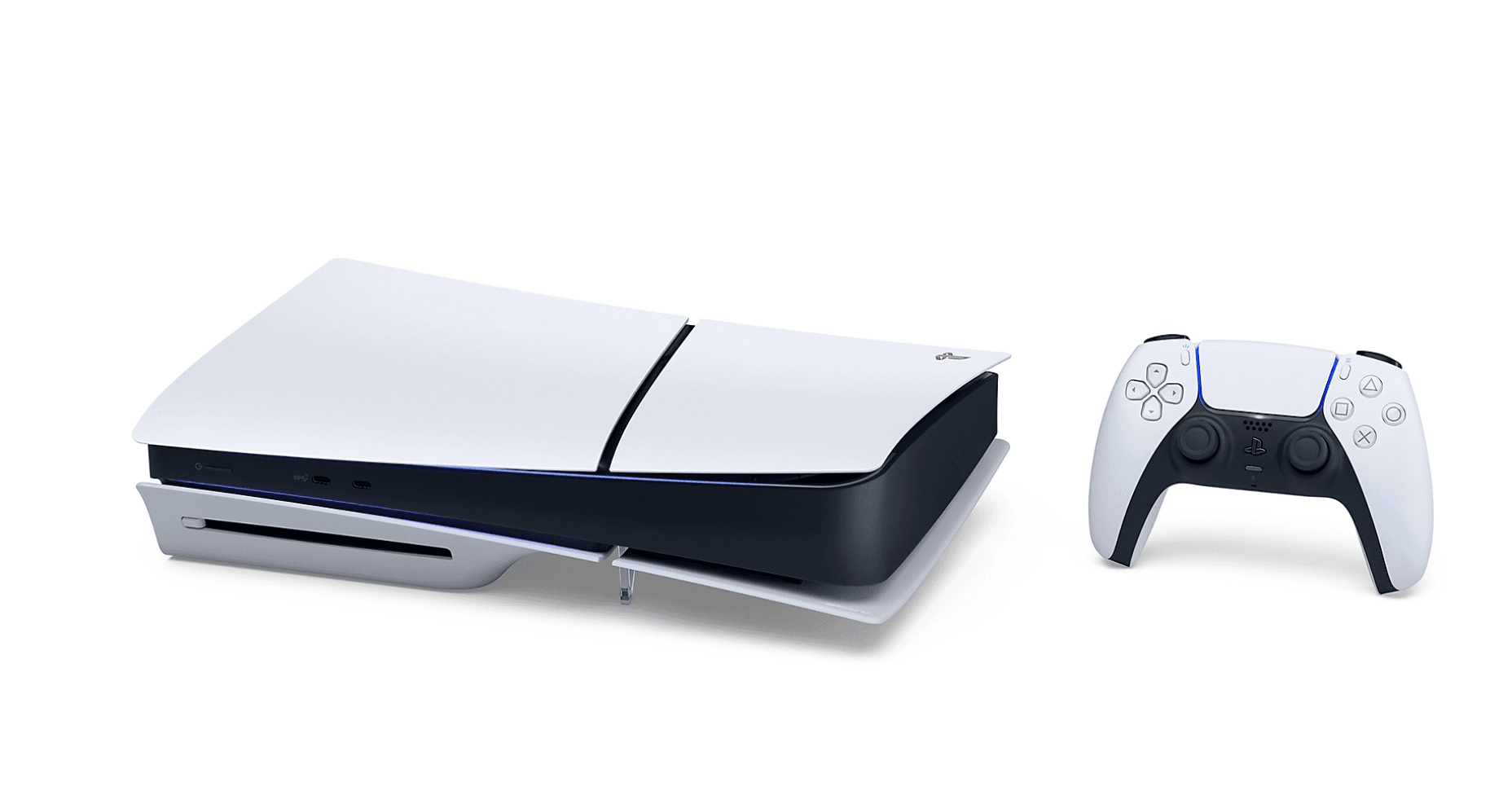
For now, the best advice might be to enjoy what we have. The PS5 and PS5 Pro offer incredible gaming experiences, and developers are still finding new ways to push these machines.
When the PS6 does arrive: whether that's in 2027, 2028, or even later, it will need to justify its existence with more than just better graphics. Based on what we know so far, Sony seems to understand that challenge better than anyone.