

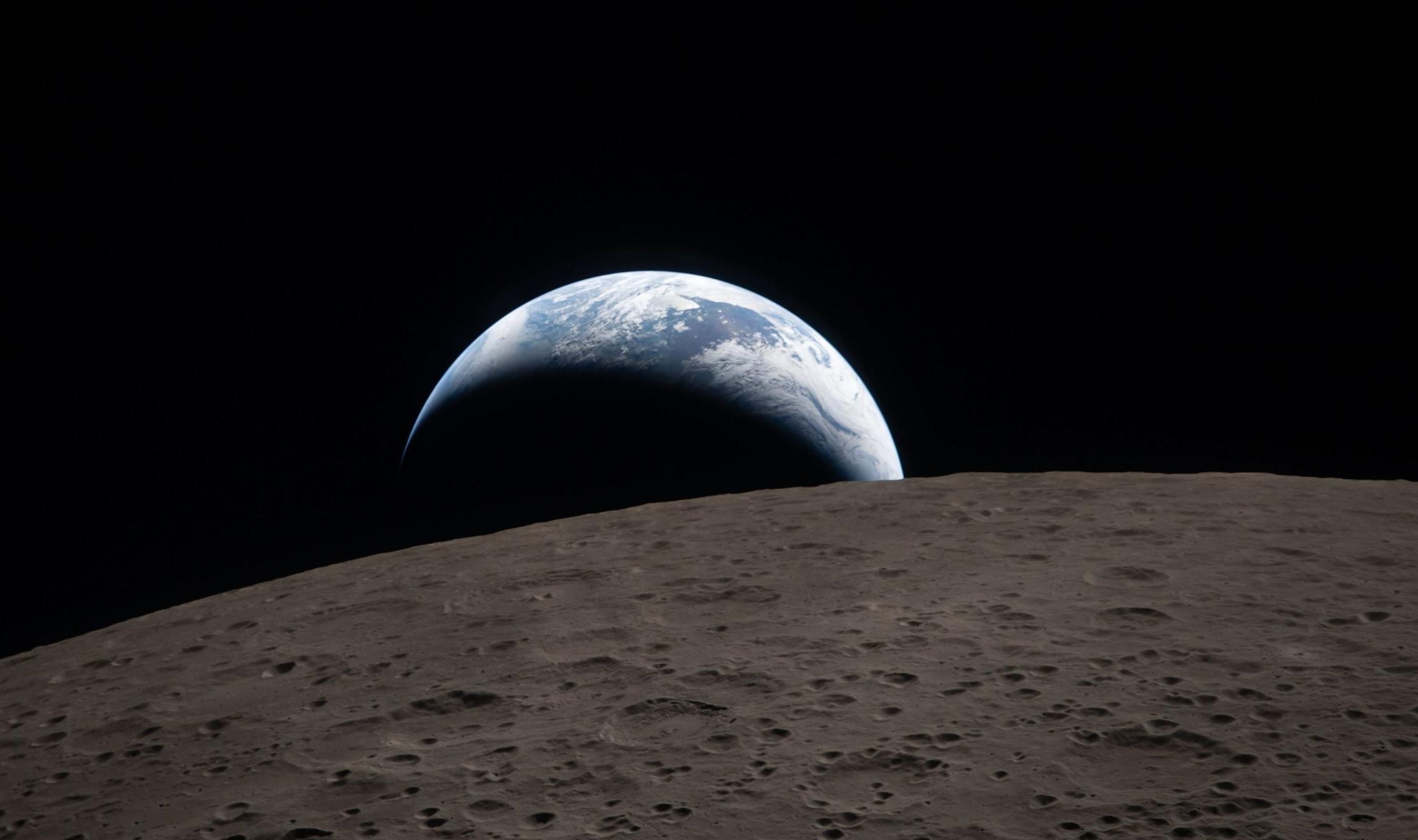
A consumer smartphone captured one of space exploration's most extraordinary moments when NASA's Artemis II commander filmed Earth disappearing behind the Moon from 252,000 miles away.
Commander Reid Wiseman posted uncut footage of "Earthset" taken on April 6 during the flyby, using his personal iPhone 17 Pro Max with its 8x zoom capability. The video shows our planet gradually vanishing behind the lunar limb as if watching sunset from another world, complete with visible cloud systems swirling across Earth's surface before complete disappearance.
Wiseman wrote when sharing the clip on social media. The footage represents what human eyes would see from that vantage point, according to the astronaut's description.
The four-person crew completed their historic mission earlier this month, photographing the Moon's dark side and its ancient lava flows while setting a new record for human spaceflight distance, 4,111 miles farther from Earth than Apollo 13 reached in 1970.
During that same mission, fellow astronaut Christina Koch captured professional photographs using a Nikon camera whose shutter clicks can be heard in Wiseman's recording background. This dual documentation approach shows how consumer technology now operates alongside specialized equipment for space documentation.
Former Canadian astronaut Chris Hadfield called it "the coolest video ever taken with an iPhone" after it accumulated more than 7.6 million views within days of posting. The viral response highlights how personal device capabilities have evolved to capture moments previously reserved for multi-million dollar space cameras.
Artemis II marked humanity's return to lunar vicinity after more than five decades, with Wiseman's video providing a perspective last witnessed during Apollo missions.
The crew also observed a solar eclipse from orbit using paper eclipse glasses identical to those distributed for Earth-based celestial events.
NASA's Artemis III mission remains scheduled for launch next year, testing rendezvous and docking capabilities needed to land astronauts on the surface.