
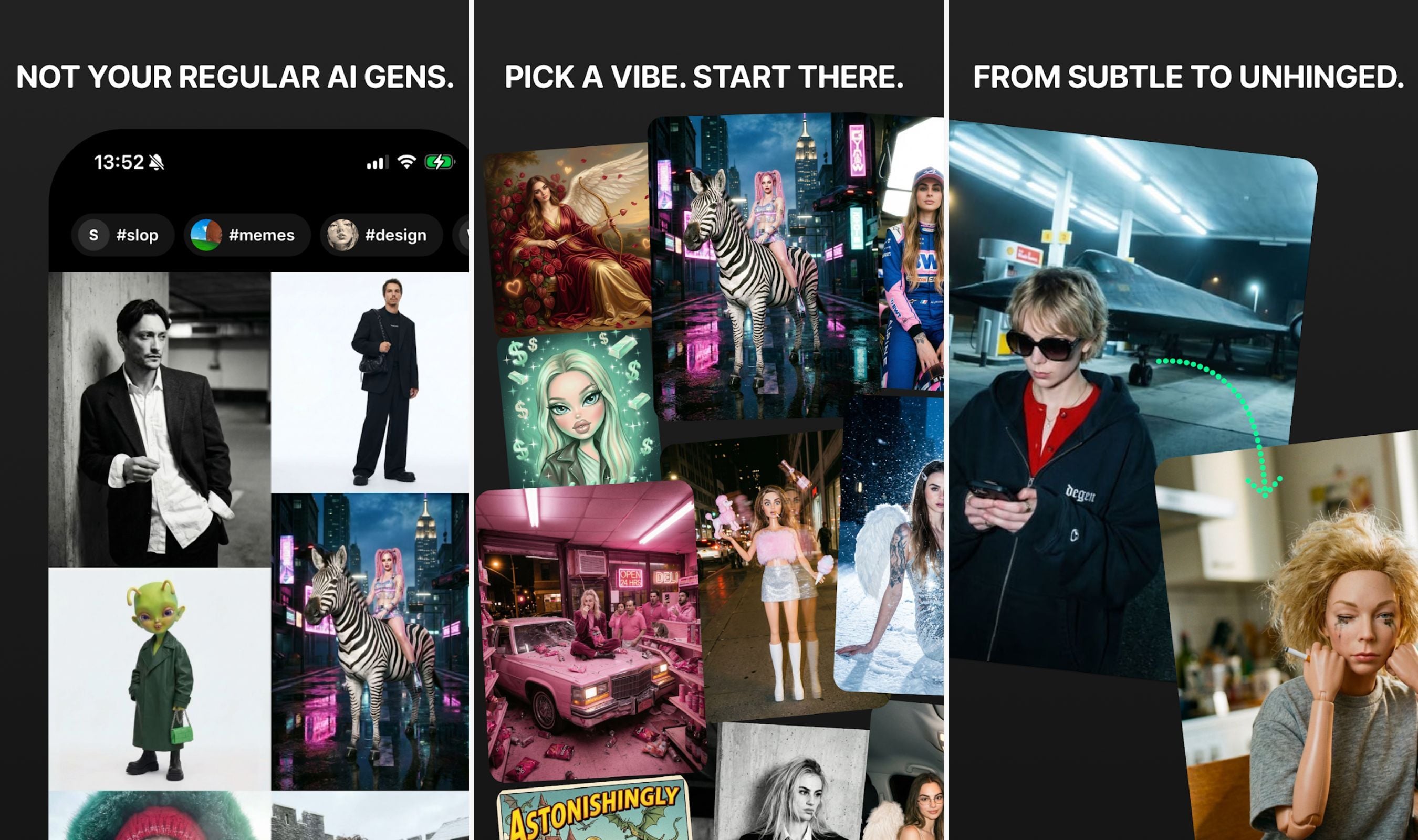
Brooklyn-based AI studio Mother.tech is launching Degen, a consumer creation app that replaces text prompts with what the company calls "gens": modular, one-tap creative tools designed by artists, photographers, and designers. The app is available on iOS and Android via invite, with broader access opening in the weeks after a May 5 lift.
The launch arrives with $15 million in seed funding led by Google Ventures, with participation from Lerer Hippeau, Box Group, and Shine Capital. That cap table is unusual for what is, on its surface, another AI image and video app in a market already crowded with them. The pitch from co-founders Kelsey Falter and Raissa Chagas is not that Degen has a better model. It is that the model layer is increasingly a commodity, and the product question worth answering is who gets paid when AI content actually gets made.
Degen's answer routes payouts to creators by usage. Every time someone uses a gen built by, say, Brooklyn street photographer Brian Alcazar, Alcazar earns a token-denominated share. The economics scale with how often a gen gets picked, not how many followers its author has. It is closer to a music-publishing royalty than to a creator-fund payout, and it is the structural piece Mother.tech is betting consumer AI has missed.
How a gen is different from a prompt
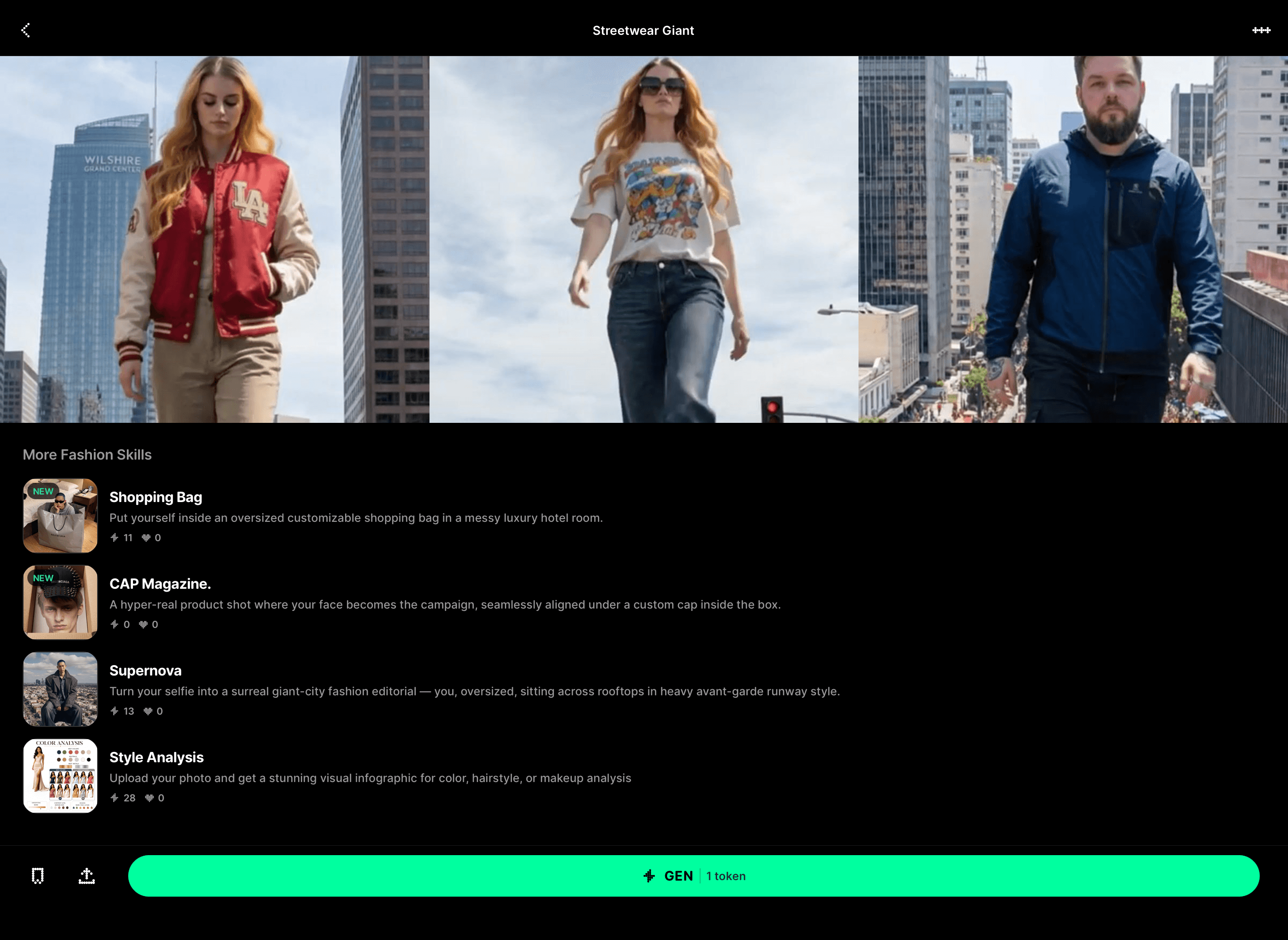
A gen is a multi-step creative pipeline that runs across several AI models, packaged behind a single tap. The user uploads a photo or types a few words. The gen handles the rest. Behind the surface, Mother.tech runs what it describes as a multi-model render pipeline, swapping in whichever underlying systems are best at whichever part of the output. The user never sees the model choice, never writes a prompt, never opens an editor.
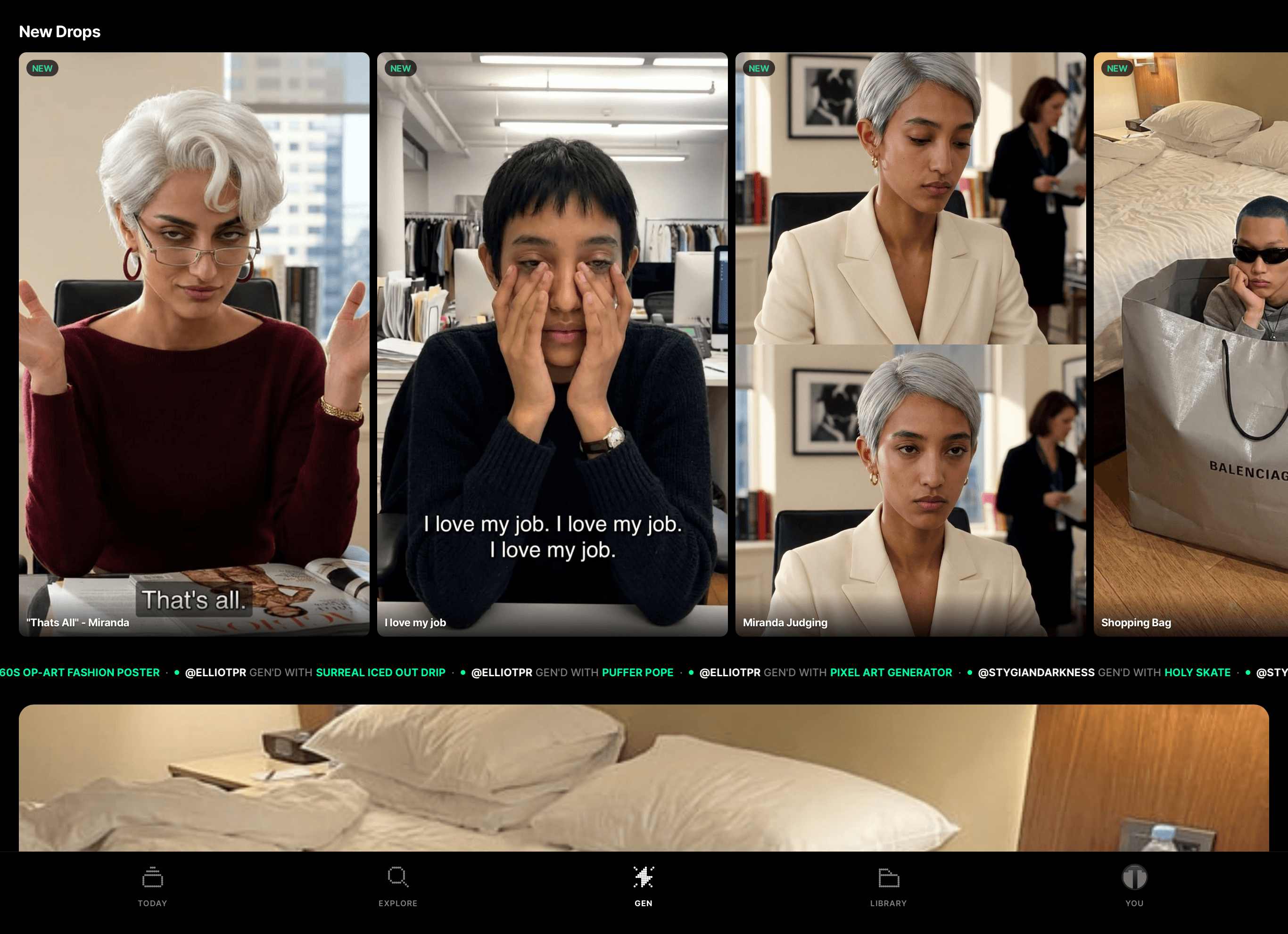
That abstraction is what makes Degen feel less like Midjourney and more like an Instagram filter that happens to know what 2026 looks like. The first wave of public gens leans into specific cultural references: Berghain Baptism drops the user onto the dance floor of the Berlin techno club; Habbo Icon renders them as an early-2000s pixel-hotel avatar; Bratty Duckwalk animates them in the meme posture of the moment; Puffer Pope places them in the streetwear reference that broke the internet in 2013. New gens drop daily, with the schedule published at degen.online/drops.
An anti-feed structure
Content on Degen is private by default. There is no public timeline, no algorithmic feed, no follower count on the home tab. Creations live in channels that Mother.tech describes as small clusters built around taste rather than reach. A "Today" tab surfaces featured drops, trending gens, and posts from people the user follows, but the main interaction unit is the channel, not the broadcast.
The framing matters because it is also the marketing. Mother.tech is positioning Degen against the attention economy that built its founders' careers. Falter and Chagas each spent years inside major social platforms before launching the studio, and their pitch leans on that vantage point. The rejection of virality is the product thesis, not just the brand.
Hands-on with the launch build
First impression of the launch build is the breadth of the gen library. The variety runs wider than the press materials suggest, and the visual design pulls users in fast. The interface is built for repeated taps, which makes Degen addictive in the loop-of-play sense rather than the doomscroll sense. Setup is straightforward: grant photo permissions, pick a gen, generate.
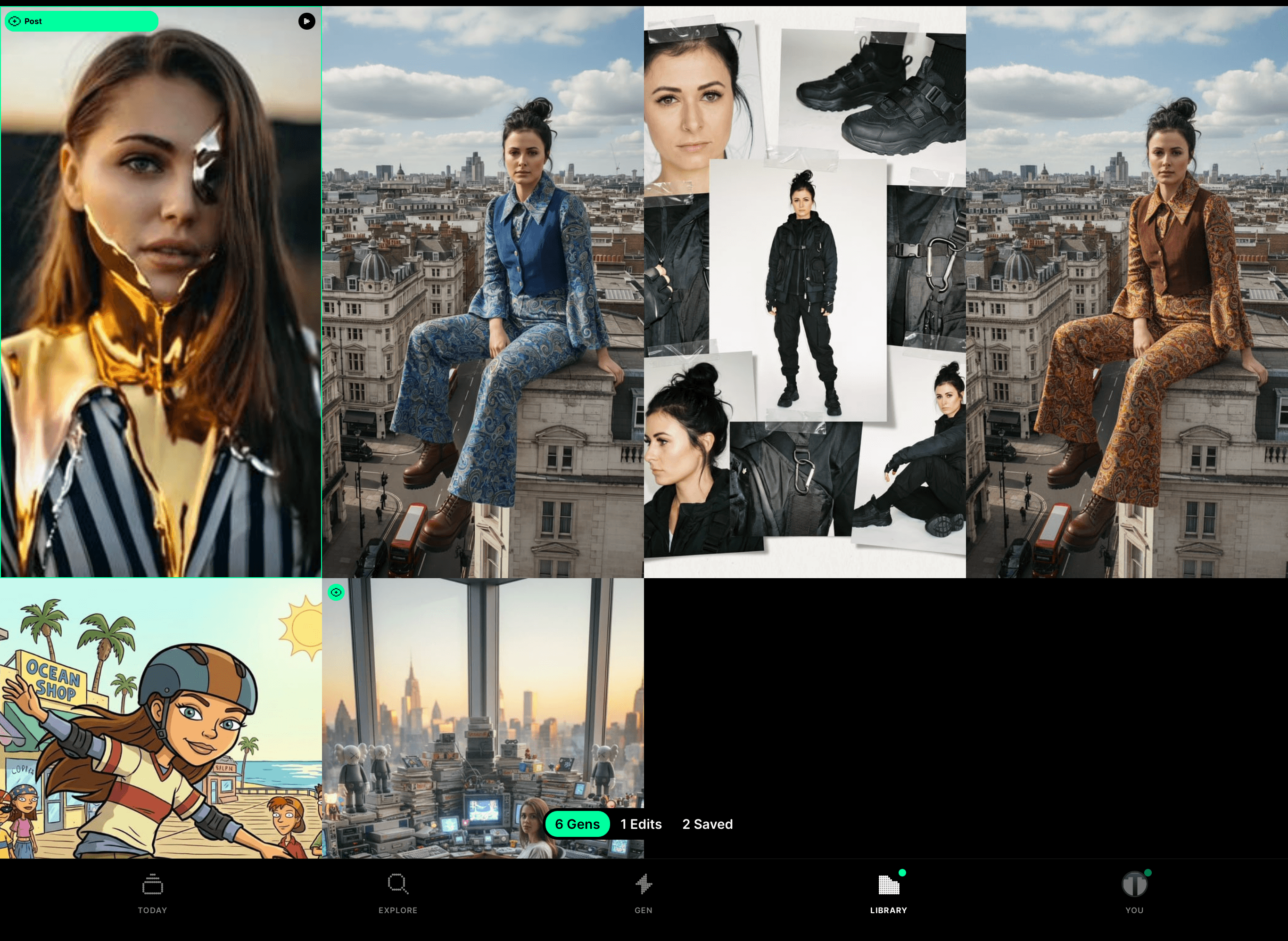
Output quality holds up most of the time. The bulk of the gens tested produced clean, on-style results. A small number came back with the standard AI distortions, mainly hands and finer facial detail, which is consistent with where the underlying models still struggle. For a memes-heavy use case, that artifact tolerance is much higher than for a portrait or product-photography app, and Degen leans into the playful direction rather than the realist one.
What separates Degen from the broader AI-image pack is the social layer underneath. Channels carry follow-and-engage mechanics, but the interaction unit is remix and reaction, not passive scroll. The bridge between AI generation and social participation is the part of the experience that lands hardest in early use.
The creator economy underneath
Each gen runs on a token. A single-token pack runs $1.99 and a 20-token pack runs $24.99, with subscription pricing in development. Users can also earn tokens through referrals, and creators earn a share each time their gen is used. The creator program is in active pilot at launch and opens publicly in the weeks following. Top-performing gens are tracked at degen.online/charts.
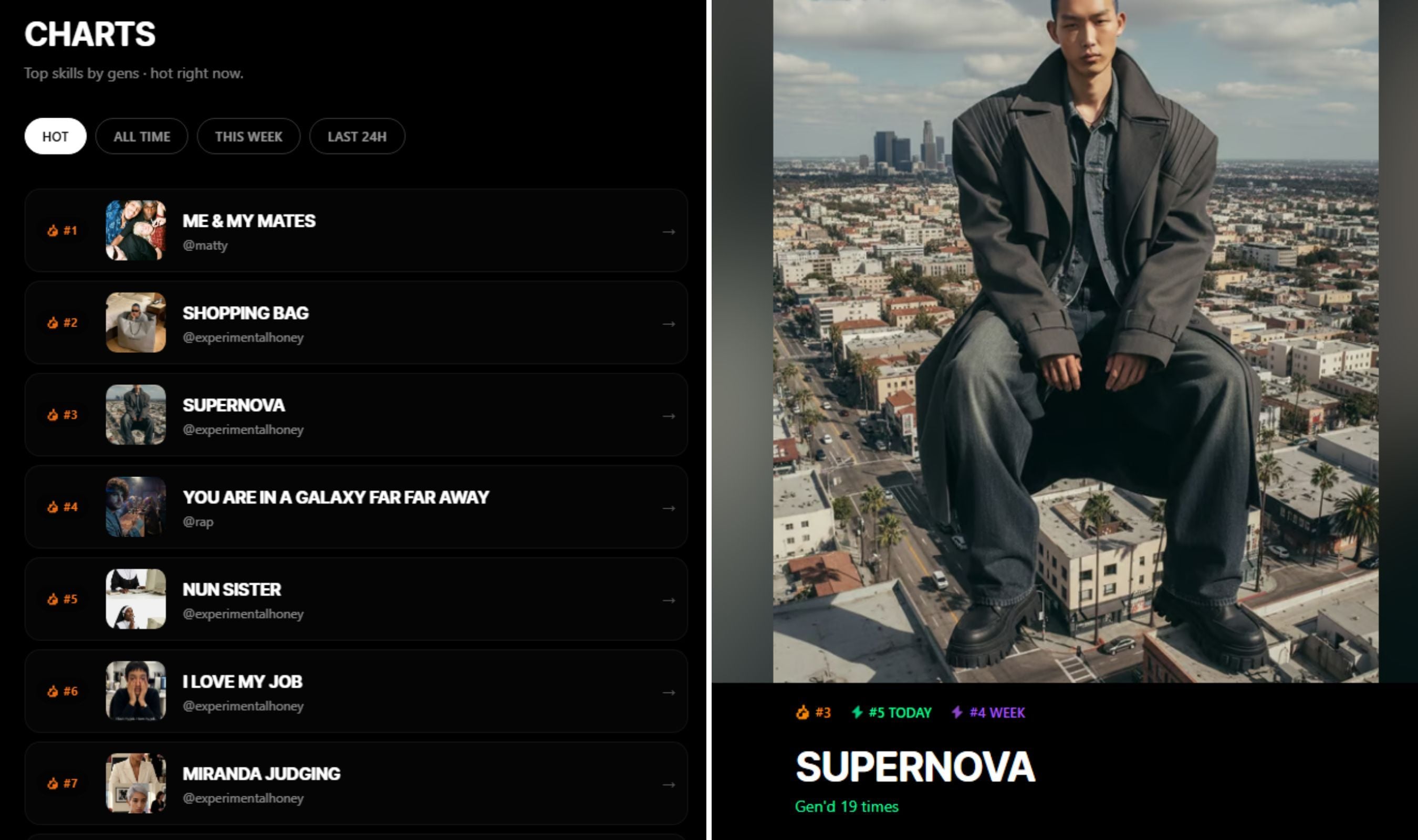
The model is closer to publishing rights than to a sponsorship pool. A gen with a small but engaged audience can outearn a higher-follower creator whose output goes unused. That inversion is what Mother.tech is selling to artists: a structure where creative quality compounds rather than reach. Brian Alcazar's Gassed Up gen, built from his car-culture portrait work, is the launch case study the company is leaning on to demonstrate the format.
The founders' case against the feed
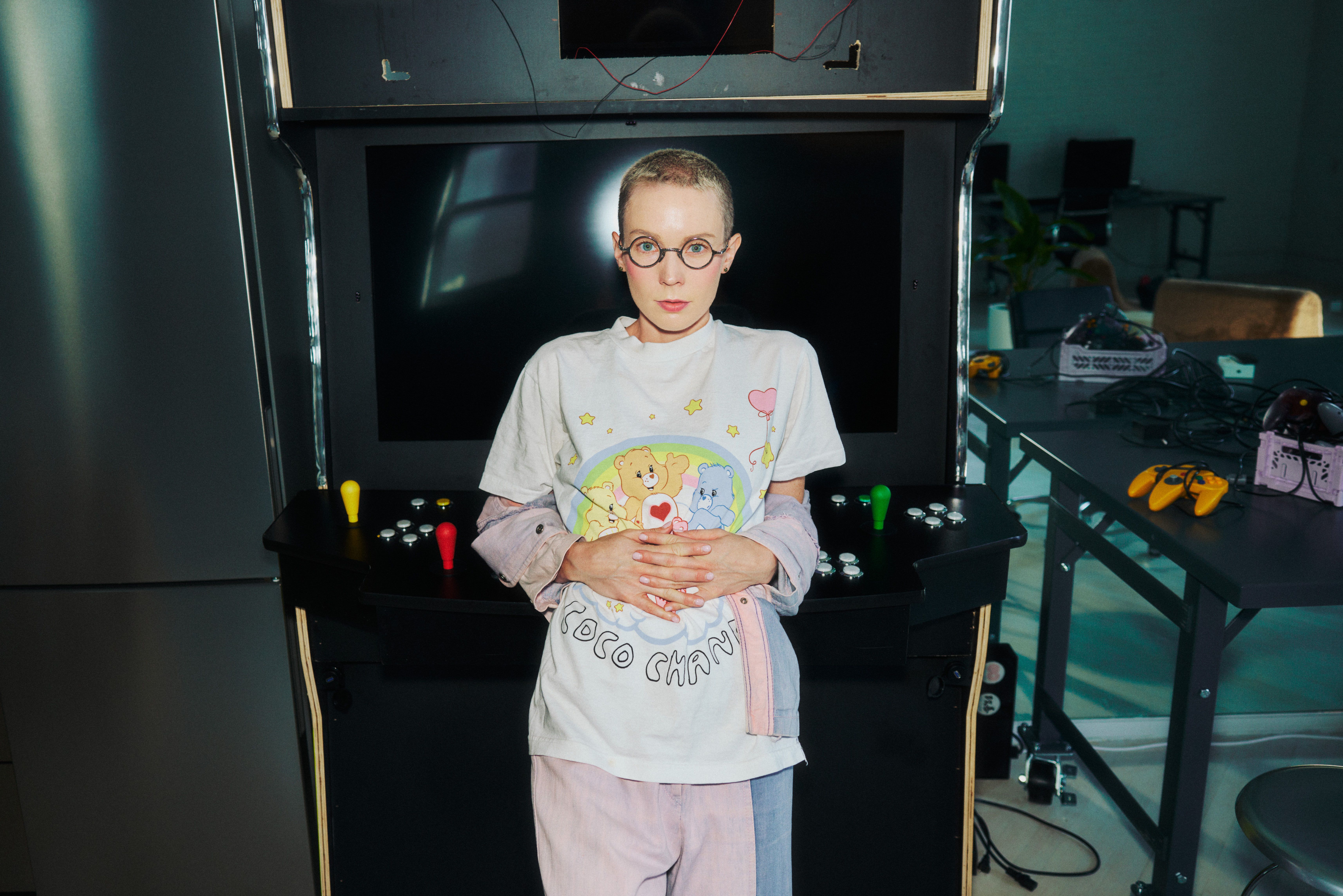
"Content on Degen is private by default. There are no engagement metrics surfaced to users, no 'for you' page optimizing for retention, and no pressure to perform for an invisible audience. Instagram and TikTok make money when you stay on the app longer. We make money when creators build generators and tools that people want to use." Kelsey Falter, co-founder and CEO, Mother.tech
Falter framed user-data control as the second structural distinction. Users own their content and can delete it outright, in her words "not just hide it from their profile, but actually remove it from the system. We don't retain copies for training models or serving ads against your creations." That posture, she said, is the part of the Mother.tech thesis that drew the Google Ventures-led seed round.
Raissa Chagas, the studio's social-media-native co-founder, framed the launch as a return to a pre-optimization internet in the embargoed announcement:
"Growing up, the internet felt like a creative playground with less pressure. This app opens that experience again. I'm having fun regenerating myself by degenerating. Less production, more play. Not everyone wants to perform anymore; it's okay to be unhinged."
Mother.tech is pitching Degen as an experiment in what consumer AI looks like when its founders trust their users instead of optimizing them. The team spans the U.S., Brazil, and Europe, with backgrounds across art, performance, design, and product engineering. The studio's games division has already announced its first title, Le Zoo, with Degen marking its first app.
Degen goes live on the App Store and Google Play via invite at 9:00 AM ET on May 5, 2026, with broader access opening in the weeks after. The daily drop schedule is at degen.online/drops; the public top-gens chart is at degen.online/charts. The open-access creator program rolls out shortly after launch.