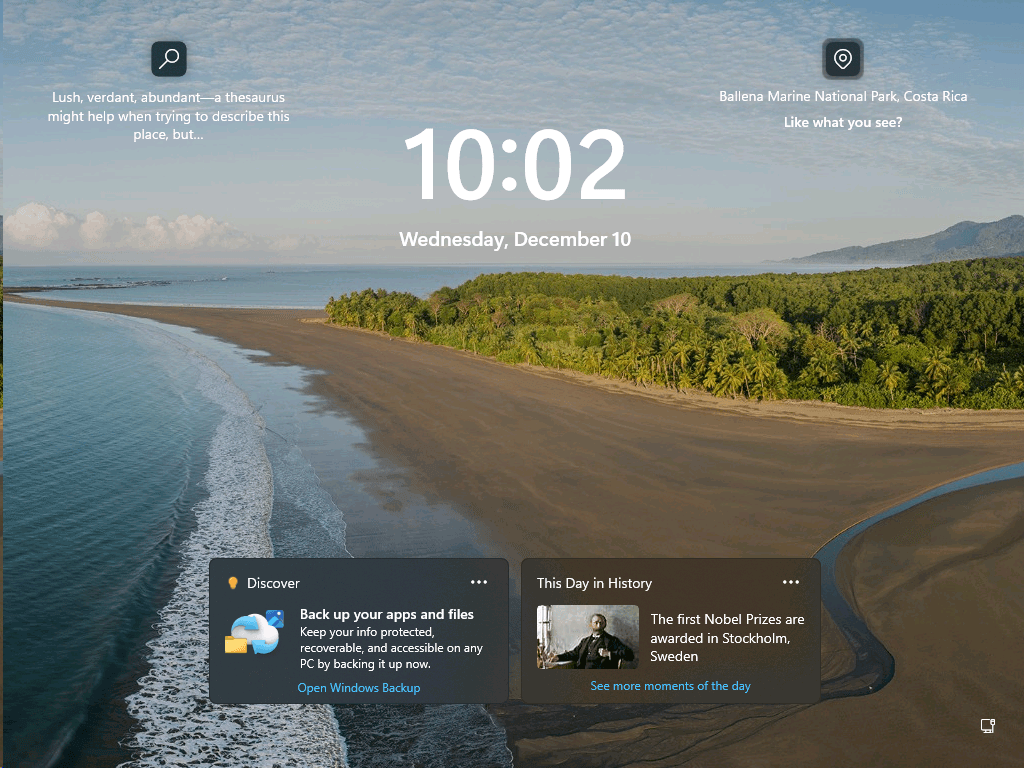
Microsoft introduced a preview of its Agent Launchers framework earlier this month, allowing developers to register AI agents directly with Windows 11. The system uses digital manifests to integrate agents into the taskbar, Microsoft Copilot, and other applications, according to TechRepublic and GeekWire.
The company is reviving its 1990s Windows 3.0 strategy by making the operating system a platform for third-party AI development. Microsoft's 1990 annual report famously described the shift from MS-DOS to Windows as "like bringing a Porsche into a world of Model Ts," a comparison now being applied to AI agents, GeekWire reports.
Windows 11 version 26H1 will launch in 2026 as a full OS upgrade required for Snapdragon X2-based processors. Qualcomm unveiled its Snapdragon X2 Elite and X2 Elite Extreme chips in September 2025, built on a 3nm process to rival Apple's latest M-series silicon, Windows Central notes.
Microsoft 365 Copilot already uses the Agent Launchers framework for first-party tools like Analyst and Researcher. Developers will eventually register their own agents during app installation or activate them dynamically based on user subscriptions, according to TechRepublic and GeekWire.
The company acknowledges significant security risks with AI agents accessing computer systems. A Microsoft support document warns that malicious files could trick agents into stealing data or installing malware, TechRepublic reports. All agentic features remain off by default.
Microsoft is implementing security measures including contained workspaces and dedicated user accounts with limited folder access. The company advises users to "understand the security implications of enabling an agent on your computer" before activation, according to GeekWire.
Windows 11 will gain several user-facing improvements alongside the AI agent infrastructure. The taskbar calendar flyout will show upcoming events and meetings in 2026, restoring functionality that existed in Windows 10 but was missing from Windows 11, Windows Central reports.
Dark mode receives a major overhaul after years of inconsistency across Windows 11 interfaces. Microsoft began testing new dark mode elements late in 2025, with broader implementation expected throughout 2026, according to Windows Central.
Microsoft Teams will add location tracking through Wi-Fi network connections in 2026. The feature automatically updates work locations when users connect to organizational Wi-Fi and shows which building they're in, though it remains off by default, Windows Central notes.
The competitive landscape differs dramatically from Microsoft's 1990s dominance. Windows and Devices generated $17.3 billion in revenue in Microsoft's most recent fiscal year, essentially flat for three years and less than Gaming ($23.5 billion) or LinkedIn ($17.8 billion), GeekWire reports.
Microsoft CEO Satya Nadella wrote in a December blog post that 2026 represents a transition from AI as helpful tool to genuine partner. "We are now entering a phase where we build rich scaffolds that orchestrate multiple models and agents; account for memory and entitlements; enable rich and safe tools use," he stated.
Aparna Chennapragada, Microsoft's chief product officer for AI experiences, emphasized collaboration over replacement. "The future isn't about replacing humans," she wrote. "It's about amplifying them." In this vision, AI agents act as digital coworkers while humans retain judgment and creativity.
Microsoft faces competition from Google's Gemini, Anthropic's Claude, and Amazon's "frontier agents" for cloud automation. The company bets that agents embedded deep in Windows will outperform those running on top of the operating system, according to TechRepublic.
The Xbox Full Screen Experience, which debuted on the Xbox Ally handheld, expands to more Windows gaming PCs in 2026. The feature makes the Xbox app the primary interface for games and services while reducing background programs to free system resources, Windows Central reports.
Long-term agent capabilities include monitoring calendars, resolving scheduling conflicts, and pulling information from multiple apps to prepare meeting briefings. These autonomous assistants would operate directly on user machines beyond simple tasks like file organization, TechRepublic and GeekWire detail.
Microsoft's strategy faces skepticism about whether PC-focused AI can thrive in a mobile-first world. The company missed the mobile era almost entirely, and the PC now competes with smartphones, browsers, and cloud platforms for user attention, GeekWire analysis suggests.
Enterprise adoption represents Microsoft's strongest position through Azure, Microsoft 365 Copilot, and business-focused agents. The company competes against Google, Amazon, and OpenAI for cloud-based AI services while attempting to make Windows the home for individual user agents, according to GeekWire.
Microsoft announced Agent 365 at Ignite 2025 as a control plane for managing fleets of AI agents. The system provides observability through dashboards and alerts for enterprise deployment, WebProNews reports, highlighting Microsoft's focus on business applications.
The company's Build 2025 conference emphasized building an "open agentic web" with AI models featuring enhanced reasoning and memory. These capabilities would handle complex tasks without constant human input, moving beyond simple chatbot interactions, WebProNews notes.
Microsoft's .NET ecosystem and Microsoft Fabric enhancements enable more sophisticated agent behaviors through integrated data platforms. These technical foundations support the shift from chatbots to autonomous actors capable of multi-step workflows, according to WebProNews.
Privacy concerns emerge as agents gain access to files and applications across Windows systems. Microsoft's Partner Center announcements in December 2025 include new capabilities for secure agent deployment addressing these concerns, WebProNews reports.
The success of Microsoft's AI agent strategy depends on developer adoption echoing the Windows app boom of the 1990s. Without guaranteed developer interest in a fragmented tech environment, the platform faces uncertain adoption despite Microsoft's platform-building efforts, GeekWire concludes.
Windows 11's evolution into an AI-native platform represents Microsoft's attempt to regain relevance in a computing landscape dominated by mobile and cloud services. The company positions 2026 as the year AI transitions from experimental feature to integrated partner across its ecosystem.