
Android phones will run faster and last longer on a single charge thanks to a background optimization that targets the operating system's core code.
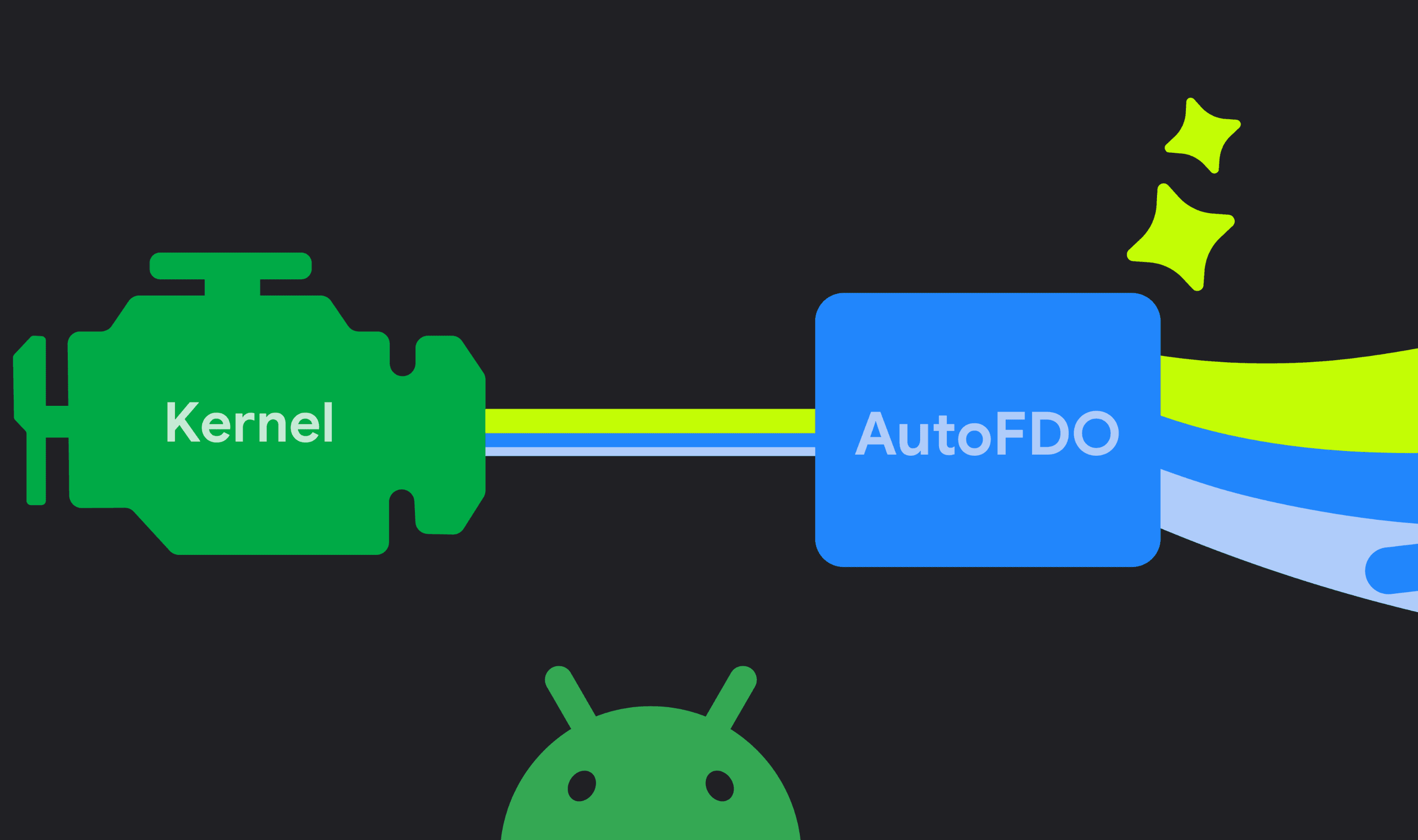
Google's Android LLVM toolchain team announced this week it is deploying Automatic Feedback-Directed Optimization (AutoFDO) to the Android kernel. The technique analyzes real-world smartphone usage patterns to reorganize how Android's most frequently executed code paths run.
The kernel handles memory management, app scheduling, and hardware communication, consuming roughly 40% of CPU time on Android devices. By optimizing this foundational layer, even minor improvements translate to noticeable performance gains across the entire system.
Early testing shows measurable benefits: 2.1% faster boot times and 4.3% quicker cold app launches when applications start from a fully closed state. Google says these backend changes will deliver "a snappier interface, faster app switching, extended battery life, and an overall more responsive device" without requiring new hardware or user intervention.
AutoFDO replaces static code analysis with profiles generated from actual device usage. Google creates these profiles by running representative workloads that simulate how people interact with their phones, including launching and using the top 100 most popular Android applications.
The company claims these simulated patterns match approximately 85% of real-world behavior, making optimizations highly realistic. When compiled software encounters execution paths outside these guided patterns, AutoFDO defaults to traditional compilation methods to maintain system stability.
First introduced in Android 12 back in 2021, AutoFDO is now being deployed across Android 15 and Android 16 kernel branches. Google plans to expand support to future kernel versions and additional system components beyond the current implementation.
Unlike feature updates that appear as new settings or interface changes, this optimization operates entirely in the background. Users won't find a toggle switch or notification about AutoFDO activation; their devices will simply perform better over time as the system learns from usage patterns.
The approach represents a shift from one-size-fits-all optimization to personalized performance tuning based on how individual devices are actually used.