
This article is brought to you in partnership with CZUR.
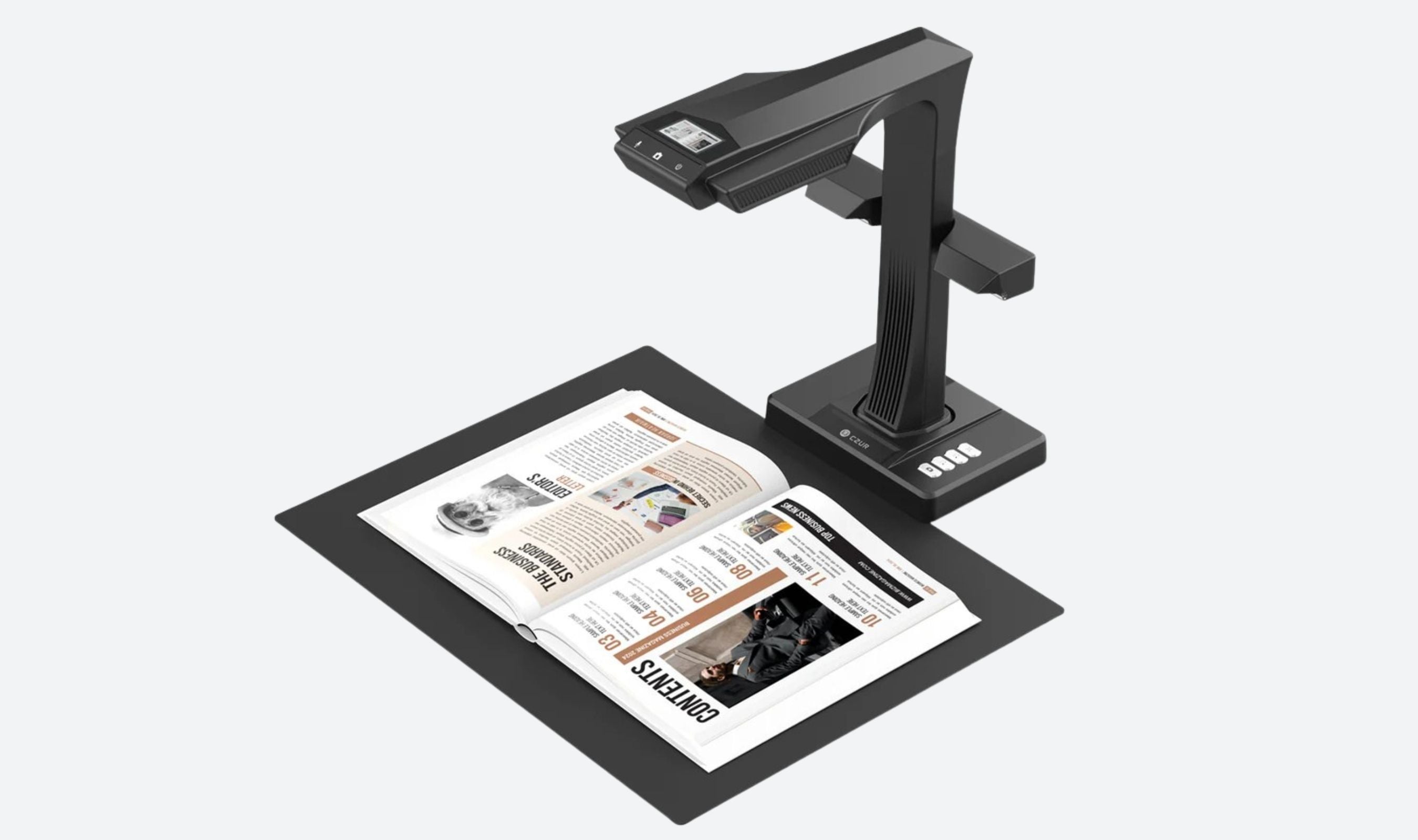
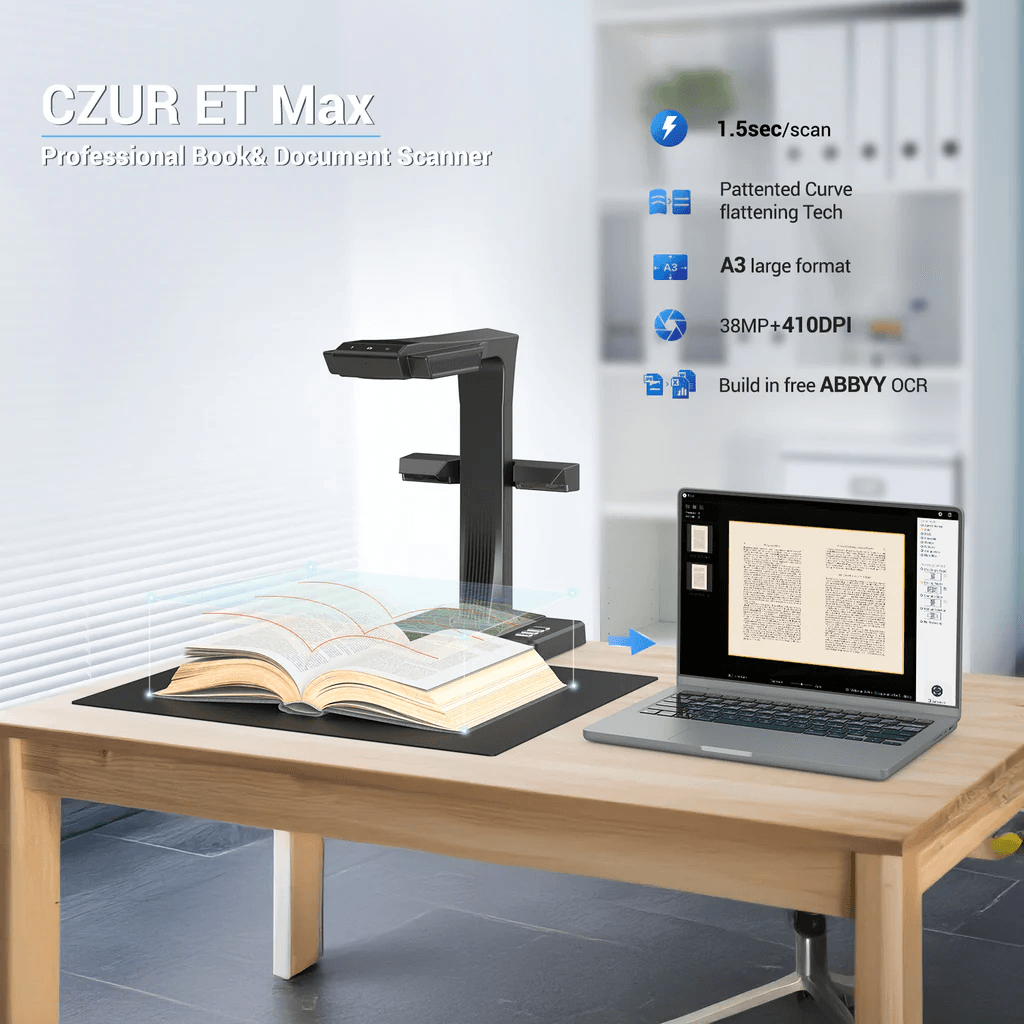
CZUR's new ET Max overhead scanner captures bound book pages at 38 megapixels and 410 DPI in roughly 1.5 seconds, raising the spec ceiling for archivists, libraries and offices that digitize at volume.
The Shenzhen-based scanner maker unveiled the ET Max on June 4, 2025 as the new flagship of its ET overhead lineup, and the retail rollout follows a Kickstarter campaign that pulled in over $1.1 million from 2,042 backers. The unit ships now through CZUR's direct store and selected retailers, aimed at teams scanning bound material without cutting spines or risking page damage on a flatbed.
Flattening the Spine With Lasers
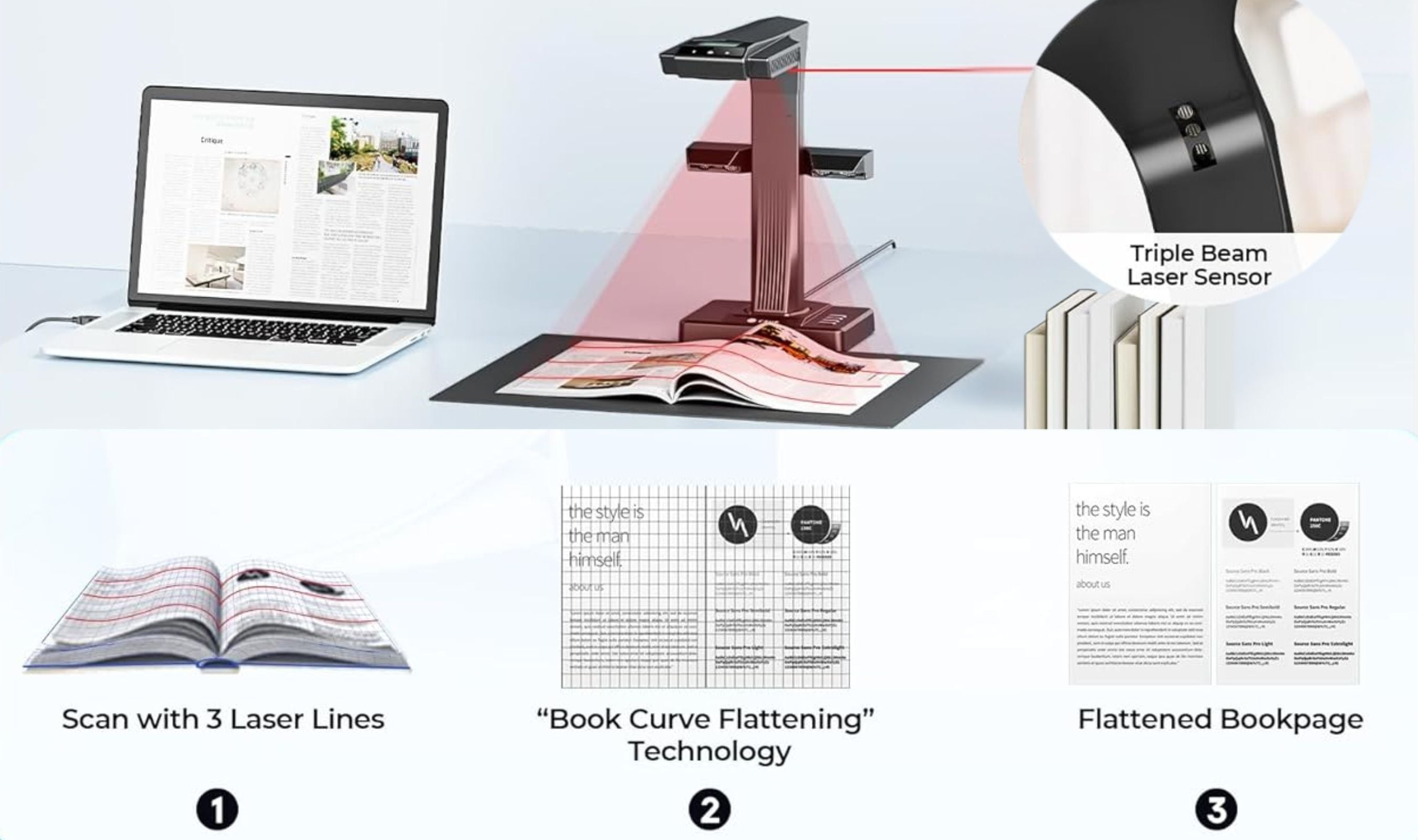
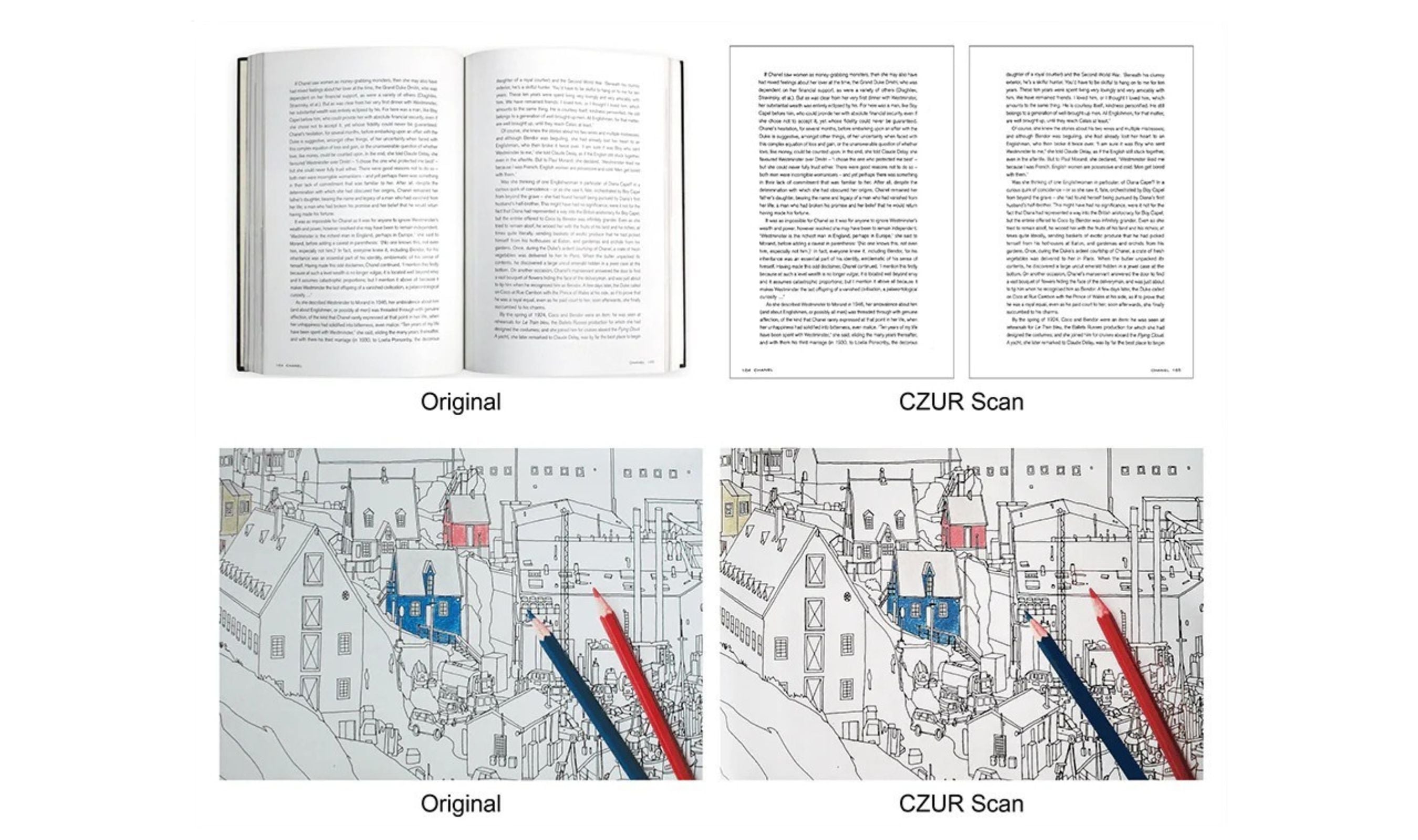
The headline feature is CZUR's patented Curve Flattening Technology. A laser array sweeps across each open spread, maps the three-dimensional shape of the curved page, and feeds that data to the desktop software, which corrects the warp in real time before output. Text reads flat from edge to gutter even on thick volumes left fully bound.
That sidesteps the two routes book digitization has historically forced on operators. Cutting the spine, or pressing pages onto a flatbed and accepting distortion near the binding. The ET Max does neither, which is the difference between an irreplaceable journal coming back intact and coming back damaged.
What 38 Megapixels Captures
The 38MP sensor outputs at 7168 by 5376 pixels in 24-bit color, with optical resolution at 410 DPI by default. That gives operators headroom for cropping into footnotes, zooming on marginalia, and repurposing scans as high-resolution figures in published material. Capture area runs to A3+ (18.89 by 14.17 inches), with a 50mm depth tolerance for dense reference works.
For context, the previous ET24 Pro topped out at 24 megapixels and 320 DPI. The Max moves closer to the resolution bands that institutional archivists typically specify for OCR work.
One Page Every Second and a Half
Each scan completes in around 1.5 seconds. Page-turn detection fires the next capture automatically when the operator moves to a new spread, which puts a 300-page book through the unit in roughly ten minutes of active work. Manual operation is supported through a hand button, a foot pedal, the software, or the buttons on the scanner base, all bundled in the box.
The foot pedal does more work than the spec sheet suggests. Hands-free triggering keeps both hands on the book, which is what actually caps throughput on long sessions.
Cleaning the Image Before Export
The bundled CZUR software runs the post-capture cleanup that would otherwise eat hours. Auto Finger Removal erases the cot-covered thumbs holding stubborn pages flat. Auto Tilt Correction squares up skewed originals. Auto Page Splitting saves left and right pages as separate files for cleaner on-screen reading. Color modes cover full color, grayscale, black and white, and a Stamps mode that preserves color seals against a cleaned background.
Lighting feeds those algorithms. Two overhead LED bars combine with a 45-degree attachable side light to flatten reflections on glossy pages and laminated cards, with brightness adjustable across four levels. The fixed overhead arm holds the 38MP camera at a constant 375mm height for repeatable framing across long scanning runs.
Setting Up the Software
The ET Max does not work straight from the box. The CZUR desktop application has to be downloaded from the company's site before the scanner will capture anything. From CZUR's software download page, select the ET Max model and pick the installer for Windows, macOS or Linux. The app supports Windows 11 through XP SP3 and macOS 10.13 or later.
First launch asks for a serial number. The SN is printed on the underside of the scanner base. One catch worth knowing up front: the string contains the capital letter I but no numeral 1, so check carefully before typing it in.
ABBYY OCR Across 180 Languages
Text recognition runs on ABBYY's engine, the same OCR stack used across enterprise document workflows. It covers more than 180 languages and exports to searchable PDF, Microsoft Word, Excel, TIFF and JPG. Accuracy on standard serif and sans-serif text holds at small point sizes, which matters for dense reference works set in tight type. Searchable PDF output turns digitized archives into greppable text rather than locked image files, which is the actual point of OCR for most institutional workflows. CZUR includes the OCR software for the lifetime of the device with no per-page or per-conversion fee.
Where It Falls Short
Overhead scanning still carries trade-offs the ET Max does not remove. Glossy paper and laminated surfaces can reflect enough light back to the sensor that color rendition shifts, even with the side light angled correctly. Sheen-heavy magazines, plasticized ID cards and photo prints often need brightness and color mode tweaks rather than default settings.
Page turning is also manual. The unit does not feed or flip pages on its own, so scanning pace tracks how quickly the operator turns a spread cleanly. On very large volumes, that physical step is the real bottleneck, not the 1.5-second capture time. New users should also plan for a short learning curve, since color mode, cropping, OCR routing and export format are spread across several screens in the CZUR application.
Where the ET Max Fits
CZUR positions the ET Max as a professional overhead scanner for digitizing books, documents and ID cards, with offices and high-volume use as the target audience. Law firms moving paper case files. Libraries running retrospective digitization on rare and circulating collections. Corporate compliance teams archiving ID and contract scans. Educators capturing pages live for online classes, with the HDMI port doubling the unit as a visual presenter at 1920 by 1080 and 60Hz.
The buyer most likely to get value here is an operator with a high-volume workflow, bound or fragile material, and patience for the software's initial setup. Occasional single-page users, or anyone wanting a one-button consumer device, will find the ET Max beyond the task. Teams scanning mostly glossy photography are better served by a dedicated flatbed photo scanner.
Overhead scanning has spent the last few years closing the gap with flatbed image quality while keeping the no-contact advantage that makes it usable on bound and fragile material.
For institutional buyers weighing overhead against flatbed, the decision increasingly comes down to workflow and throughput rather than output quality alone.
The CZUR ET Max ships now through shop.czur.com with a one-year limited hardware warranty, lifetime free CZUR software, and free shipping on orders over $50 to more than 40 countries.