
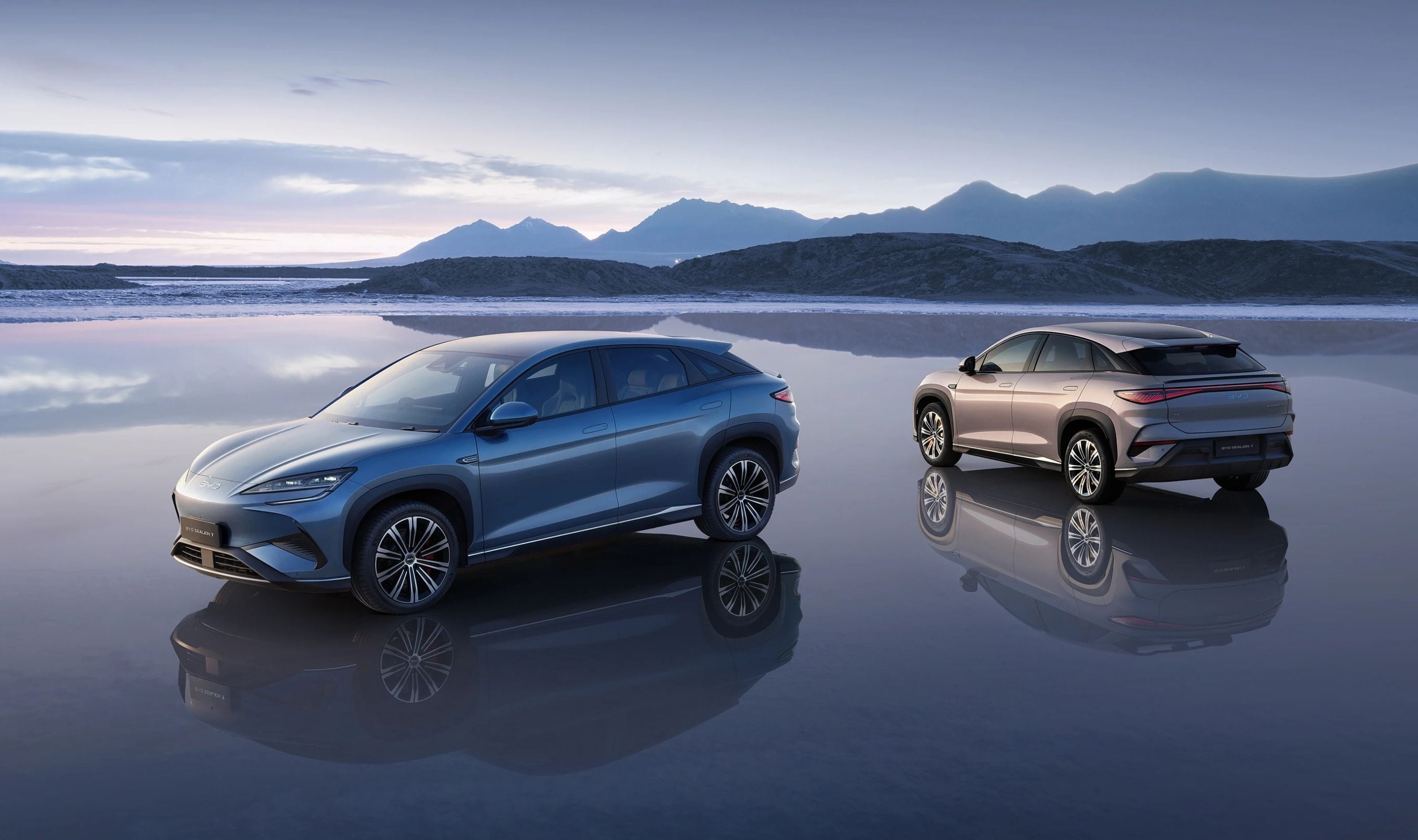
A quad-motor electric sedan that travels over 1,000 kilometers on a single charge while refueling nearly as fast as a gasoline car represents what BYD calls its solution to the "impossible triangle." The Chinese automaker's second-generation Blade Battery technology debuted this week with charging speeds that reach 70% capacity in five minutes and deliver more than double the range of its predecessor.
BYD introduced Blade Battery 2.0 during its Disruptive Technology event on March 5, marking the company's first major battery upgrade in six years. The new system enables a pure electric range of 1,006 kilometers (625 miles) under China's CLTC testing cycle, up from approximately 600 kilometers with the original version introduced in 2020.
The breakthrough comes not from incremental improvements but from solving fundamental physics constraints that have limited electric vehicles to excelling in only one area at a time. Zheng Yu, Product Director of BYD's luxury brand Yangwang, explained that larger batteries with higher energy density typically face challenges with charge-discharge rates and thermal management when attempting both high performance and rapid charging.
The updated technology addresses these limitations through a combination of a 150 kWh battery pack, enhanced high-voltage platform integration, and upgraded vehicle thermal management systems. It allows vehicles to recharge from 10% to 70% capacity in just five minutes under normal conditions, with a full charge from empty reaching 97% in nine minutes.
Even in extreme cold weather conditions as low as -30°C (-20°F), the battery maintains impressive charging capabilities, replenishing from 20% to 97% in twelve minutes after being exposed to frigid temperatures for twenty-four hours.
"Stopping at 97% charge preserves the remaining capacity for regenerative braking functions."
BYD CEO Wang Chuanfu noted this during the presentation. The Yangwang U7 luxury sedan will be the first vehicle equipped with Blade Battery 2.0 when it launches later this year.
What makes this achievement particularly notable is that the U7 features a quad-motor "Super Quad-Motors" system, a configuration that inherently consumes more power yet still achieves the extended range benchmark.
Safety testing remains central to BYD's battery development philosophy. The new battery successfully passed rigorous nail penetration and bottom impact evaluations without showing signs of thermal runaway, maintaining the safety reputation established by its lithium iron phosphate-based predecessor.
While Chinese CLTC ratings typically translate to approximately 900 kilometers under WLTP testing standards and around 725 kilometers using U.S. EPA methodology, even these adjusted figures place vehicles equipped with this technology well beyond current market offerings.
It arrives as BYD seeks to regain momentum in China's increasingly competitive domestic EV market following recent sales challenges. The company plans to expand its "Flash Charging" network to twenty thousand stations by year's end as part of broader infrastructure development supporting next-generation battery capabilities.