
There's a reason most people keep separate headphones for work and music. Work headsets prioritize mic clarity and UC platform integration. Music headphones prioritize soundstage and bass. Picking one usually means sacrificing the other. The EPOS Adapt 660 refuses to make that trade-off, and after a few week of wearing these through full work days, conference calls, commute playlists, and late-night listening sessions, I can say it mostly pulls it off. The audio quality is genuinely excellent. The battery runs for days.
Technobezz is supported by its audience. We may get a commission from retail offers. Reviews ethics statement.
EPOS Adapt 660 Review: A Work Headset That Actually Sounds Great
The EPOS Adapt 660 combines 30-hour battery life, adaptive hybrid ANC with EPOS BrainAdapt technology, a 3-microphone EPOS AI system, USB-C dongle connectivity, and dual-device Bluetooth in a…
Updated April 14, 2026Apr 14, 2026
•15 min read

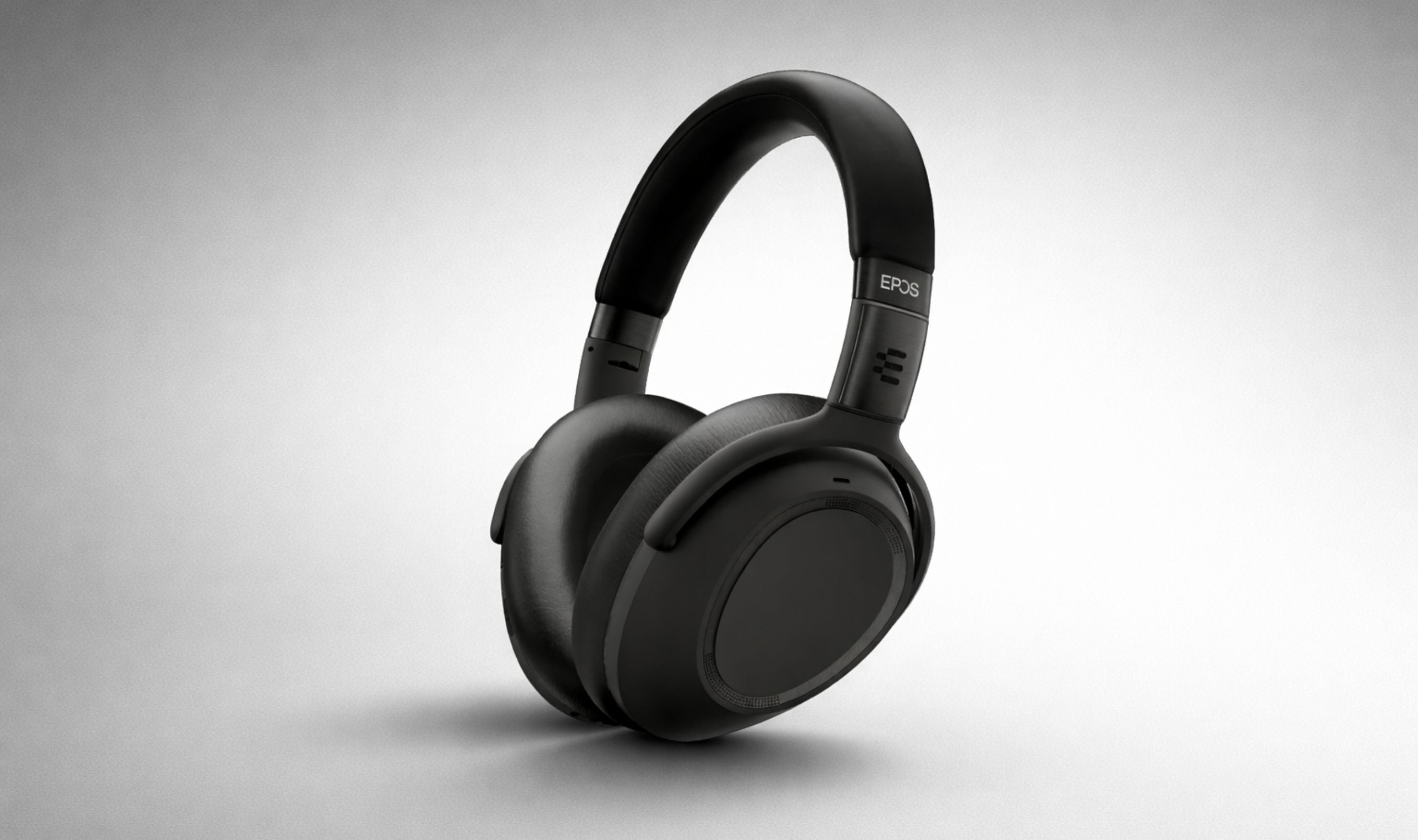
Credit: Technobezz
Get Deals Like These in Your Inbox
The best prices, straight to your inbox.
On GoogleFollow Technobezz: add us as a preferred source.

9/ 10
Best for Remote workers, hybrid professionals, and frequent travelers who need a single headset for all-day calls, music, and meetings with seamless multi-device connectivity and premium audio quality
EPOS Adapt 660 USB-C Wireless ANC Headset
TypeOver-ear, closed-back, wireless
ANCAdaptive hybrid with 4 ANC microphones
ANC TechnologyEPOS BrainAdapt (67% listening effort reduction)
Microphones3-microphone system with EPOS AI machine learning
Battery (Listening)Up to 30 hours with ANC off, 23 hours with ANC on
Battery (Talk Time)Up to 25 hours
The Bluetooth connectivity across multiple devices is the smoothest I've tested. And the entire setup experience, from unboxing to first call, feels like a product that was designed by people who actually use headsets for a living.
The ANC is solid but not class-leading, and the microphone is very good without being outstanding. At $319 MSRP, these sit in premium territory where expectations are high. But for a headset that handles Teams meetings, Zoom calls, Spotify playlists, and airplane noise all from the same pair of ear cups, the Adapt 660 makes a compelling case for being the only headphones on your desk.
EPOS Adapt 660 Wireless ANC Headset - Best Premium Wireless Work Headset
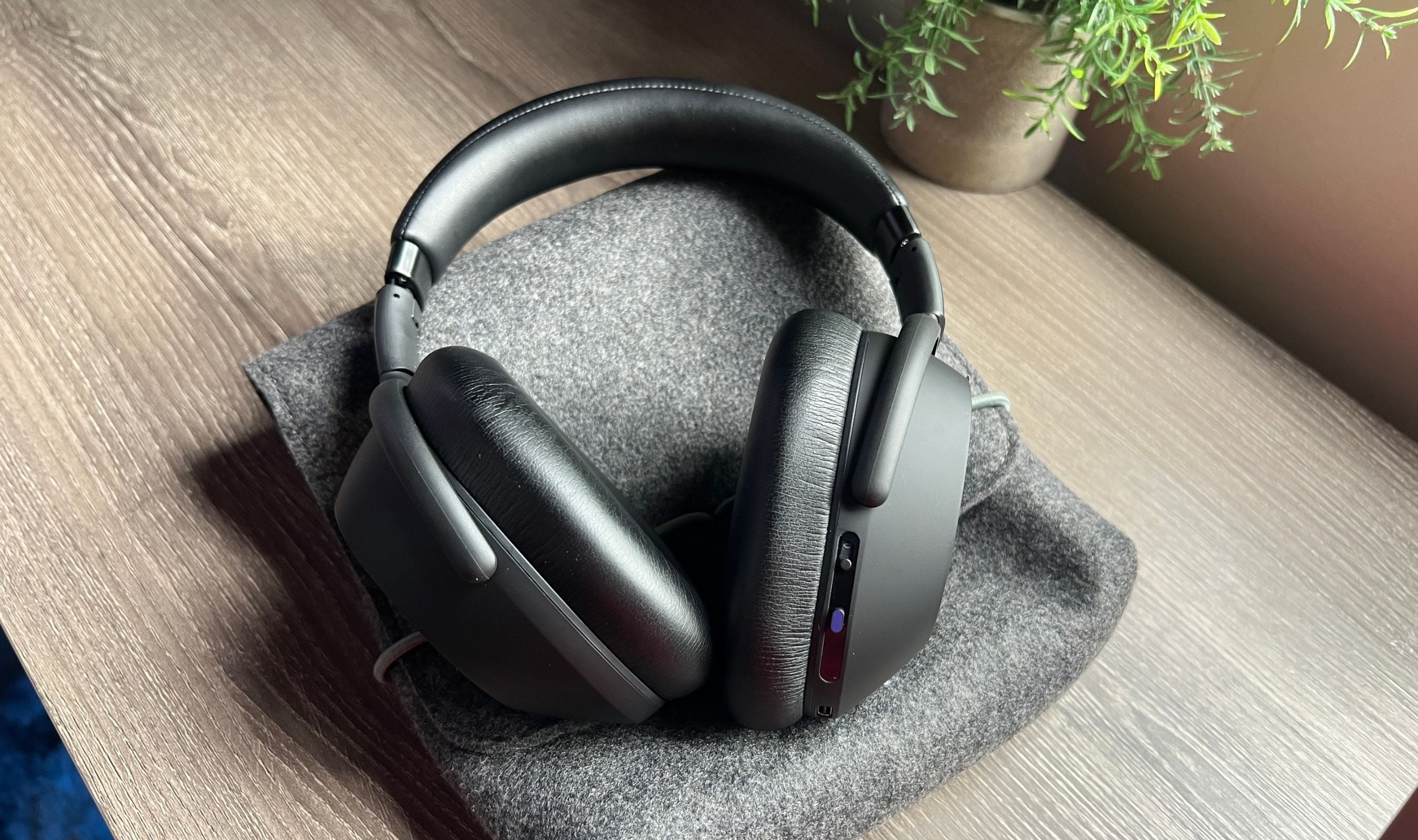
The EPOS Adapt 660 is a wireless over-ear headset with adaptive hybrid ANC, EPOS BrainAdapt technology that reduces listening effort by 67% in noisy environments, a 3-microphone system with EPOS AI for optimized voice pickup, up to 30 hours of battery life with ANC off, dual-device multipoint Bluetooth, an included USB-C dongle for a dedicated PC connection, touch controls, and certifications for Microsoft Teams, Zoom, Google Meet, and Cisco Webex. It features modern USB-C charging and dongle connectivity.
Key Highlights
- Up to 30 hours of listening time with ANC off (23 with ANC on) and 23 hours of talk time on a single charge
- Adaptive hybrid ANC with 4 microphones that adjusts to your environment automatically
- EPOS BrainAdapt technology proven to reduce listening effort by 67%
- 3-microphone system with EPOS AI for natural, optimized voice pickup
- USB-C dongle included for a reliable, dedicated PC and laptop connection
- Dual-device multipoint Bluetooth for seamless switching between phone and computer
- Certified for Microsoft Teams, Zoom, Google Meet, Cisco Webex and more
- Touch controls on the right ear cup for volume, track skip, and call management
- Swivel on/off mechanism that powers down when you fold the ear cups flat
- 8.14 oz (231 g) lightweight with leatherette and memory foam ear pads
- 2.5 mm audio socket with a supplied 2.5 mm to 3.5 mm cable for wired listening with full ANC and volume control
- EPOS Connect app with customizable EQ presets and firmware updates
Pros
- Audio quality is exceptional with clear bass, detailed mids, and an open, spacious soundstage
- Battery life is outstanding at up to 30 hours (23 with ANC on), easily lasting multiple work days between charges
- Setup experience from unboxing to first call is polished, quick, and genuinely impressive
- Bluetooth connectivity is rock-solid with seamless switching between two paired devices
- Build quality feels premium with purposeful button placement and durable materials
- Touch controls on the right ear cup are responsive and intuitive every time
- Swivel on/off mechanism is clever and adds to the premium feel
- Super lightweight and comfortable enough for all-day wear without fatigue
- EPOS Connect app is well-built, stable, and purposeful with useful EQ customization
- USB-C dongle provides reliable connection for calls without Bluetooth dropouts
- Stylish design that looks professional without being boring
Cons
- ANC is effective but not on the level of Sony or Bose flagship headphones at this price
- Microphone quality is very good but not outstanding, can sound slightly compressed in noisy environments
- $319 MSRP puts it in premium territory where competition is fierce
Who It's For
Remote workers, hybrid professionals, frequent travelers, and anyone who spends most of their day switching between calls, meetings, and music. If you're tired of using consumer headphones that fumble on work calls, or work headsets that sound lifeless when you play music, the Adapt 660 bridges that gap. The long battery life and lightweight comfort make it especially suited for people who wear headphones 6 to 8 hours a day without wanting to take them off.
Skip if
If best-in-class ANC is your top priority and you don't need UC certifications, the Sony WH-1000XM6 or Bose 700 will outperform the Adapt 660 in pure noise cancellation. If you need a boom microphone for crystal-clear call quality in loud environments, a dedicated UC headset like the Jabra Evolve2 85 might serve you better. And if $319 is above your budget, the EPOS Adapt E1 earbuds offer excellent connectivity and sound at a lower price point.
Design, Build, and Comfort
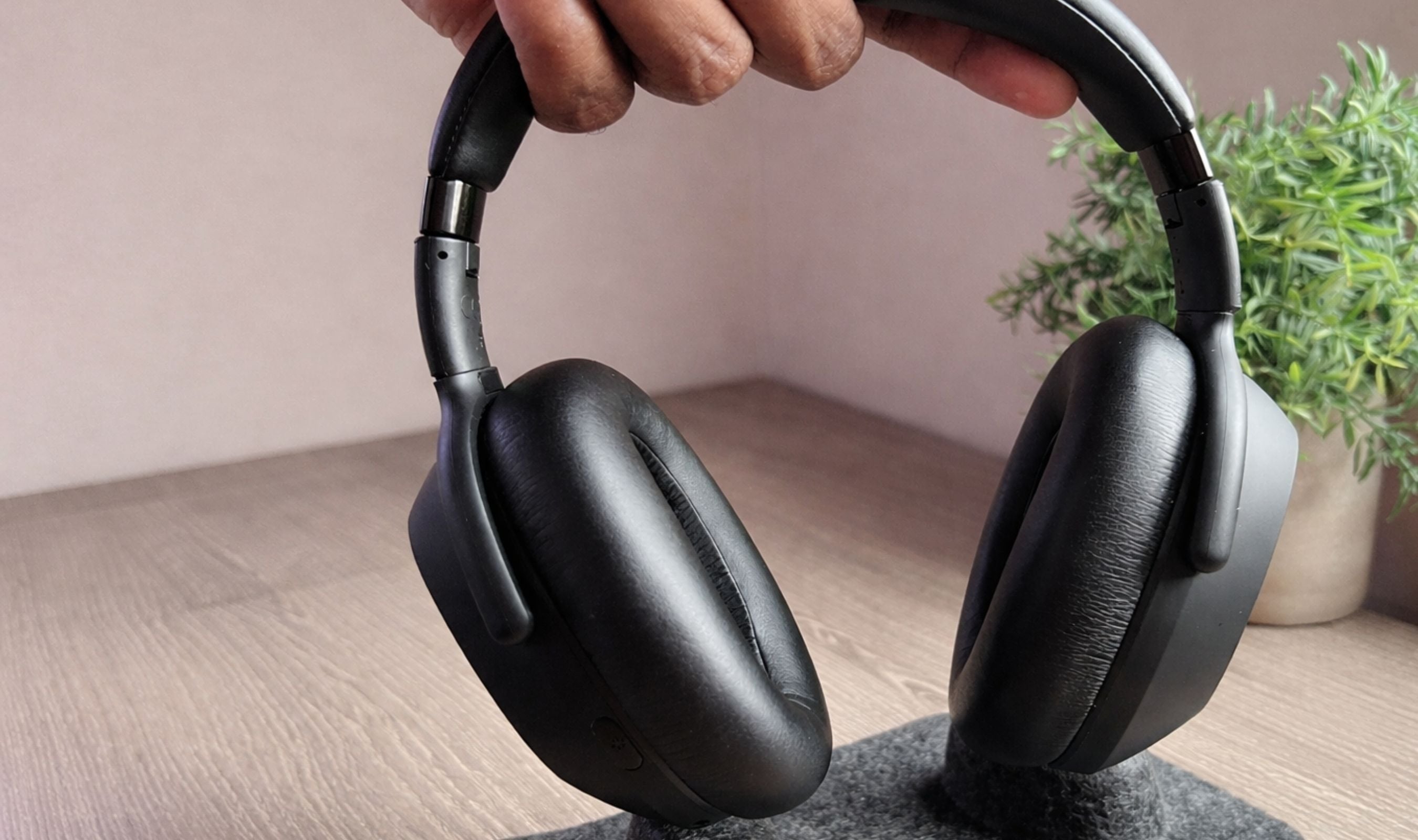
The Adapt 660 has a clean, understated design that says "professional" without screaming "gaming headset." The matte black finish is minimal, the branding is subtle, and the overall silhouette is slim enough that you won't look out of place wearing these in a meeting room, at a coffee shop, or on a flight. The build is a mix of metal and high-quality plastic that feels sturdy without adding unnecessary weight.
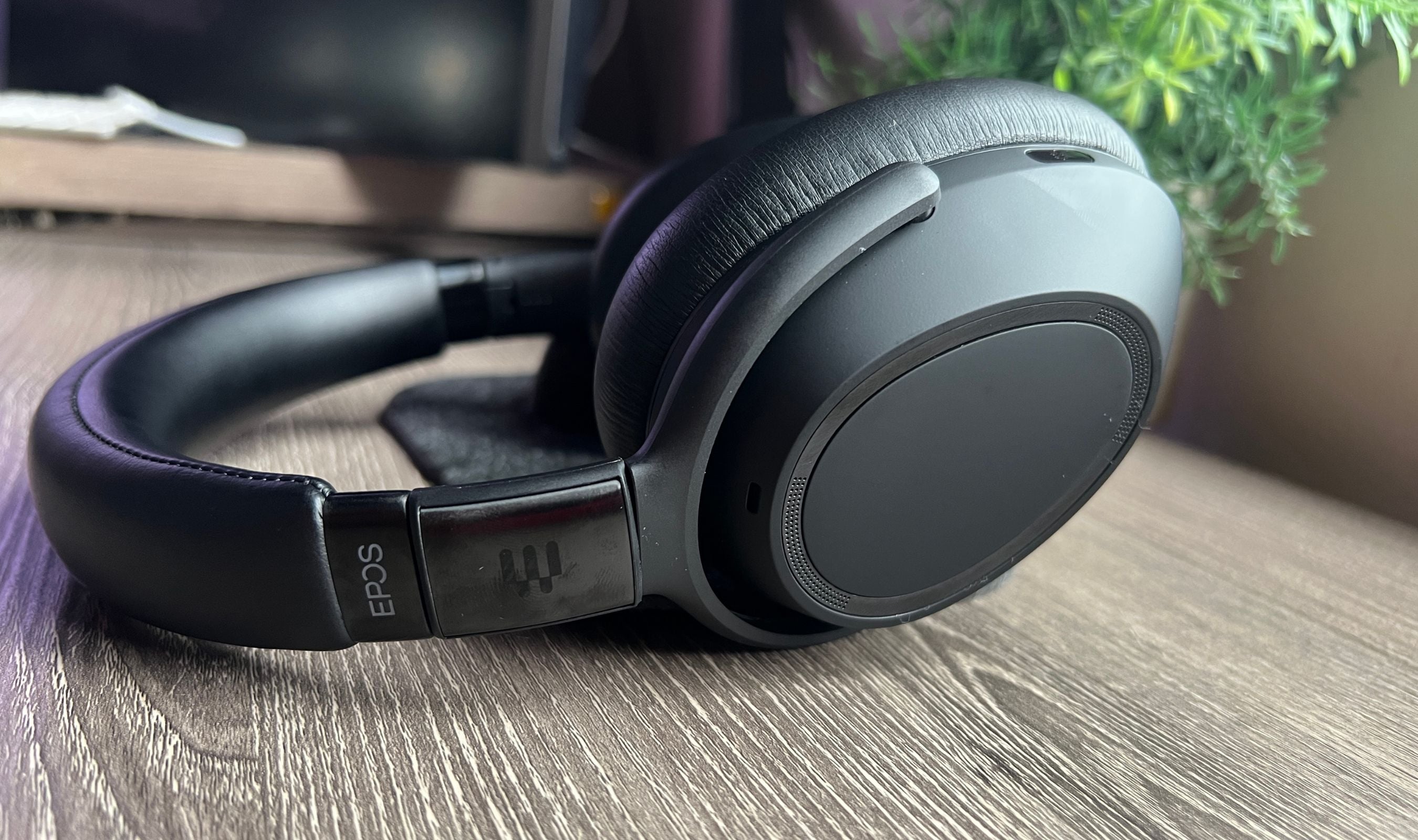
At just 8 ounces, these are some of the lightest ANC over-ear headphones I've worn. The leatherette and memory foam ear pads are soft, shaped to match the contour of your ear, and the padding across the headband distributes pressure evenly. I wore these for full 8-hour work days without any discomfort, pressure on my jaw, or hot ears. That's not something I can say about every over-ear headset, and for a product designed for all-day professional use, it's a critical detail that EPOS nailed.
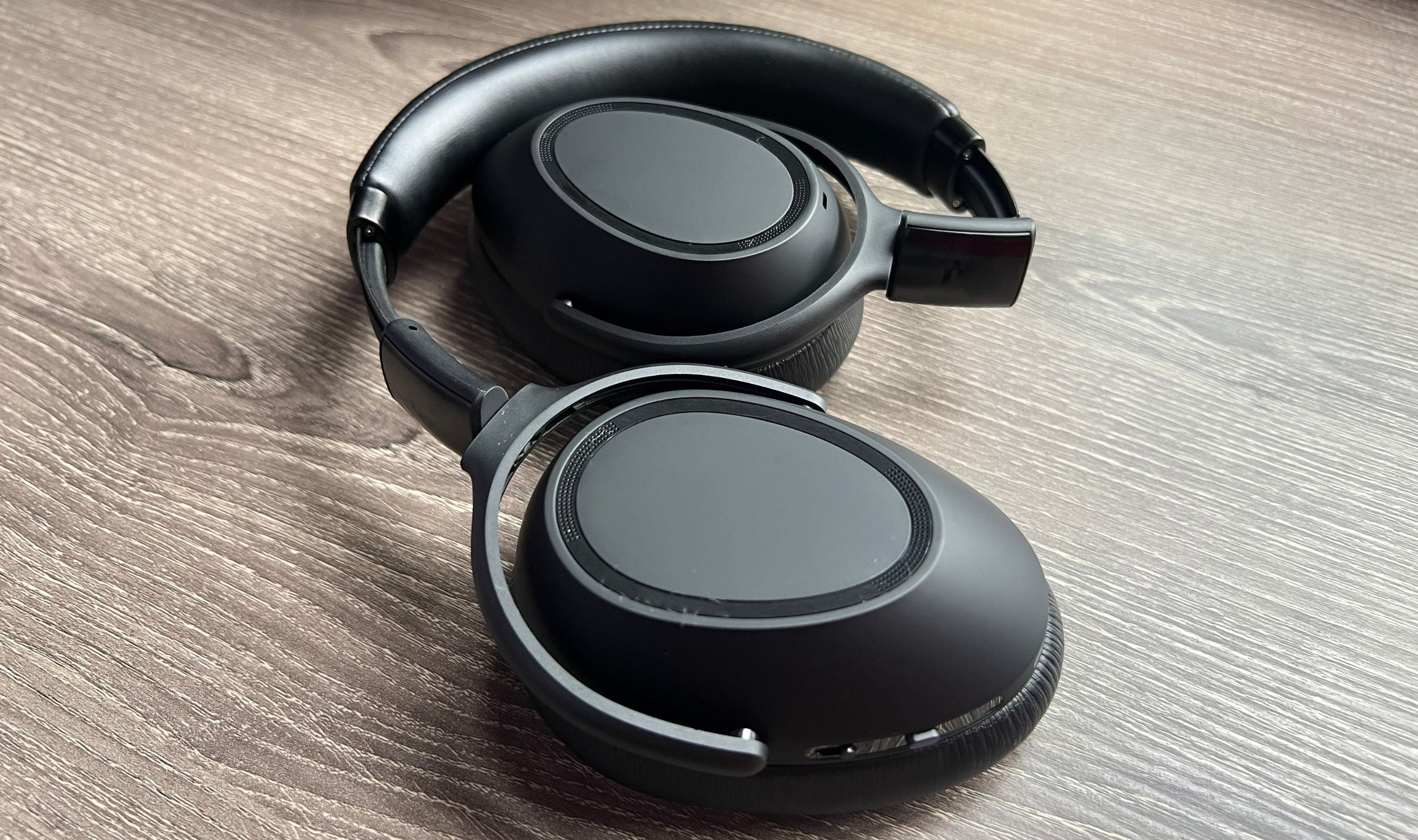
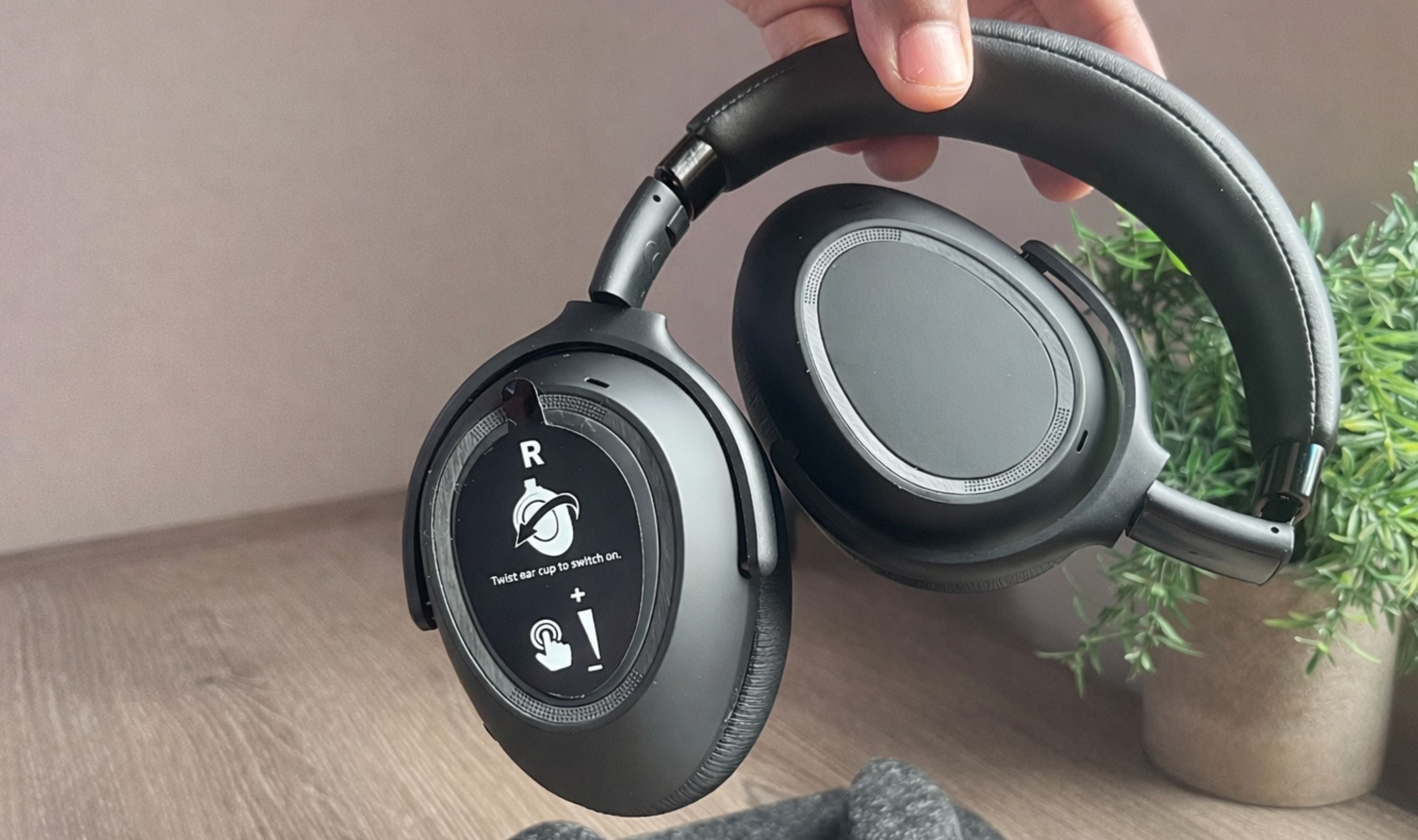
The ear cups fold flat and the headband folds inward, making the whole headset compact enough for the included carry pouch. The swivel mechanism that powers the headset on and off is clever. Rotate the ear cups outward to their listening position and the headset powers on. Fold them flat and it powers off. It feels premium and eliminates the need for a separate power button. The one downside is that resting the headset around your neck can sometimes trigger the off position, requiring a quick reconnect. Once you're aware of it, it's easy to avoid.
Sound Quality
This is where the EPOS and Sennheiser heritage really shines. The Adapt 660 USB-C sounds fantastic for a wireless work headset. The drivers support a frequency range of 17 Hz to 23,000 Hz, and the result is a wide, open soundstage with punchy bass, clear mids, and detailed highs. Music sounds immersive and dynamic. Vocals come through with clarity and presence. Bass has real depth without overpowering everything else. There's a spacious quality to the audio that many noise-canceling headphones lack because they tend to sound boxed in.
The EPOS Connect app lets you customize the sound with several presets including Club, Movie, Speech, Neutral, and a custom Director mode where you can adjust the profile to your taste. The Speech preset strips out bass and focuses on the vocal range, which is perfect for long meeting days. Club gives you more energy for music. I spent most of my time on a custom profile that boosted treble slightly for more detail, and the headset responded well to the adjustment.
For calls, the audio coming from the other end is crisp and natural. The Call Enhancement feature in the EPOS Connect app is worth enabling immediately. It makes voices on calls sound remarkably clear, almost like the person is sitting across from you. Combined with the sidetone feature that lets you hear your own voice at a comfortable level, the call experience is genuinely excellent.
Connectivity and the USB-C Dongle
Connectivity is where the Adapt 660 excels beyond what most consumer headphones offer. The included USB-C dongle plugs into your laptop or desktop and provides its own dedicated Bluetooth link to the headset, which proved more stable than pairing with the computer's built-in Bluetooth. For video calls, this translates to consistent audio sync, no random drops, and no frustrating re-pairing after your laptop wakes from sleep.
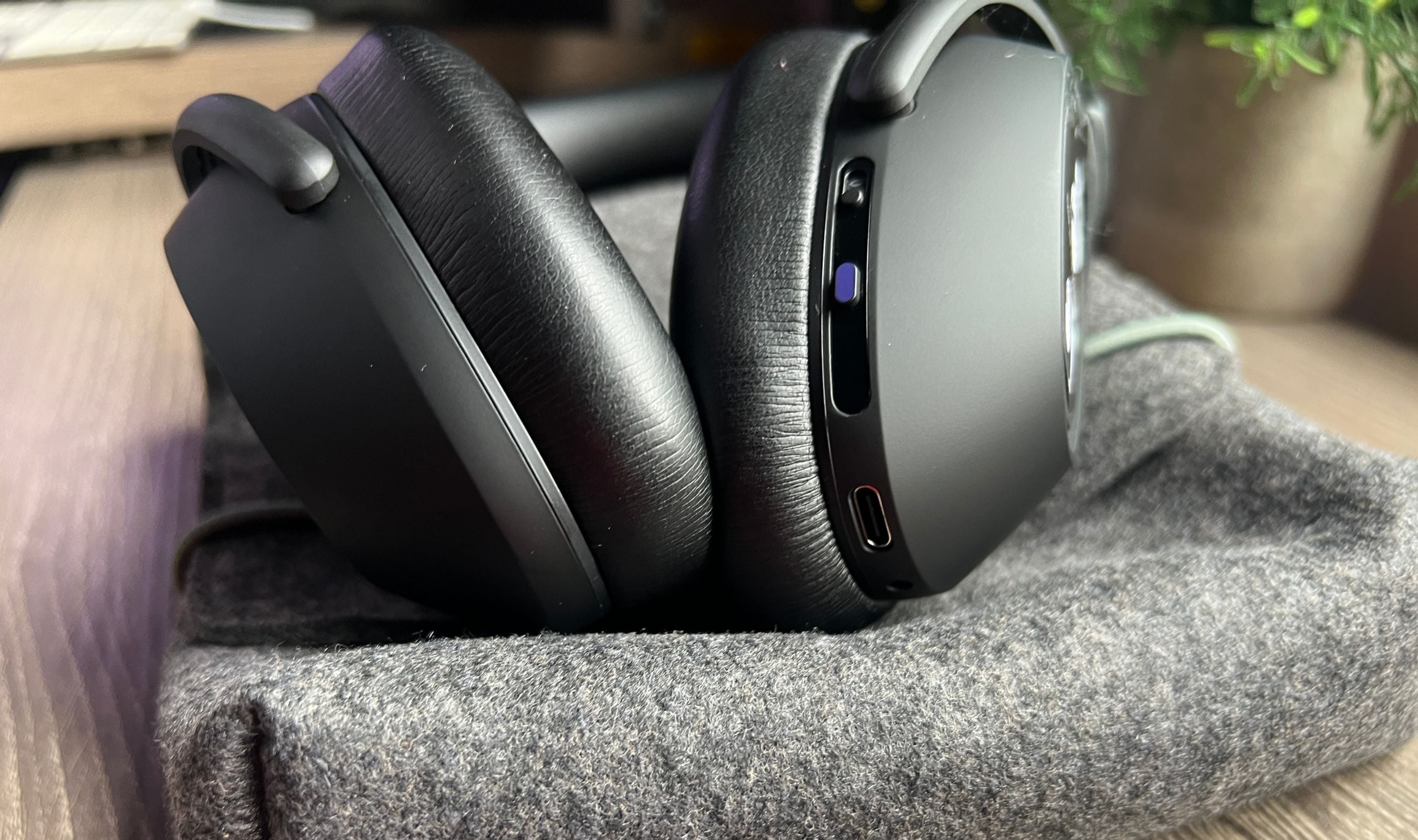
Dual-device multipoint Bluetooth lets you stay connected to your phone and laptop simultaneously. When a call comes in on your phone while you're on your laptop, the headset switches automatically. When you end the call, it switches back. I tested this across Teams meetings, Zoom calls, Spotify streaming, and phone calls throughout the day, and the transitions were seamless every time. No drops, no delays, no manual reconnecting. The Bluetooth range held strong at distances well beyond my desk, letting me walk to the kitchen or another room without losing connection.
The dedicated Microsoft Teams button launches Teams with a single press when connected via the dongle. If you live in Teams, this is a nice shortcut. The headset is also certified for Zoom, Google Meet and Cisco Webex, so the major UC platforms are covered.
Active Noise Cancellation
The adaptive hybrid ANC uses four microphones to monitor your environment and adjust noise reduction in real time. In practice, it does a solid job with consistent background noise like office chatter, HVAC systems, airplane cabin drone, and traffic. The adaptive mode is the standout setting. Rather than applying maximum noise cancellation at all times, it reads the environment and scales the ANC accordingly, which feels more natural and less fatiguing over long sessions.
The ANC is built to suppress steady noise like fans and engines, while speech and higher-pitched sounds are reduced rather than removed, so voices still reach you faintly. To actually talk with a colleague, the TalkThrough feature pauses or mutes your audio and lets the room in. For pure noise isolation while commuting or in a loud open office, it works well enough. But if you're comparing directly to the Sony WH-1000XM6 or Bose 700 in terms of raw noise-blocking power, the Adapt 660 comes up a step short. It's good ANC. It's not the best ANC. For the work-focused use case, the adaptive tuning matters more than maximum silence, and EPOS made the right call.
The three-position switch on the right ear cup lets you toggle between ANC on, adaptive, and off without reaching for an app. Simple, fast, and I used it constantly throughout the day.
Microphone Performance
The three-microphone array with EPOS AI machine learning does a very good job on calls. In quiet to moderately noisy environments, colleagues consistently reported clear, natural audio from my end. The EPOS AI is designed to optimize voice pickup by learning your speech patterns and suppressing background noise in real time, and the results are noticeable. Office noise, keyboard clicks, and general room ambiance are filtered effectively.
In windier or noisier outdoor environments, the mic performance holds up reasonably well but starts to compress the audio slightly. It's not bad. People could still understand me clearly. But compared to headsets with dedicated boom microphones, there's a small but noticeable quality gap. For a boom-less design at this price, the microphone is competitive. It just doesn't reach the same level of clarity that you'd get from something with a physical arm positioned next to your mouth. For 90% of work calls and meetings, the mic quality is more than sufficient.
Battery Life
Battery life is a genuine strength. EPOS rates the Adapt 660 at up to 30 hours of listening time with ANC off, 23 hours with ANC on, and 23 hours of talk time on a single charge. In my testing, those numbers hold up. I charged the headset on Sunday night and didn't need to charge again until late Thursday, with 6 to 8 hours of daily use including a mix of calls, music, and ANC. That's exceptional for a wireless headset and means you can genuinely go a full work week without thinking about charging.
The standby time is rated at 360 hours, which means you won't come back to a dead headset on Monday morning even if you forgot to charge over the weekend. Charging takes about 3 hours from empty to full via USB-C, and fast charging is supported if you need a quick top-up. The five-dot LED battery indicator on the headset makes it easy to check your remaining power at a glance.
The EPOS Connect App
The EPOS Connect app is available on desktop and mobile, and it's one of the better companion apps I've used with a headset. The interface is clean and purposeful, with no unnecessary clutter. You can customize EQ presets, adjust sidetone levels, toggle ANC settings, check battery status, manage paired devices, and update firmware all from one place.
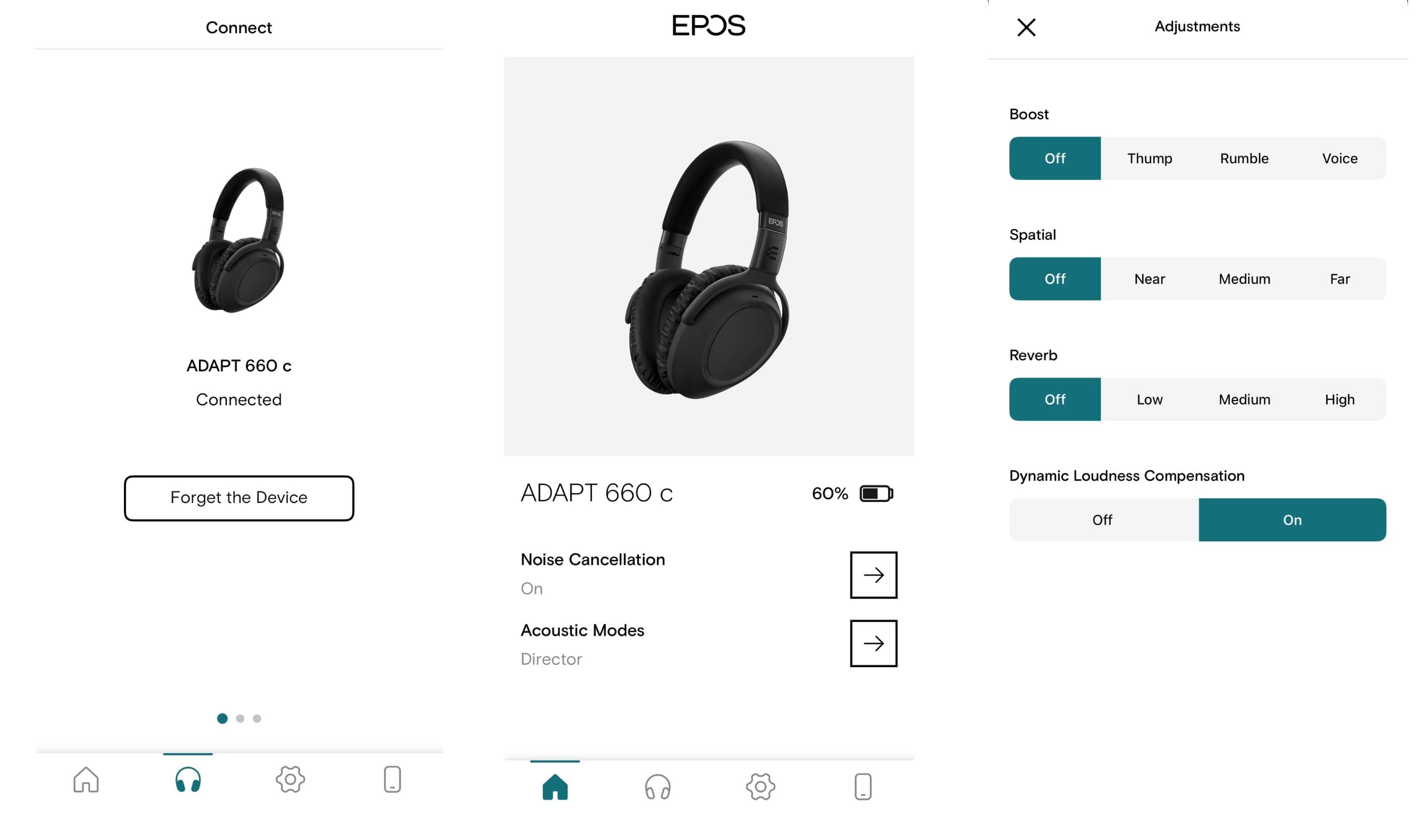
The EQ presets are well-tuned. Speech mode is excellent for call-heavy days. Club mode adds energy for music. The custom Director mode lets you dial in your own preferences. Firmware updates push through the app smoothly, and EPOS has been actively updating the Adapt 660 line to improve performance and add features over time. The app isn't flashy, but it's stable, responsive, and does exactly what a professional headset companion app should do.
This product was provided to Technobezz for review. We independently select what we review. The manufacturer had no input on this article and did not see it before publication. All opinions are our own.
FAQ
How long does the battery actually last?
Up to 30 hours of listening with ANC off (23 with ANC on) and 23 hours of talk time per charge. In daily use with a mix of calls, music, and ANC, I got through a full work week (Monday to Thursday) on a single charge before needing to plug in.
Is this the USB-C version or micro USB?
This is the updated USB-C version (model 1001373). Both the charging port and the included dongle are USB-C. The older Adapt 660 used micro USB.
How does the ANC compare to Sony or Bose?
The ANC is solid and effective for office, commute, and travel noise. It's adaptive, meaning it adjusts to your environment automatically. However, it doesn't match the raw noise-blocking power of the Sony WH-1000XM6 or Bose 700. For work use where you still want to hear important sounds around you, the adaptive approach is actually preferable.
Can I use these wired?
Yes. The included audio cable (2.5 mm at the headset, 3.5 mm at your device) lets you use the headset wired with full ANC and volume control functionality. This is useful on flights or when your battery runs low.
Do the touch controls work well?
Yes. Tap to play/pause, swipe up or down for volume, swipe left or right to skip tracks. They're responsive and accurate. I had no issues with accidental triggers or missed inputs during my testing.
Is the microphone good enough for professional calls?
For the vast majority of work calls and meetings, yes. The EPOS AI noise reduction handles background noise well. In very noisy environments, the mic can compress audio slightly, but it remains clear and understandable. It's very good for a boom-less design, though a dedicated boom mic headset will outperform it in the noisiest conditions.
The EPOS Adapt 660 does something rare. It delivers a headset that sounds great for music, works seamlessly for professional calls, connects to multiple devices without drama, and lasts long enough that charging becomes an afterthought. The setup experience is polished. The EPOS Connect app is purposeful. The build quality and comfort are tuned for people who actually wear headphones all day, every day.
The ANC and microphone are both very good without being the absolute best in their respective classes, and at $319, you're paying a premium that invites comparison to the top consumer headphones. But those consumer headphones don't come with UC certifications, a dedicated USB-C dongle, or an IT-friendly management ecosystem. If your headphones need to be your work tool first and your music companion second, the Adapt 660 handles both roles with a level of polish that's hard to find in a single device.
Share this article
More on headphones
Deal
Today's 3 headphone deals start at $49.99 for work and gaming
Deal
3 headphone deals worth your money today, from $69
Deal
Sennheiser HD 490 PRO Leads 3 Headphone Deals All Under $346.40
Deal
Amazon Drops Audio-Technica Headphones to $104.30 in Three Headphone Deals Starting at $99
More reviews
ReviewThe Dreame AirPursue PM20 Purifies, Heats, Cools and Follows You Around the RoomReviewI Spent Weeks Looking for a Flaw in the HHKB Professional HYBRID Type-SReviewiPhone 18 Pro Max vs iPhone 17 Pro Camera Comparison in DaylightReviewDreame D20 Air Plus Review, Built Like a Robot That Costs Three Times as MuchReviewThe Boulies EP600 Moves in More Directions Than Any Chair We Have TestedReviewNarwal Freo 20 Edge Review, Reaching the Corners Without Dragging the DirtReviewHisense M7SR Review, an Easy First Step Into MiniLEDReviewKYY X90D Review, Two Extra Screens From One USB-C Cable