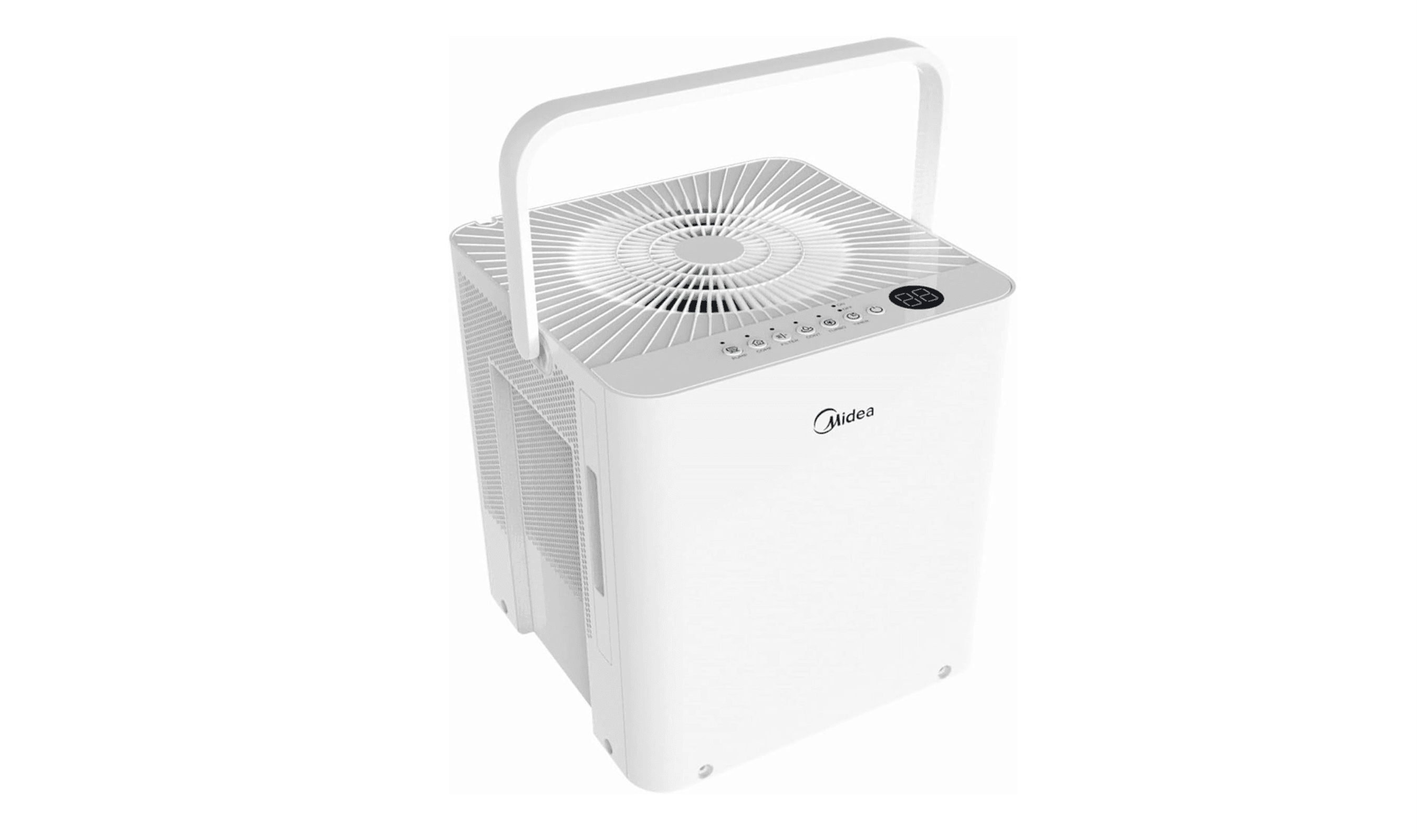
If you're dealing with musty basements or damp rooms, the right dehumidifier makes all the difference. Our top pick, the Midea 50-Pint Cube, combines a large water tank, a built-in pump, and app control. This list helps you choose based on your space size, budget, and whether you need a pump for automatic drainage.
Technobezz is supported by its audience. We may get a commission from retail offers.
Best Dehumidifiers for Basements and Homes in 2026
The best dehumidifiers for basements and damp rooms in 2026, led by the Midea 50-Pint Cube, with picks for value, large spaces, and built-in pump drainage.
T
Technobezz
Senior Editor
Updated September 5, 2026Sep 5, 2026
•5 min read

Get Deals Like These in Your Inbox
The best prices, reviewed weekly.
At a Glance
| Category | Product | Why We Picked It |
|---|---|---|
| Best overall | Midea 50-Pint Cube Dehumidifier with Pump | Large tank, built-in pump, and app control |
| Best for large spaces | Frigidaire FHDD5034Y1 50-Pint Wi-Fi Dehumidifier | 50-pint capacity, Wi-Fi control, and a 2.7-gallon bucket |
| Best built-in pump | Black+Decker 50-Pint Dehumidifier | Built-in pump lifts water up to a sink or window |
| Also recommended | GoveeLife Smart 50 Pint Dehumidifier | Can reduce humidity quickly in suitable room conditions |
| Also recommended | hOmeLabs 25-Pint Dehumidifier | Compact pick for small to medium spaces |
| Also recommended | Waykar Dehumidifier | Quiet operation for living areas |
| Also recommended | Toshiba 50 Pint Dehumidifier | Easy to move with included wheels |
How we chose and tested
We evaluated dehumidifiers based on multiple factors including moisture removal capacity, energy efficiency, noise levels, and user-friendly features. Our assessment considered coverage area, tank size, drainage options, and smart capabilities. We prioritized products that balance performance with practical considerations like ease of maintenance and reliable operation in basement conditions.
The best dehumidifiers right now
Midea 50-Pint Cube Dehumidifier with Pump - Best overall
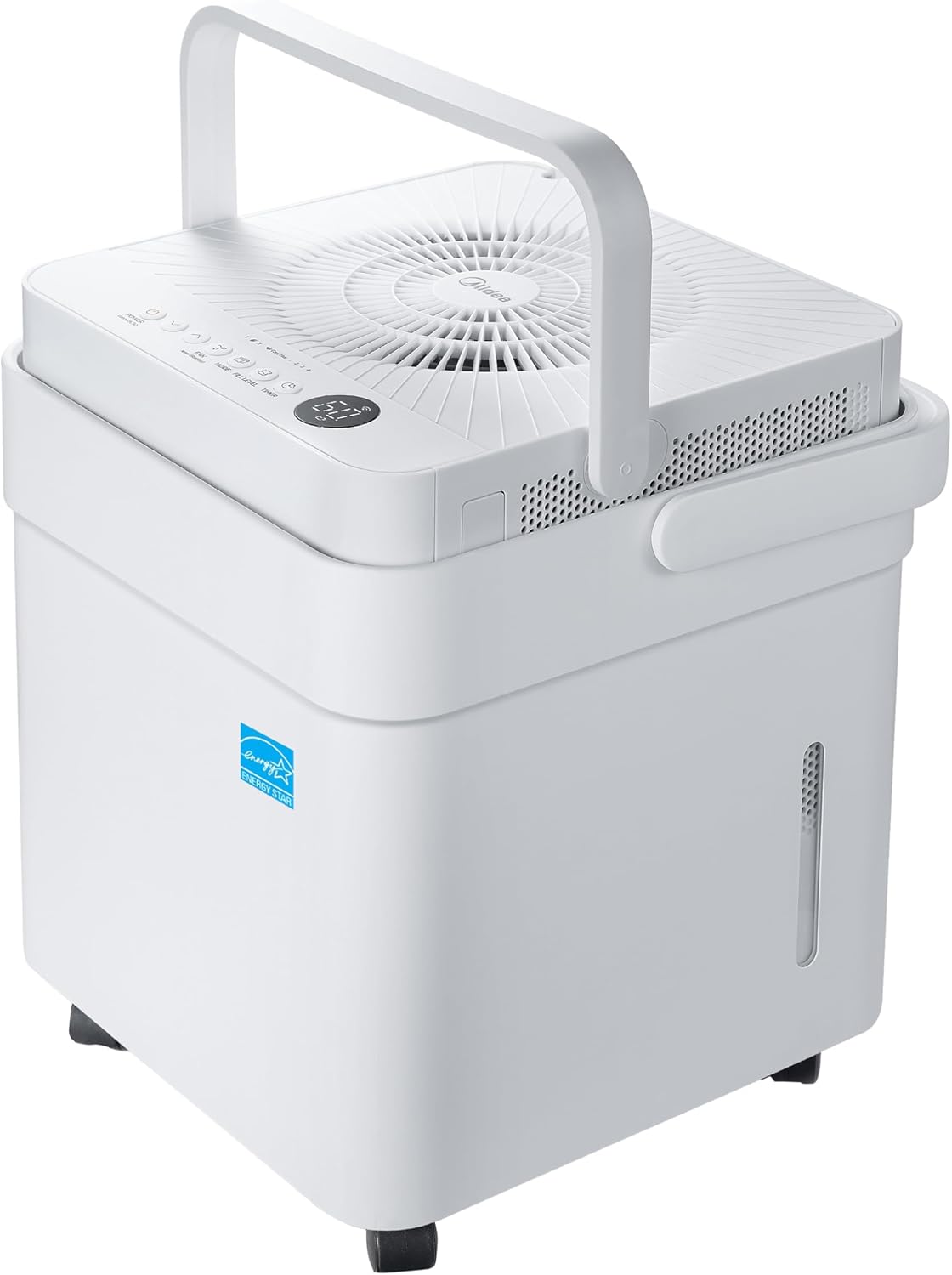
This 50-pint Cube combines a 4.2-gallon tank with a built-in pump and Wi-Fi control. Its lift-and-twist design nests for storage and extends for use with the large bucket.
Key highlights
- 50-pint capacity, with advertised coverage up to 4,500 square feet
- 4.2-gallon water tank
- Built-in pump with an included 16-foot drain tube
- SmartHome app control with Alexa and Google Assistant support
- Lift-and-twist design with bucketless drainage options
Pros
- Large tank reduces trips to empty collected water
- Pump can drain upward to a sink or window
- Remote control through the app
Cons
- A full 4.2-gallon bucket is cumbersome to carry
- Pump use requires routing the drain tube to a suitable outlet
Who it is for: Homeowners who want a large tank, app control, and flexible drainage for a damp basement.
Skip if
You need a small bucket that is easy to carry when full.
Frigidaire FHDD5034Y1 50-Pint Wi-Fi Dehumidifier - Best for large spaces
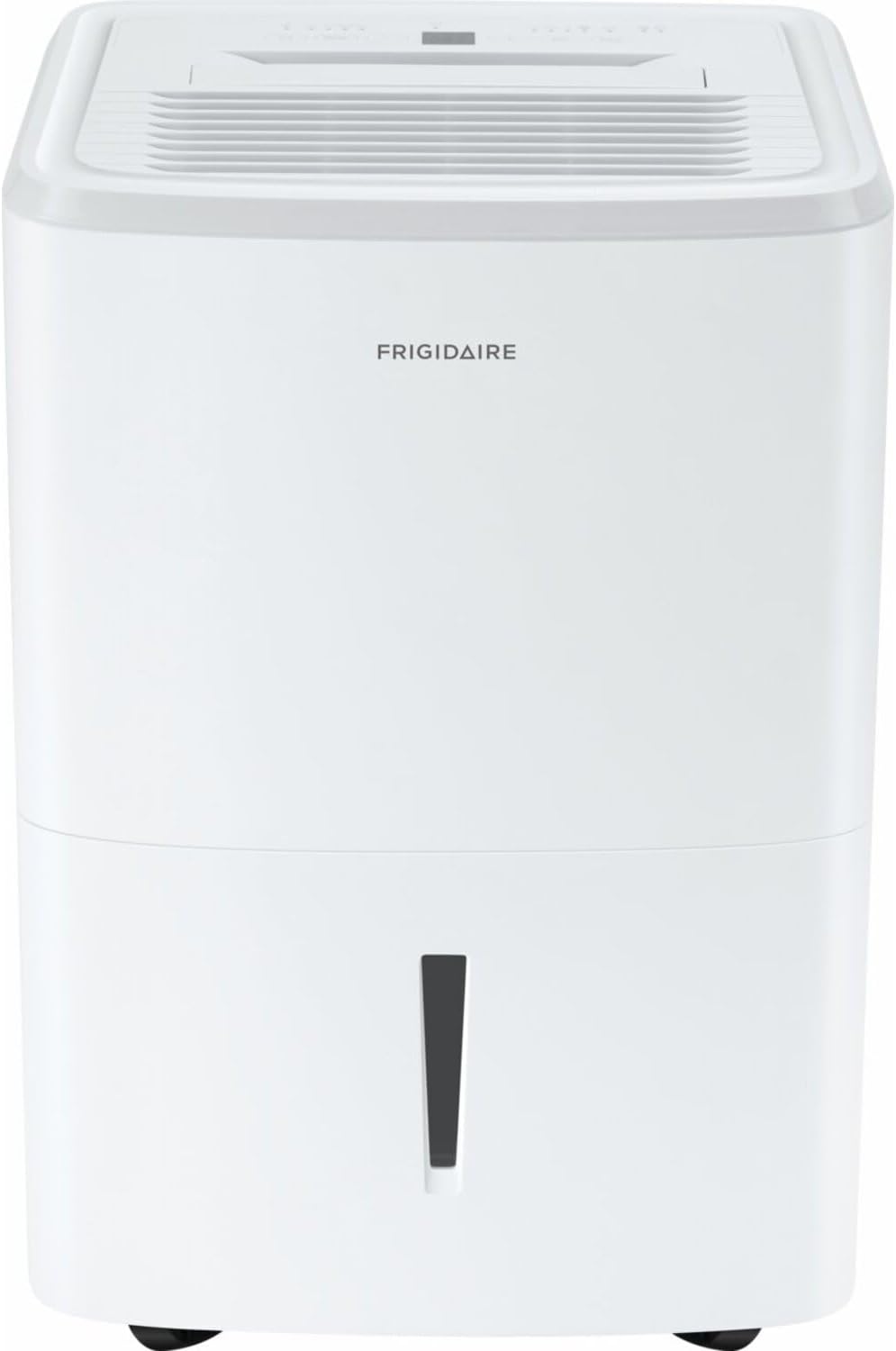
The Frigidaire FHDD5034Y1 removes up to 50 pints per day and offers Wi-Fi control for managing humidity remotely. Its 2.7-gallon bucket and continuous drainage option suit basement use.
Key highlights
- 50-pint daily moisture removal capacity
- 2.7-gallon bucket with automatic shutoff when full
- Wi-Fi control through the Frigidaire app
- Continuous drainage option; no built-in pump
- Three fan speeds and a washable air filter
Pros
- App supports schedules and remote humidity adjustments
- Continuous drainage reduces manual emptying
- Caster wheels and a handle help with moving the unit
Cons
- No pump for draining upward
- Weighs 41 pounds before collecting water
- Manufacturer lists operating noise at 47-51 dBA
Who it is for: Homeowners managing damp basements who want remote humidity control and a large bucket.
Skip if
You need a built-in pump to send water to an elevated drain.
Black+Decker 50-Pint Dehumidifier - Best built-in pump
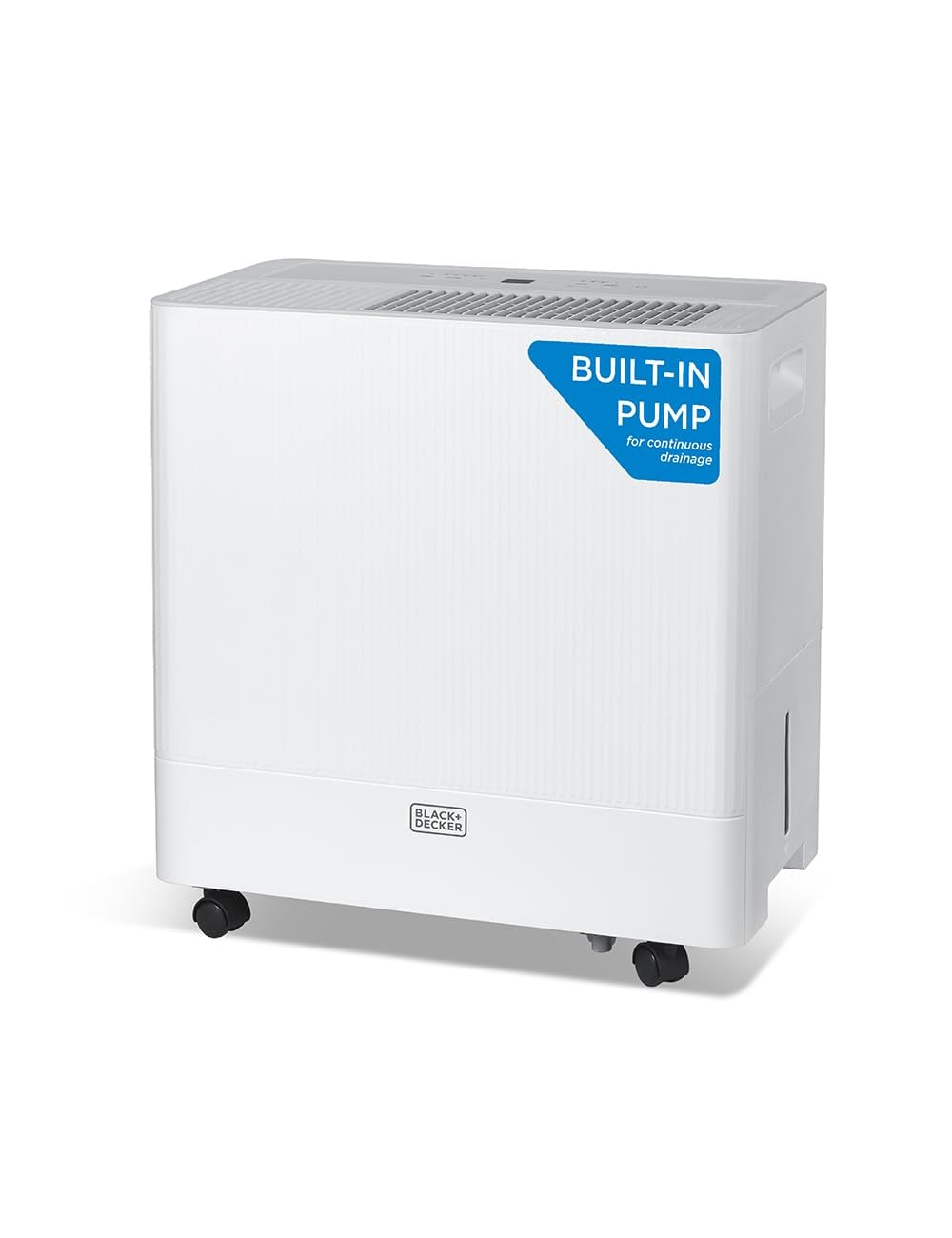
This BLACK+DECKER model includes a built-in pump that can move water up and out, so you can drain to a sink or out a window instead of carrying buckets. It handles large spaces and uses efficient R-32 refrigerant.
Key highlights
- Built-in pump for versatile drainage
- 50-pint capacity for medium to large spaces
- Continuous drain option with 16-foot hose
- Digital display with humidity monitoring
Pros
- Built-in pump and 16-foot hose move water upward without a floor drain
- Handles large spaces up to 4,500 sq. ft. (2012 DOE)
- Audible alert and indicator light when the bucket is full
- UL certified with efficient R-32 refrigerant
Cons
- No Wi-Fi or app control
- Pump adds some operating noise
- Heavier than basic 50-pint units
Who it is for: Homeowners without a floor drain who want pump-assisted, bucket-free draining in a large basement.
Skip if
You want Wi-Fi or app control, or have a floor drain that makes a simple gravity hose enough.
Also Good
- GoveeLife Smart 50 Pint Dehumidifier - can reduce humidity quickly in suitable room conditions.
- hOmeLabs 25-Pint Dehumidifier - compact pick for small to medium spaces.
- Waykar Dehumidifier - quiet operation for living areas.
- Toshiba 50 Pint Dehumidifier - easy to move with included wheels.
How to Choose
Consider these factors when selecting your dehumidifier:
Capacity matters most. Match pint capacity to your space size. For basements under 1,500 square feet, 25 to 35 pint models usually work well. For larger areas, 50 pint units are typically a better fit. Listed capacity reflects test conditions, real-world performance varies by temperature and humidity.
Drainage options affect maintenance. Units with built-in pumps can move water upward to a sink or window. Continuous-drain hose setups work well when you have a floor drain and proper gravity flow. Tank-only use means regular manual emptying in humid spaces.
Smart features add convenience. Wi-Fi-enabled models let you monitor humidity and adjust settings remotely. Alerts for full buckets can reduce day-to-day maintenance. These features are helpful, but they usually increase cost.
Noise level matters for placement. Quieter models are better near living areas or bedrooms. Louder units are usually better in unfinished basements or utility zones. If noise is a concern, check model decibel information before buying.
Energy efficiency affects running cost. Energy Star certified models generally use less electricity than non-certified alternatives. That matters if your unit runs often in damp seasons.
FAQ
What humidity level should I keep in a basement?
Keep relative humidity below 60%, ideally between 30% and 50%, following EPA guidance for limiting mold growth.
How often do I need to empty the tank?
It depends on room humidity, tank size, and runtime. In moderately damp conditions, it may be every few days. In very damp spaces, it can be daily unless you use continuous drainage.
Do dehumidifiers work in cold basements?
Yes, but performance drops at lower temperatures. Models with auto-defrost or frost control handle cool conditions more reliably.
Do I need a built-in pump?
Only if you need to move water upward or do not have a floor drain. If gravity drainage is available, a hose-only setup is often simpler.
How much does it usually cost to run one?
Operating cost varies by unit size, local electricity rates, and runtime. Energy Star models are generally cheaper to run over time.
Published February 28, 2026 Last updated September 5, 2026
Share this article
More in News
8 Best Gaming Mice to Buy in 2026
The best gaming mice in 2026, from the 56g Razer DeathAdder V4 Pro to the budget Logitech G305 Lightspeed. Tested picks for FPS, MMO, wired and wireless.
5 min read
Top 6 cordless vacuums for 2026
Dyson V15 Detect leads our picks for the best cordless vacuums of 2026. Compare top models for pet hair, value, and self-emptying features.
4 min read
7 Best Outdoor Projectors for 2026
The Anker Nebula Mars 3 leads our picks for the best outdoor projectors.
5 min read
Best Camera for YouTube in 2026
Sony ZV-E10 II leads our 2026 picks for YouTube. See the top 10 cameras for vlogging, streaming, and professional content creation.
4 min read
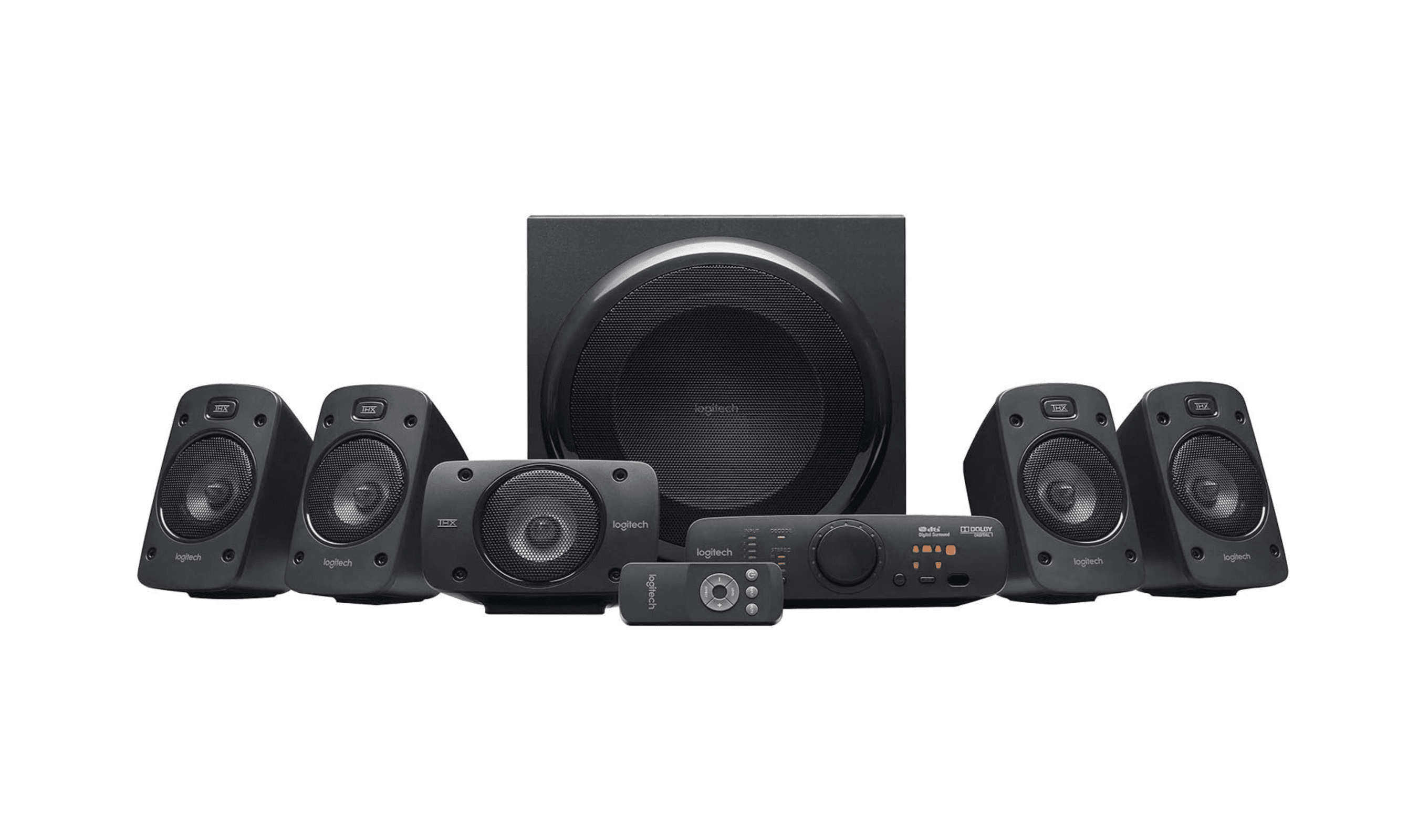
7 Surround Sound Picks for Movies and Gaming in 2026
5 min read
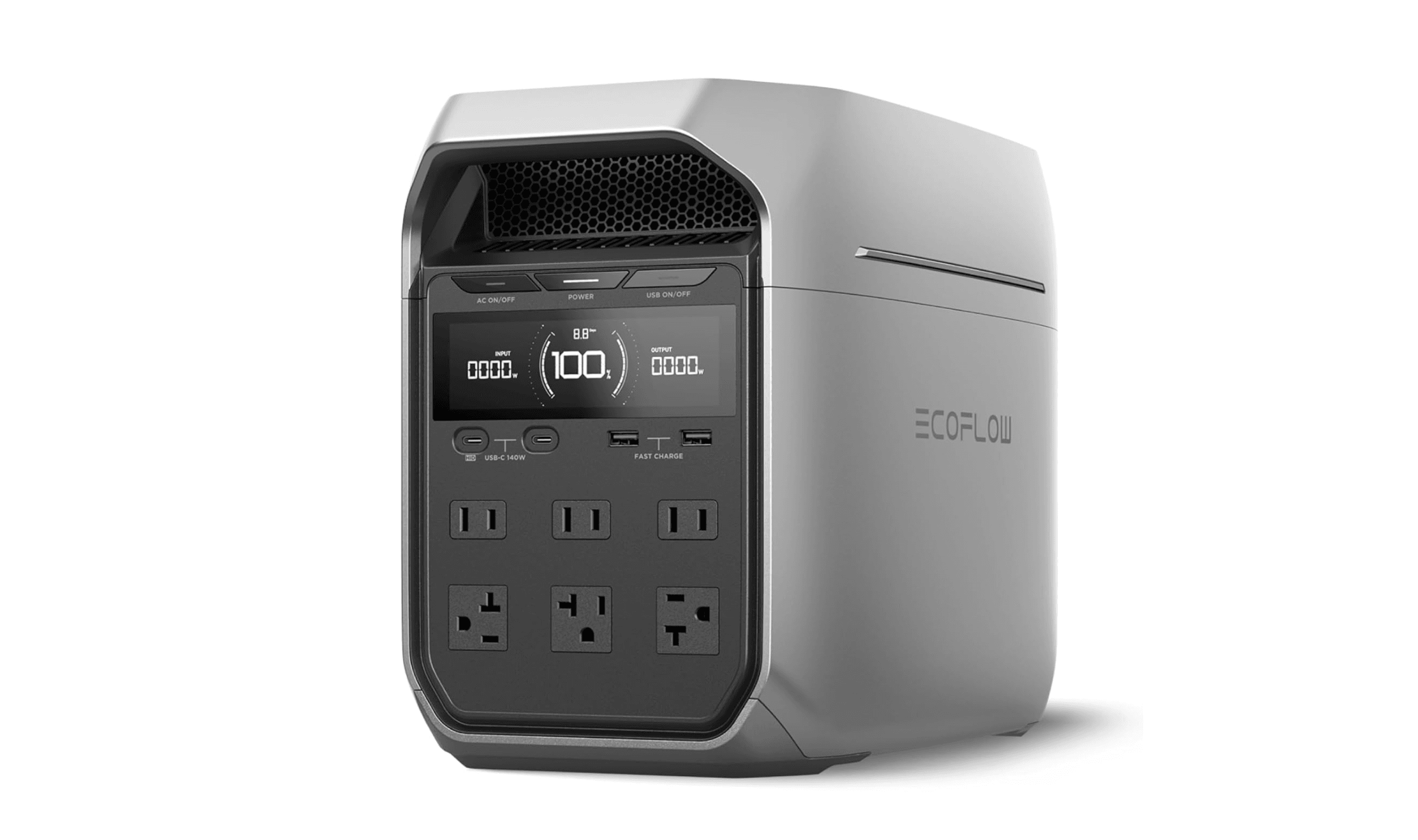
5 Best Solar Power Stations for 2026
3 min read
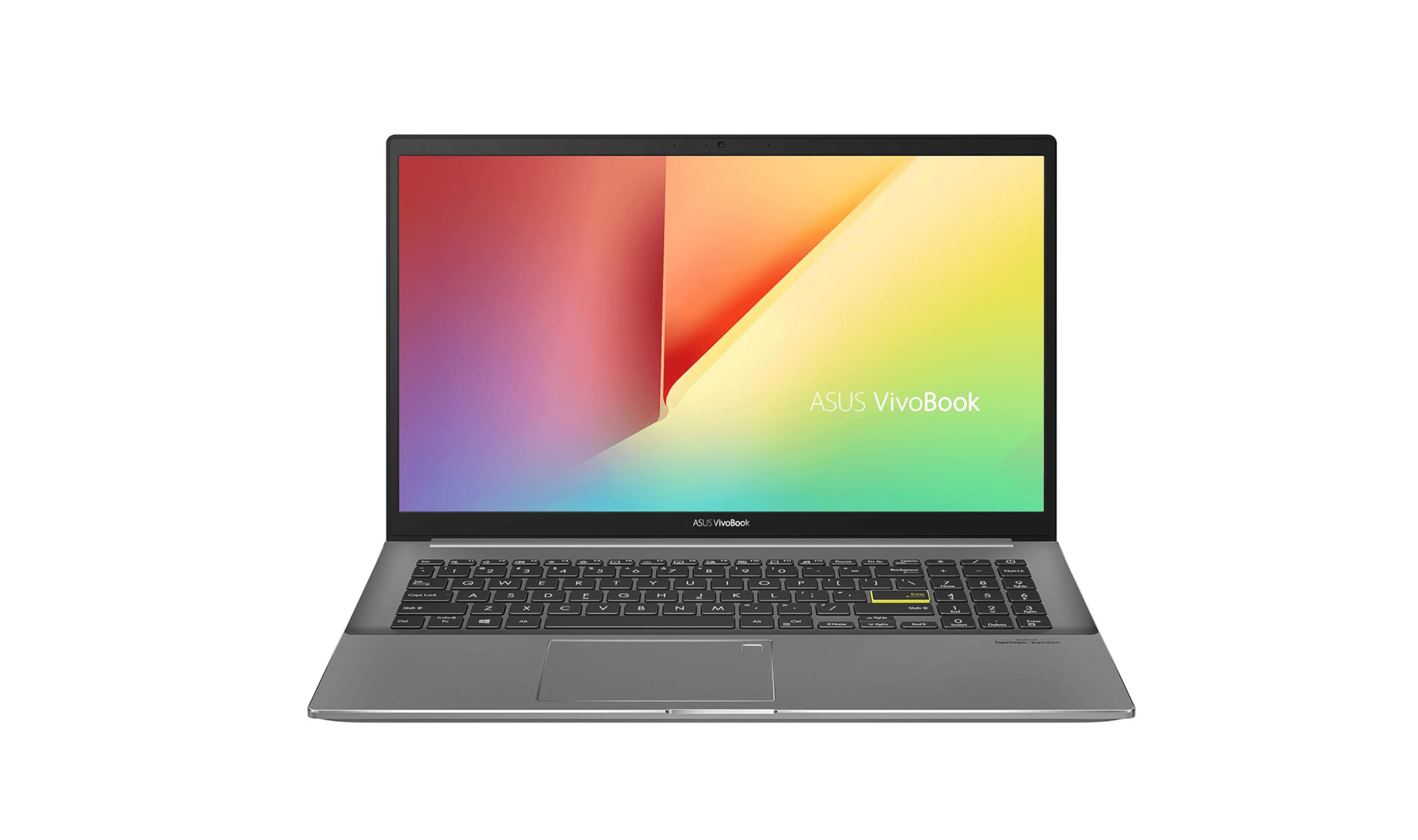
7 Best Laptops for Bloggers in 2026
4 min read

6 Best Cheap Smartwatches for 2026
4 min read
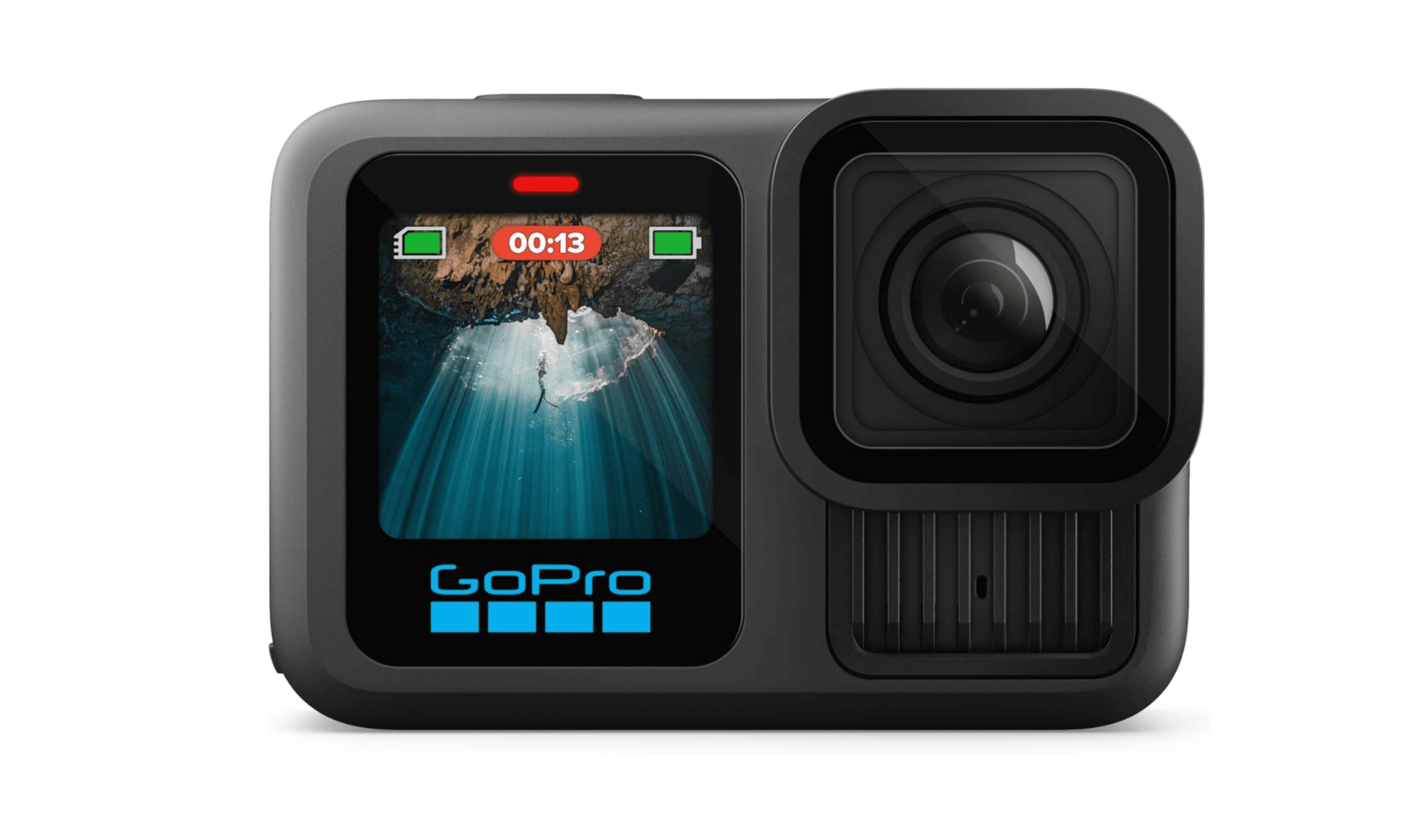
8 Best Action Cameras for 2026
3 min read
10 Best Thermal Printers for 2026
4 min read
7 Best UPS Battery Backups for Home Use in 2026
4 min read
7 Best Portable Projectors for 2026
5 min read